



Key Takeaways:
- Agentic AI systems are revolutionizing business operations by enabling autonomous decision-making with minimal human intervention.
- The integration of intelligent virtual assistants and autonomous agents enhances efficiency, reduces human error, and allows for dynamic adaptability in various industries.
- As businesses adopt agentic AI, they must navigate new risks and ensure clear accountability while leveraging the competitive advantages of AI-driven automation.
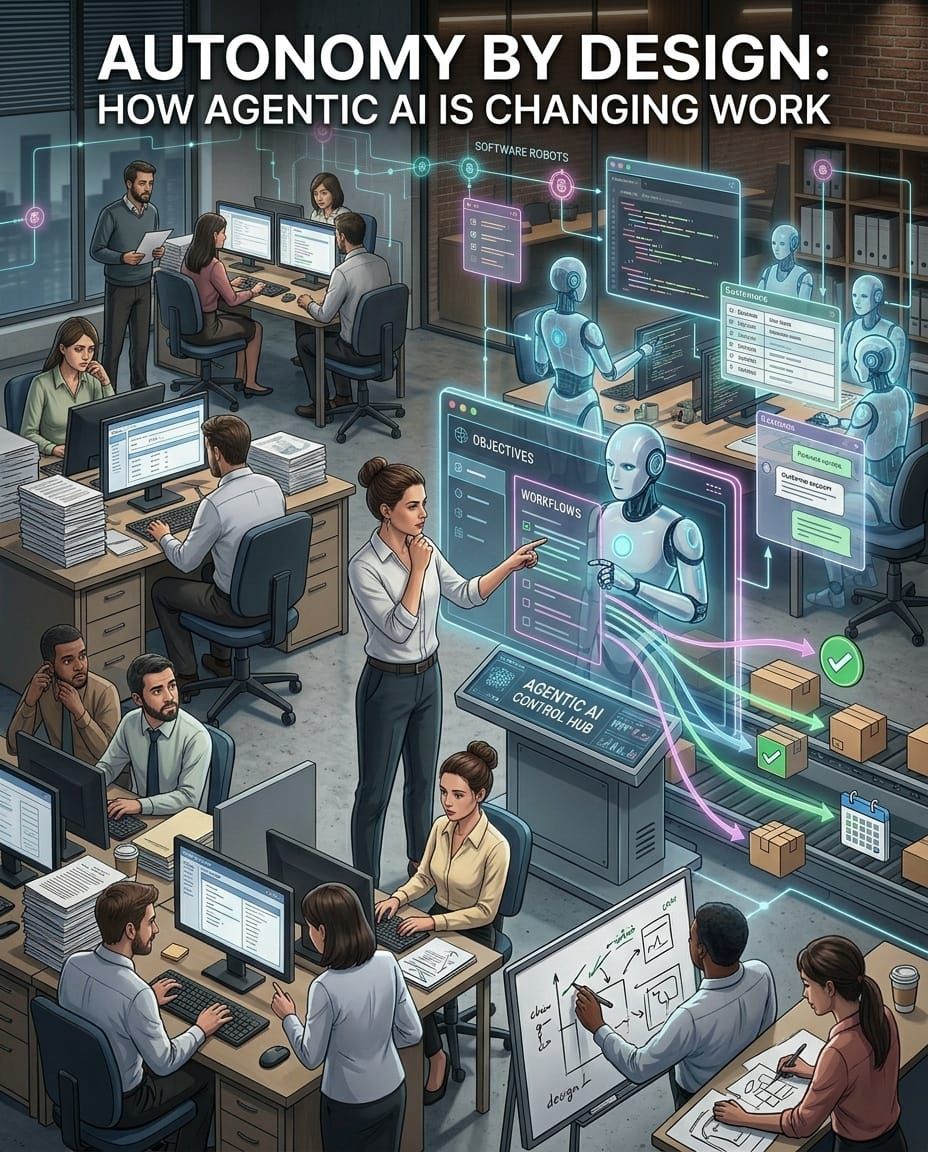
The landscape of work is undergoing a seismic shift, driven by the emergence of agentic AI. This innovative technology is not just a buzzword; it represents a fundamental change in how tasks are performed across various sectors. Agentic AI refers to systems that can operate autonomously, making decisions and executing tasks with minimal human oversight. This capability is reshaping traditional business operations, allowing organizations to streamline processes and enhance productivity.
At the core of this transformation is the concept of autonomy by design. Unlike traditional AI, which often requires significant human intervention, agentic AI systems are designed to function independently. This shift is particularly evident in industries where repetitive tasks dominate, such as supply chain management and customer service. By leveraging autonomous AI agents, businesses can achieve efficiency gains and focus human resources on more complex objectives.
Understanding Agentic AI
Agentic AI encompasses a range of technologies that enable machines to act independently. These systems utilize advanced algorithms and machine learning techniques to analyze data, make decisions, and execute tasks without constant human input. The evolution of AI has led to the development of intelligent agents capable of performing complex tasks that were once the sole domain of human workers.
One of the most significant advantages of agentic AI is its ability to learn continuously. Unlike traditional automation, which often relies on pre-defined rules, agentic systems can adapt dynamically to new information and changing circumstances. This capability allows businesses to respond swiftly to market demands and operational challenges, providing a competitive edge in an increasingly fast-paced environment.
The Role of AI Agents in the Workplace
AI agents are becoming integral to modern workplaces, acting as virtual assistants that enhance productivity and efficiency. These intelligent systems can handle a variety of tasks, from scheduling meetings to managing customer inquiries. By automating routine processes, organizations can free up human workers to focus on strategic initiatives that require creativity and critical thinking.
Moreover, the integration of AI agents into business operations can significantly reduce human error. Traditional processes often involve multiple steps and human judgment, which can lead to mistakes. In contrast, agentic AI systems operate with a high degree of accuracy, minimizing the risk of errors and ensuring that tasks are completed efficiently. This reliability is particularly crucial in industries such as finance and healthcare, where precision is paramount.
The Impact of Generative AI
Generative AI is a subset of agentic AI that focuses on creating new content, whether it be text, images, or other forms of media. This technology has the potential to revolutionize industries such as marketing, design, and entertainment by automating the content creation process. Businesses can leverage generative AI to produce high-quality materials quickly, allowing for more agile marketing strategies and creative campaigns.
The implications of generative AI extend beyond content creation. By utilizing AI systems that can generate insights and recommendations, organizations can make informed decisions based on real-time data. This capability enhances strategic oversight and enables businesses to adapt their approaches in response to emerging trends and consumer preferences.
Minimal Human Intervention: A Double-Edged Sword
While the benefits of agentic AI are clear, the shift towards minimal human intervention raises important questions about governance and accountability. As AI systems take on more responsibilities, organizations must establish frameworks to ensure that these technologies operate ethically and transparently. This includes defining the boundaries of AI autonomy and maintaining human oversight where necessary.
The challenge lies in finding the right balance between leveraging AI capabilities and retaining human control. Businesses must be vigilant in monitoring AI systems to prevent potential risks, such as biased decision-making or unintended consequences. By implementing robust governance structures, organizations can harness the power of agentic AI while safeguarding against potential pitfalls.
Enhancing Efficiency with Autonomous AI Agents
The efficiency gains associated with autonomous AI agents are transforming how businesses operate. These systems can handle end-to-end processes, from data analysis to task execution, with minimal human input. This level of automation allows organizations to streamline operations and reduce costs, ultimately leading to improved profitability.
For example, in supply chain management, autonomous AI agents can analyze vast amounts of data to optimize inventory levels and predict demand fluctuations. By automating these processes, businesses can respond more effectively to changes in the market, ensuring that they remain competitive. This dynamic adaptability is a hallmark of agentic AI, enabling organizations to thrive in an ever-changing landscape.
The Shift Towards AI-Driven Automation
As businesses increasingly adopt AI-driven automation, the traditional roles of human workers are evolving. While some tasks may be fully automated, others will require collaboration between humans and AI systems. This hybrid approach allows organizations to leverage the strengths of both human judgment and AI capabilities, resulting in more effective decision-making.
The shift towards AI-driven automation also necessitates a reevaluation of workforce skills. Employees will need to develop new competencies to work alongside intelligent agents, focusing on areas such as data analysis, critical thinking, and creative problem-solving. Organizations that invest in upskilling their workforce will be better positioned to harness the full potential of agentic AI.
Continuous Learning and Adaptability
One of the defining features of agentic AI is its ability to learn continuously. These systems can analyze feedback loops and adapt their behavior based on new data, allowing them to improve over time. This continuous learning process is essential for maintaining the effectiveness of AI agents in dynamic environments.
For instance, in customer service, AI agents can learn from interactions with users to enhance their responses and improve customer satisfaction. By analyzing patterns in customer inquiries, these systems can identify common issues and develop solutions, ultimately leading to a more efficient support process. This adaptability is crucial for businesses looking to stay ahead of the competition.
The Importance of Human Oversight
Despite the advancements in agentic AI, human oversight remains a critical component of effective AI governance. Organizations must ensure that AI systems operate within ethical boundaries and align with their values. This oversight is particularly important in high-stakes industries, where decisions made by AI agents can have significant consequences.
Establishing clear accountability frameworks is essential for managing the risks associated with autonomous AI. Businesses should define the roles and responsibilities of human workers in relation to AI systems, ensuring that there is a clear understanding of how decisions are made. This transparency fosters trust in AI technologies and helps mitigate potential concerns about bias or unethical behavior.
Navigating New Risks in AI Autonomy
As organizations embrace agentic AI, they must also navigate the new risks that come with increased autonomy. These risks can range from data privacy concerns to the potential for malicious actors to exploit AI systems. Businesses must be proactive in identifying and addressing these challenges to ensure the safe and responsible use of AI technologies.
Implementing robust security measures is essential for protecting AI systems from external threats. Organizations should invest in cybersecurity protocols and regularly assess their AI infrastructure to identify vulnerabilities. By taking a proactive approach to risk management, businesses can safeguard their operations and maintain the integrity of their AI systems.
The Competitive Advantage of Agentic AI
The adoption of agentic AI offers organizations a significant competitive advantage in today’s fast-paced business environment. By leveraging autonomous systems, businesses can streamline operations, reduce costs, and enhance decision-making processes. This competitive edge is particularly valuable in industries where agility and responsiveness are critical to success.
Early adopters of agentic AI have already begun to see the benefits of this technology. Companies that integrate AI-driven automation into their operations can respond more quickly to market changes, optimize resource allocation, and improve overall efficiency. This ability to adapt dynamically to new challenges positions organizations for long-term success in an increasingly competitive landscape.
The Role of AI Governance in Ensuring Accountability
As the use of agentic AI expands, the need for effective AI governance becomes paramount. Organizations must establish clear policies and procedures to guide the development and deployment of AI systems. This governance framework should address issues such as data privacy, ethical considerations, and accountability for AI-driven decisions.
By implementing strong governance practices, businesses can ensure that their AI systems operate transparently and responsibly. This includes regular audits of AI algorithms to identify potential biases and ensure compliance with regulatory standards. A robust governance framework not only protects organizations from legal and ethical risks but also fosters trust among stakeholders.
Human in the Loop: Balancing Autonomy and Control
The concept of "human in the loop" is essential for balancing the autonomy of AI systems with the need for human oversight. While agentic AI can operate independently, there are situations where human judgment is crucial for making informed decisions. This hybrid approach allows organizations to leverage the strengths of both AI and human workers.
In practice, this means that businesses should identify key decision points where human intervention is necessary. By establishing clear guidelines for when and how humans should engage with AI systems, organizations can ensure that they maintain control over critical processes while still benefiting from the efficiency of autonomous agents.
The Future of Work with Agentic AI
The future of work is being shaped by the integration of agentic AI into business operations. As organizations continue to adopt these technologies, the nature of work will evolve, with a greater emphasis on collaboration between humans and AI systems. This shift will require businesses to rethink their workforce strategies and invest in training programs that equip employees with the skills needed to thrive in an AI-driven environment.
Moreover, the rise of agentic AI will likely lead to the creation of new job roles focused on managing and optimizing AI systems. As businesses increasingly rely on autonomous agents, there will be a growing demand for professionals who can bridge the gap between technology and human expertise. This evolution presents exciting opportunities for individuals willing to adapt and embrace the changes brought about by AI.
Case Studies: Successful Implementation of Agentic AI
Several organizations have successfully implemented agentic AI to enhance their operations and drive innovation. For instance, a leading logistics company adopted autonomous AI agents to optimize its supply chain processes. By leveraging AI-driven analytics, the company was able to reduce delivery times and improve inventory management, resulting in significant cost savings and increased customer satisfaction.
Another example is a financial institution that integrated intelligent virtual assistants into its customer service operations. These AI agents were able to handle routine inquiries, allowing human agents to focus on more complex issues. As a result, the bank experienced improved response times and higher customer satisfaction ratings, demonstrating the effectiveness of agentic AI in enhancing service delivery.
Challenges and Considerations for Businesses
While the benefits of agentic AI are substantial, businesses must also consider the challenges associated with its implementation. One of the primary concerns is the potential for job displacement as automation takes over routine tasks. Organizations must be proactive in addressing these concerns by providing training and support for employees affected by automation.
Additionally, businesses should be mindful of the ethical implications of AI decision-making. Ensuring that AI systems operate fairly and transparently is essential for maintaining trust among stakeholders. By prioritizing ethical considerations in their AI strategies, organizations can foster a positive relationship with their employees, customers, and the broader community.
The Importance of Feedback Loops in AI Systems
Feedback loops play a crucial role in the effectiveness of agentic AI systems. These loops allow AI agents to learn from their experiences and improve their performance over time. By continuously analyzing data and adjusting their behavior, AI systems can adapt to changing conditions and enhance their decision-making capabilities.
For example, in marketing, AI agents can analyze customer interactions to identify trends and preferences. By incorporating this feedback into their strategies, businesses can create more targeted campaigns that resonate with their audience. This iterative process not only improves the effectiveness of AI systems but also enhances overall business performance.
Embracing Change Management in AI Adoption
The adoption of agentic AI requires a thoughtful approach to change management. Organizations must prepare their workforce for the transition to AI-driven processes, ensuring that employees understand the benefits and implications of these technologies. Effective communication and training are essential for fostering a culture of innovation and collaboration.
Additionally, businesses should establish clear goals and metrics for measuring the success of their AI initiatives. By setting benchmarks and tracking progress, organizations can assess the impact of agentic AI on their operations and make informed decisions about future investments in technology.
The Role of Large Language Models in Agentic AI
Large language models (LLMs) are a key component of agentic AI, enabling systems to understand and generate human-like text. These models have revolutionized natural language processing, allowing AI agents to engage in meaningful conversations and provide valuable insights. The ability to process and analyze vast amounts of text data enhances the capabilities of AI systems, making them more effective in various applications.
For instance, in customer support, LLMs can power chatbots that understand customer inquiries and provide accurate responses. This capability not only improves the efficiency of support operations but also enhances the overall customer experience. As businesses continue to leverage LLMs, the potential for agentic AI to transform communication and engagement will only grow.
The Future of AI Governance
As agentic AI becomes more prevalent, the need for effective AI governance will continue to evolve. Organizations must stay ahead of regulatory developments and industry standards to ensure compliance and ethical use of AI technologies. This proactive approach will help businesses navigate the complexities of AI governance and build trust with stakeholders.
Moreover, collaboration among industry leaders, policymakers, and researchers will be essential for establishing best practices in AI governance. By working together, organizations can create a framework that promotes responsible AI development and deployment, ensuring that the benefits of agentic AI are realized while minimizing potential risks.

Summary
Agentic AI is reshaping the future of work by enabling autonomous decision-making and enhancing operational efficiency. As businesses embrace this technology, they must navigate the challenges and opportunities it presents. By prioritizing ethical considerations, establishing robust governance frameworks, and investing in workforce development, organizations can harness the full potential of agentic AI while ensuring accountability and transparency.
Your Friend,
Wade

Q1: What is agentic AI?
Agentic AI refers to systems that can operate autonomously, making decisions and executing tasks with minimal human intervention. These systems leverage advanced algorithms and machine learning to analyze data and adapt to changing conditions.
Q2: How does agentic AI enhance efficiency in business operations?
Agentic AI enhances efficiency by automating routine tasks, reducing human error, and enabling organizations to respond quickly to market changes. This allows businesses to streamline operations and focus on more complex objectives.
Q3: What are the ethical considerations associated with agentic AI?
Ethical considerations include ensuring that AI systems operate fairly and transparently, maintaining accountability for AI-driven decisions, and addressing potential biases in AI algorithms. Organizations must prioritize these issues to build trust among stakeholders.