





Bitcoin has fallen more than 30% from its March 14, 2025 all-time high near $123,000, and the asset is now grinding through what may become its longest, most psychologically punishing drawdown since the infamous 2018-2019 collapse. The current market is highly volatile, with sharp and unpredictable price swings. Bitcoin has tumbled 27% from its record high, putting the cryptocurrency in bear market territory for the seventh time in five years. The crypto market’s flagship has spent weeks oscillating in the $60,000–$70,000 band, a critical area for short-term Bitcoin price action, with market attention focused on whether this range holds, while institutional investors rotate capital elsewhere.
Despite the noise—countless indicators, conflicting narratives, and on-chain metrics pointing in different directions—the market is increasingly fixated on a single critical price band. This zone, sitting roughly between $55,000 and $60,000, represents the confluence of Bitcoin’s realized price, long-term holder cost basis, and multi-year moving averages. Everything else, from halving cycles to macro headlines, matters less than whether this level holds or breaks.
Here’s the current situation in context:
- Bitcoin peaked near $123,000 on March 14, 2025, and has since declined approximately 45% at its worst points
- Bitcoin's price fell sharply, with many top digital assets declining 30-50% over a recent six-week period
- The drawdown duration now rivals the extended grind seen in late 2018 and throughout 2022
- Current price action echoes prior cycles where Bitcoin spent months hovering just above critical support before either capitulating further or launching the next major move
- The $55,000–$60,000 zone aligns with where institutional money entered during the 2024 ETF launches, making it a structural line in the sand
This analysis takes a data-driven approach, targeted at investors who want to understand whether this represents the end of the cycle or a setup for the next major leg higher.
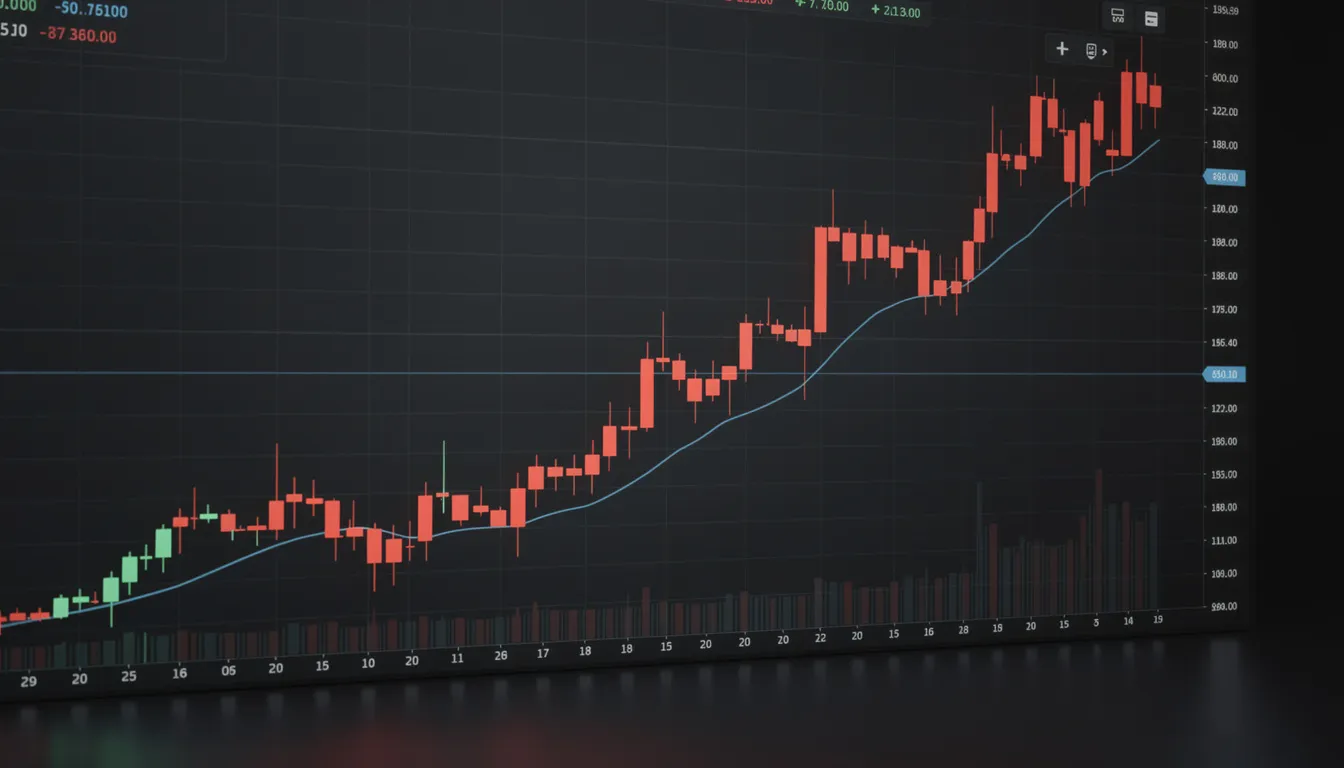
Bitcoin’s Path Into Its Seventh Major Bear Since 2018
A bitcoin bear market is conventionally defined as a 20%+ decline from a recent peak. By this measure, Bitcoin has now entered bear territory for the seventh time in roughly eight years—a reminder that volatility remains the defining characteristic of this asset class.
The move from the March 14, 2025 high (~$123,000) has unfolded in distinct acts. The first act was the retrace into the mid-$80,000s during late March and early April, which many dismissed as healthy profit taking. The second act saw a deeper flush into the $70,000s, and the third act is the current grind through the $60,000–$70,000 zone where sellers have repeatedly overwhelmed buyers at each attempted rally.
Here’s how this current drawdown compares to prior cycles:
Cycle | Peak | Trough | Drawdown |
|---|---|---|---|
2013–2015 | ~$1,150 | ~$160 | ~86% |
2017–2018 | ~$19,700 | ~$3,200 | ~84% |
2021–2022 | ~$69,000 | ~$15,500 | ~77% |
Current (2025) | ~$123,000 | ~$60,000s | ~50% so far |
The average return for Bitcoin during the 12-month period following its first close in bear market territory has been 1% over the last five years.
Despite a smaller percentage drawdown so far, the combination of duration and repeated failed rallies creates what traders call “death by a thousand cuts”—a psychologically exhausting environment where momentum fades and sentiment deteriorates with each passing week.
Traditional cycle timing expectations based on the four-year halving have not mapped neatly onto this bear phase. The assumption that 2025 would deliver a blow-off top followed by a quick correction has given way to something messier: a prolonged distribution period that tests the conviction of even the most committed holders.
The Anatomy of the Current Capitulation: Who Has Already Surrendered?
Capitulation in crypto markets manifests through forced or panic selling—visible as large realized losses on chain, spikes in open interest liquidations, and aggressive outflows from ETFs and exchanges. Understanding the identity of sellers during each capitulation act helps clarify market dynamics, as it reveals which groups have surrendered and why. Understanding who has already surrendered helps clarify who remains and what it would take for the final wave of selling to occur.
The first wave of capitulation came after the November 2024 mini-peak around $105,000–$110,000. Late 2024 buyers, many of whom entered during the ETF euphoria, sold at a loss during the early 2025 retrace into the $80,000s. On-chain data showed realized losses in the hundreds of millions daily during this period. These capitulation events can lead to a significant increase in trading volume across various platforms.
A second, more severe wave hit during February–April 2025 as bitcoin price flushed toward the low $60,000s. This time, both 2024 buyers and early 2025 “buy-the-dip” traders exited, with daily realized losses sometimes exceeding $1 billion. The collapse in futures funding rates—turning negative for extended periods—confirmed that leverage was being forcibly unwound.
The rotation of pain followed a predictable pattern:
- First, long-term holders from the “class of 2024” who bought during the spot ETF launch euphoria
- Then short term speculators who chased the parabolic move into Q1 2025
- Finally, momentum traders who had assumed the halving cycle would deliver easy gains
During the recent market stress, the composition of trading activity shifted, with large institutional transfers becoming more prominent.
Each capitulation phase has thinned out a different cohort. What remains is a market increasingly controlled by high-conviction, long-term holders with lower average cost basis—the kind of supply distribution that historically precedes major bottoms. The aftermath of capitulation events often involves a period of price stabilization and rebuilding of risk appetite.

On-Chain Evidence That We’re Repeating Bitcoin’s Most Bearish Era
On-chain metrics—realized price, long-term holder cost basis, market mean, MVRV, and drawdown duration—provide the best tools for comparing this bear period to prior extremes. Unlike price charts alone, these metrics reveal the actual pain being experienced by different holder cohorts and whether the market structure resembles prior capitulation zones. Notably, the net realized losses—representing the overall balance of gains and losses—have remained elevated for an extended period, highlighting the aggregate stress across the market.
The similarities with the 2018–2019 and late-2022 bottoms are striking:
- Extended time with price hovering just above realized price
- Multiple months of elevated realized losses that gradually decay as weak hands exit
- Long-term holder supply steadily increasing as coins transfer from weak to strong hands
- Derivatives markets showing persistent negative funding rates and falling leverage
For context, current on-chain data shows:
Metric | Approximate Level |
|---|---|
Realized Price | $55,000–$58,000 |
True Market Mean | $80,000–$82,000 |
200-Week MA | ~$58,000 |
Long-term Holder Cost Basis | ~$55,000–$60,000 |
Current spot price oscillates between the realized price (below which historically triggers deep capitulation) and the true market mean (overhead resistance where accumulated supply clusters). This “no man’s land” is precisely where Bitcoin spent months during 2018 and 2022 before ultimately breaking in one direction.
Long-term holder supply—coins held for 155+ days—is approaching levels seen near historic bottoms. This signals a transfer of coins from weak to strong hands, a necessary precondition for cycle lows but not a guarantee that the bottom is in.
To summarize this section:
- Time in drawdown now rivals 2018–2019 and 2022
- Depth of realized losses for key cohorts matches prior bear markets
- On-chain stress persists but shows signs of gradual exhaustion
- Supply dynamics increasingly resemble prior accumulation phases
Bitcoin's realized volatility peaked at approximately 156% during a recent sell-off, indicating significant market stress. The market also saw a significant increase in trading volume during the February sell-off, with aggregate spot volume reaching around $15.4 billion per day. Despite these pressures, the recent market environment is more stable than in previous cycles, as indicated by lower realized volatility compared to past events. Additionally, the market experienced a significant deleveraging event without systemic failure, demonstrating resilience in the cryptocurrency infrastructure.
The One Price Band That Matters Now: The Cost-Basis “Line in the Sand”
The market’s focus has converged on a single decisive band: the confluence of Bitcoin’s realized price, long-term holder cost basis, and multi-year moving averages in the roughly $55,000–$60,000 zone. This is the one price that matters now.
Realized price represents the average price at which all circulating Bitcoin last moved on chain—essentially the aggregate cost basis of the entire network. Historically, sustained trading below realized price has only occurred during the deepest bear market capitulations: the 2015 bottom, the December 2018 collapse, and the post-FTX crash in November 2022. In each case, the breach was short-lived but violent, marking the point of maximum pain before recovery began.
This ~$55,000–$60,000 area also aligns with:
- The 200-week moving average (~$58,000), a level that has held as support in every cycle except briefly during the 2022 FTX collapse
- The lower range of major institutional entry points from post-ETF flows in early 2024
- Key Fibonacci retracement levels from the 2022 low to the 2025 high
The scenarios anchored on this band are straightforward:
If Bitcoin holds above $55,000–$60,000: The worst of the bear is likely over. This would confirm the zone as the cycle low, setting the stage for accumulation and eventual recovery—similar to how the $16,000–$18,000 zone functioned in late 2022.
If Bitcoin breaks decisively below $55,000: The drawdown extends into truly historic territory. Some analysts project targets as low as $40,000–$49,000 in this scenario, which would represent the kind of 70%+ decline seen in prior cycles.
Everything else—macro headlines, altcoin narratives, ETF flow noise—matters less than whether this structural support holds. This is where the truth of this cycle will be determined.

Why Calendar-Based Bitcoin Cycle Models Are Failing Again
The popular “four-year halving cycle” narrative promised that each post-halving year would deliver blow-off tops followed by quick corrections, with predictable timing that investors could plan around. This model appears to be failing once again.
In this cycle, macro conditions have distorted the classic pattern:
- Sticky inflation has kept the federal reserve hawkish longer than expected
- Higher-for-longer interest rates have reduced liquidity across risk assets
- Bitcoin has traded increasingly as a high beta tech proxy, correlating with Nasdaq rather than acting as an independent asset
- Spot ETFs, while bringing institutional demand, have also introduced new selling pressure through systematic outflows during risk-off periods
Additionally, funding rates in the derivatives market have flipped from positive to negative during periods of market stress, reflecting a shift in sentiment and increased long-side pressure as leverage unwinds. Bitcoin tends to perform well when interest rates are falling, but economic uncertainty can still lead to price declines. The recent rotation away from risk assets, including Bitcoin, is often driven by broader economic concerns. Furthermore, the geopolitical environment—such as new regulations in major economies—can significantly influence Bitcoin's market dynamics.
Instead of a clean, time-based top and bottom, the market has experienced what might be called a “two-stage bear”: a long stagnation period with grinding lower highs, followed by sharper capitulation spikes. This resembles how equity bear markets often unfold—not necessarily how prior bitcoin bear markets behaved.
Time-based models fail because they ignore holder cost-basis dynamics. What actually matters is not when the halving occurred, but who owns coins at what price and at what point their conviction breaks. These cost-basis bands, not halving dates, are what anchor current market behavior.
For investors seeking clarity, the prescription is straightforward: pivot from calendar narratives to data-driven frameworks centered on realized price, long-term holder behavior, and the survival of the critical $55,000–$60,000 band. The halving provides a general guide to supply dynamics, but it cannot tell you when capitulation ends or demand returns.
Market Maturity and Volatility: How This Bear Differs from the Past
The current bitcoin bear market has ignited debate across the investment community, with many arguing that this period marks a turning point in the evolution of crypto markets. Unlike prior cycles, which were often defined by retail-driven speculation and limited liquidity, today’s environment is shaped by a new level of market maturity and volatility—driven by the growing presence of institutional investors and a more robust trading infrastructure.
One of the most striking differences is how bitcoin price now moves in tandem with broader risk assets. As institutional investors have increased their bitcoin exposure, the asset has become more sensitive to macroeconomic forces, particularly the performance of high beta tech stocks and the policy stance of the Federal Reserve. The recent decline in bitcoin price has closely mirrored sell-offs in equities and commodities, underscoring bitcoin’s new role as a mainstream risk asset rather than a niche outlier. This shift has also changed the dynamics of profit taking, as large players adjust their positions in response to global liquidity conditions and shifting risk sentiment.
ETF flows and the explosion of open interest in bitcoin futures have further transformed the landscape. In previous bear markets, spot trading dominated, and institutional involvement was minimal. Now, the rise of spot bitcoin ETFs and the deepening of futures markets have brought a wave of institutional capital—and with it, new sources of both liquidity and volatility. ETF inflows and outflows, in particular, have become a key driver of short-term price swings, as large asset managers rebalance portfolios and respond to changing market conditions. This has made the market more efficient, but also more prone to sudden, sharp moves when flows reverse or funding rates shift.
Sticky inflation has added another layer of complexity. As the Federal Reserve grapples with persistent inflation, its commitment to higher-for-longer interest rates has weighed heavily on all risk assets, including bitcoin. The resulting environment has seen a decline in both price and profit taking, as investors become more cautious and liquidity tightens across the board. This macro backdrop has amplified the volatility of the current bitcoin bear, making it distinct from prior cycles where crypto often moved independently of traditional markets.
In terms of time frame, the increased maturity and volatility of today’s crypto markets may actually compress the duration of this bear market compared to the drawn-out declines of the past. With institutional investors quick to adjust positions and sophisticated trading tools in play, many analysts believe that the market could find a bottom within the next quarter. This view is supported by a combination of technical signals—such as falling open interest and funding rates—and fundamental factors, including the exhaustion of forced selling and the stabilization of ETF flows.
The rise of artificial intelligence (AI) in trading has also left its mark. AI-powered strategies now scan vast amounts of data to identify patterns and execute trades at lightning speed, contributing to both greater market efficiency and the potential for rapid, self-reinforcing price moves. While this has improved liquidity and price discovery, it also raises the risk of flash crashes and sudden volatility spikes, as AI-driven trades can amplify momentum in either direction.
In summary, this bitcoin bear market stands apart from prior cycles due to the combination of increased market maturity, institutional participation, and heightened volatility. The interplay of ETF flows, sticky inflation, Federal Reserve policy, and AI-driven trading has created a more complex and dynamic environment—one where investors must stay nimble, informed, and ready to adapt as new challenges and opportunities emerge. As the crypto markets continue to evolve, the lessons of this period will shape how investors approach risk, value, and opportunity in the digital asset space.
What This Means for Investors: Conviction, Risk, and Positioning Around the Key Level
This is not financial advice, but rather a framework for thinking about risk and opportunity as Bitcoin flirts with its most important support band of the cycle. The security of your capital depends on understanding both the potential upside and the very real possibility of further decline.
High-conviction investors may view the $55,000–$60,000 region as the zone where prior cycles’ deepest value emerged. History argues that buying when Bitcoin trades near or below realized price has generated exceptional long-term returns—but only for those with the time frame and risk tolerance to weather potential further drawdowns of 20–30% before recovery begins.
The role of etf flows cannot be overstated. Spot ETF inflows and outflows, corporate balance-sheet allocations, and macro hedge funds using Bitcoin as a liquidity proxy all tend to cluster their bids or stops around structurally significant levels. This creates the potential for violent moves in either direction if the $55,000–$60,000 zone is tested—either a sharp bounce on institutional demand or an accelerating decline if stops trigger.
Practical considerations for putting capital to work in this environment:
- Position sizing matters more than timing—avoid concentrating risk at single entry points
- Diversification across the crypto ecosystem and into gold or other uncorrelated assets can reduce portfolio volatility
- Understand that Bitcoin’s long-term thesis (digital scarcity, global settlement layer, potential macro hedge) can coexist with severe interim volatility
- The money you allocate should reflect a time horizon measured in years, not months
Despite significant price declines, network engagement in major blockchains like Ethereum and Solana increased during the recent market stress, with a rising 30-day moving average of daily active users. Nearly half of all stablecoin settlement volume during peak stress was from large institutional transfers, highlighting the scale of institutional activity. The investment thesis for Bitcoin remains intact despite bear markets, driven by institutional adoption and regulatory developments. Bitcoin bear markets can also lead to a healthier cohort of builders and investors entering the market. The sell-off in the cryptocurrency market was driven by a combination of overleveraged positions and broader macroeconomic volatility. Importantly, the recent sell-off in cryptocurrency markets was characterized by a structural reset rather than a complete breakdown of the market.
Looking forward, two paths emerge from here. If the critical price band holds, this bear could be remembered as the last great shake-out of the cycle—the final capitulation that transferred Bitcoin from weak hands to strong before the next major bull phase. The story would echo 2018–2019 and late 2022: maximum pain followed by extraordinary gains for those who maintained conviction.
If the $55,000–$60,000 zone breaks, Bitcoin may etch a new, truly historic bearish chapter. Drawdowns of 70–80% from peak would put bitcoin price in the $30,000–$40,000 range—levels that seem unlikely today but would match the pattern of prior cycles. Even in this scenario, history suggests that capitulation eventually exhausts itself, creating the foundation for the next accumulation phase.
The one price band that matters now will determine which path unfolds. Everything else is noise.
Your Friend,
Wade