




Key Takeaways:
- Generative Engine Optimization (GEO) is emerging as a new approach in digital marketing, leveraging AI to enhance user engagement and search results.
- Traditional Search Engine Optimization (SEO) still holds significant value, particularly in keyword research and organic traffic generation.
- The future of digital visibility may not be about replacing SEO but rather integrating GEO strategies to complement existing practices.
The digital landscape is shifting faster than a chameleon on a rainbow. With the rise of Generative Engine Optimization (GEO), many marketers are left scratching their heads, wondering if traditional Search Engine Optimization (SEO) is becoming a thing of the past. The buzz around AI-generated answers and search engine algorithms has sparked debates about the future of online visibility. So, is GEO really replacing SEO, or are they destined to coexist in harmony?
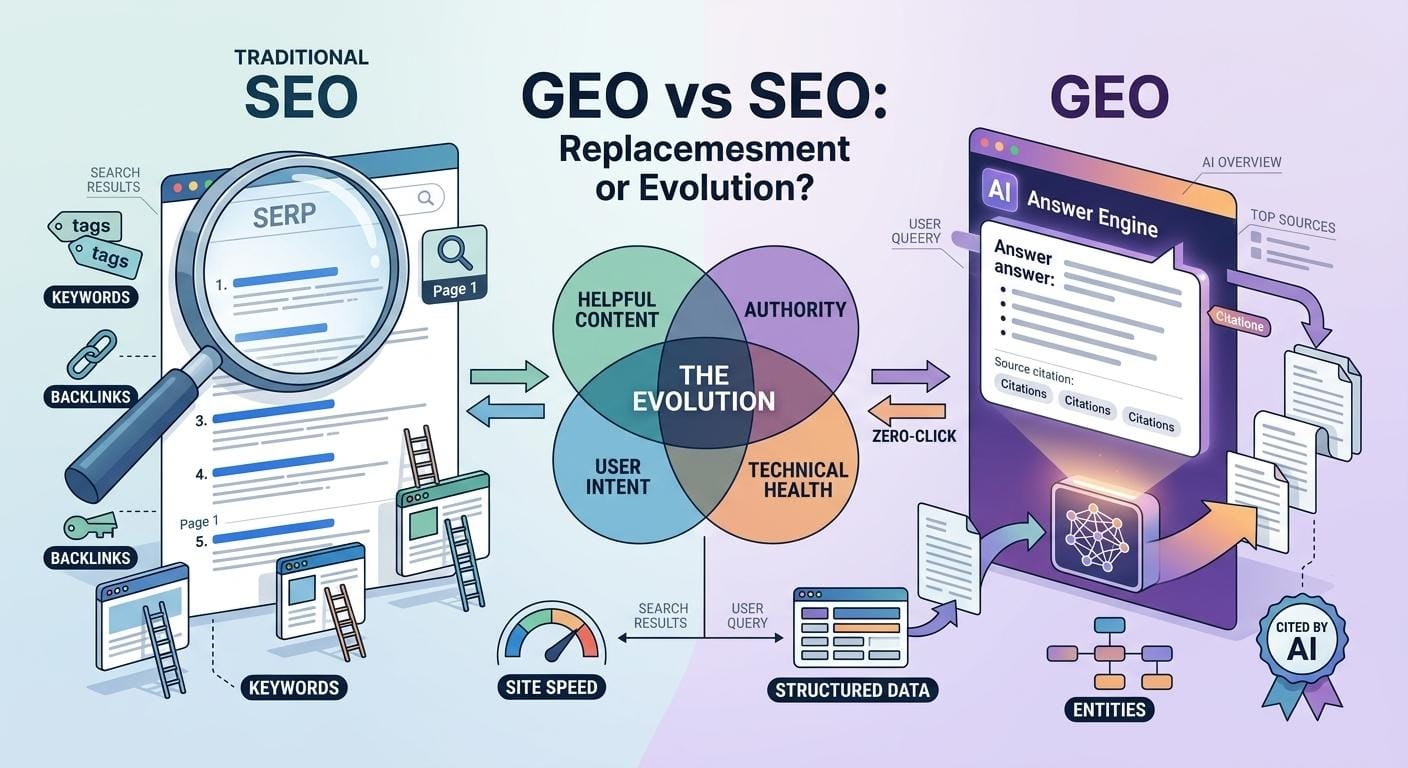
To understand this evolving dynamic, we need to dive into what GEO entails and how it contrasts with traditional SEO. GEO leverages AI models to generate content and answers that align closely with user intent. This means that instead of merely optimizing for keywords, marketers are now focusing on creating relevant content that directly addresses user queries. But does this mean that traditional SEO is on its way out? Let’s explore.
Understanding Generative Engine Optimization (GEO)
Generative Engine Optimization is a fresh approach that utilizes AI to create content and optimize search results. Unlike traditional SEO, which often relies on keyword density and matching, GEO focuses on generating AI outputs that resonate with user intent. This shift is akin to moving from a one-size-fits-all approach to a more personalized experience, where the content is crafted to meet the specific needs of the audience.
AI-powered search tools are at the forefront of this transformation. They analyze consumer behavior and preferences, allowing businesses to tailor their content strategies accordingly. For instance, platforms like Google’s AI chatbots can provide direct answers to user queries, enhancing user engagement and satisfaction. This is a game-changer for digital marketing, as it opens up new avenues for brands to connect with potential customers.
The Role of Traditional SEO
Despite the rise of GEO, traditional SEO remains a cornerstone of digital marketing. It encompasses a range of strategies aimed at improving a website's visibility on search engine results pages (SERPs). Keyword research, backlink building, and on-page optimization are just a few of the tactics that have stood the test of time. These methods are essential for driving organic traffic and ensuring that content reaches the right audience.
Moreover, traditional SEO provides a solid foundation for understanding search engine algorithms. By grasping how these algorithms function, marketers can better navigate the complexities of digital visibility. While GEO may introduce new strategies, the principles of traditional SEO still apply. It’s like having a trusty compass while exploring uncharted territories; it helps you stay on course even as the landscape changes.
GEO vs. SEO: A Comparative Analysis
When comparing GEO and SEO, it’s crucial to recognize their unique strengths. GEO excels in generating AI summaries and responses that cater to user intent, making it a powerful tool for enhancing user engagement. On the other hand, traditional SEO focuses on optimizing content for search engines, ensuring that it ranks well and attracts organic traffic.
This doesn’t mean that one is better than the other; rather, they serve different purposes. GEO can enhance the user experience by providing direct answers and relevant content, while traditional SEO ensures that this content is discoverable. The two approaches can work hand in hand, creating a comprehensive strategy that maximizes online visibility.
The Impact of AI on Search Results
AI is revolutionizing the way we approach search results. With the advent of generative AI tools, search engines can now deliver more relevant content tailored to user queries. This shift is evident in the way search results are displayed, with AI-generated outputs often taking precedence over traditional listings. For example, when users search for specific questions, they may receive direct answers from AI models rather than a list of links.
This change is reshaping consumer behavior, as users increasingly rely on search engines for quick answers. The rise of answer engines means that businesses must adapt their strategies to ensure they are providing the information users seek. This is where GEO shines, as it focuses on creating content that directly addresses user needs, enhancing brand recognition and engagement.
The Importance of User Intent
Understanding user intent is paramount in both GEO and traditional SEO. In the past, marketers often focused solely on keyword matching, but this approach is becoming outdated. Today, it’s essential to consider what users are actually looking for when they type a query into a search engine. This shift in focus allows businesses to create content that resonates with their audience, ultimately driving higher engagement and conversion rates.
For instance, if a user searches for “best coffee shops near me,” they are likely looking for immediate recommendations rather than a list of articles about coffee. By optimizing for user intent, businesses can ensure that their content meets the needs of potential customers, leading to increased click-through rates and organic traffic.
The Rise of AI-Powered Search Tools
AI-powered search tools are becoming increasingly prevalent in the digital marketing landscape. These tools analyze vast amounts of data to provide insights into consumer behavior and preferences. By leveraging these insights, businesses can create more effective content strategies that align with user intent.
For example, platforms like Google’s AI chatbots can provide instant answers to user queries, enhancing the overall search experience. This shift towards AI-generated responses means that businesses must adapt their strategies to ensure they are visible in this new landscape. GEO tools can help marketers create content that is not only relevant but also optimized for AI-driven search results.
Strategies for Success in the GEO Era
To thrive in the era of Generative Engine Optimization, businesses must adopt new strategies that leverage AI capabilities. This includes focusing on content generation that aligns with user intent and utilizing AI tools for keyword research and optimization. By embracing these changes, marketers can enhance their online visibility and connect with potential customers more effectively.
Additionally, businesses should consider integrating structured data into their content strategies. Structured data helps search engines understand the context of content, making it easier for AI models to generate relevant responses. This can lead to improved search rankings and increased visibility in search results.
The Future of Digital Marketing
As we look to the future, it’s clear that the landscape of digital marketing is evolving. The rise of GEO and AI-powered search tools is reshaping how businesses approach online visibility. However, this doesn’t mean that traditional SEO is obsolete. Instead, the two approaches can complement each other, creating a more holistic strategy for reaching potential customers.
Marketers must stay informed about the latest trends and developments in both GEO and traditional SEO. By doing so, they can adapt their strategies to meet the changing needs of consumers and ensure that their content remains relevant in an increasingly competitive landscape.
The Importance of Keyword Research
Keyword research remains a critical component of both GEO and traditional SEO. Understanding which keywords are relevant to your audience allows you to create content that resonates with their needs. While GEO focuses on generating AI outputs, traditional SEO emphasizes the importance of keyword density and matching.
By combining these approaches, businesses can create content that is not only optimized for search engines but also tailored to user intent. This dual focus can lead to improved search rankings and increased organic traffic, ultimately driving business success.
Enhancing User Engagement
User engagement is a key metric for measuring the success of any digital marketing strategy. In the GEO era, businesses must prioritize creating content that captures the attention of their audience. This means focusing on relevant topics, providing valuable information, and utilizing AI tools to enhance the user experience.
For example, incorporating interactive elements such as quizzes or polls can increase user engagement and encourage visitors to spend more time on your site. By fostering a sense of community and interaction, businesses can build brand loyalty and drive repeat visits.
The Role of Content Generation
Content generation is at the heart of both GEO and traditional SEO. In the past, marketers often relied on keyword-heavy articles to drive traffic. However, with the rise of AI-generated responses, the focus has shifted towards creating high-quality, relevant content that addresses user needs.
This shift means that businesses must invest in content creation that goes beyond mere keyword optimization. By producing valuable, informative content, brands can establish themselves as thought leaders in their industry and enhance their online visibility.
The Challenge of Adapting to Change
Adapting to the changes brought about by GEO and AI-powered search tools can be a challenge for many businesses. The rapid pace of technological advancement means that marketers must stay informed and be willing to experiment with new strategies. This can be daunting, but it’s essential for staying competitive in the digital landscape.
To overcome these challenges, businesses should invest in training and resources that help their teams understand the latest trends in digital marketing. By fostering a culture of continuous learning, organizations can better equip themselves to navigate the complexities of the GEO era.
The debate over whether Generative Engine Optimization is replacing traditional SEO is ongoing. While GEO introduces innovative strategies that enhance user engagement and search results, traditional SEO still plays a vital role in driving organic traffic and ensuring content visibility. The future of digital marketing lies in integrating both approaches, allowing businesses to maximize their online presence and connect with potential customers effectively.

1. What is Generative Engine Optimization (GEO)?
Generative Engine Optimization (GEO) is a digital marketing strategy that utilizes AI to generate content and optimize search results based on user intent, moving beyond traditional keyword-focused approaches.
2. How does traditional SEO differ from GEO?
Traditional SEO focuses on optimizing content for search engines using keyword density and matching, while GEO emphasizes creating relevant content that directly addresses user queries through AI-generated responses.
3. Can businesses benefit from using both GEO and traditional SEO?
Yes, businesses can benefit from integrating both GEO and traditional SEO strategies. This combination allows for improved online visibility, enhanced user engagement, and a more comprehensive approach to digital marketing.
Your Friend,
Wade