





Start, Stop, Keep: The 2026 Entrepreneur Reset
The Start–Stop–Keep framework is one of the most powerful tools for entrepreneurs who want clarity without complexity. Strategic coaching has long championed the idea that growth comes not from doing more, but from doing the right things—and eliminating everything else. In 2026, this matters more than ever.
To create a winning strategy, entrepreneurs need to focus on clarity, effective systems, and disciplined execution that moves both their business and life forward. Having fixed systems and processes in place is essential to prevent future regret and to support true freedom and success.
This article is written from the perspective of a growth-focused entrepreneur applying Strategic Coach thinking. It’s not official Strategic Coach content, but rather a practical application of their philosophy for the year ahead.
The goal is simple: help you decide what to start doing, what to stop doing, and what to keep doing to create runway for 2026–2030.
Here’s the 2026 context that makes this urgent:
- AI acceleration is reshaping every industry, creating both leverage and noise
- Interest rates remain elevated compared to the 2020–2021 era
- Digital marketing channels are increasingly crowded and expensive
- Most people are overwhelmed, which creates an opportunity for those with discipline
Rely on your intuition and experience, but don’t hesitate to seek inspiration from coaches, leaders, and peers. Reading books or thought leadership resources is also highly recommended to support your learning, decision-making, and personal growth as you plan strategically for 2026.
Each section below gives concrete, strategic examples—not vague self-help. As you read, make your own Start/Stop/Keep list. By the end, you’ll have a framework to act on tomorrow.
Developing a Winning Strategy for 2026
As we step into 2026, most people in business are searching for more ideas and a strategy that delivers real growth and progress. The hard part isn’t ambition—it’s building momentum without getting lost in complexity or noise. To create a winning strategy, entrepreneurs need to focus on clarity, effective systems, and disciplined execution that moves both their business and life forward.
Start by building a framework that keeps your team aligned and your priorities clear. A well-structured plan, backed by honest reflection and regular review, helps you avoid distractions and stay focused on what matters most. The right tools and habits—like weekly planning, protected time for deep work, and simple scorecards—quietly build momentum and protect you from overwhelm.
Leadership in 2026 means having the courage to act on your vision, even when the challenge feels daunting. Rely on your intuition and experience, but don’t hesitate to seek inspiration from coaches, leaders, and peers. Motivation and freedom come from consistent action, not just big ideas. Make time each week to reflect on your progress, adjust your plan, and talk openly with your team about what’s working and what needs to change.
Don’t miss the importance of human connection and emotion in your business strategy. Building strong relationships with clients, team members, and your wider community creates lasting value and resilience. Authority and vision are essential for confidently leading your company, and scaling with intention ensures you protect what matters as you grow.
Social media platforms like Facebook remain powerful tools for sharing your story, building authority, and engaging with your audience. Use these channels to post honest, inspiring content that reflects your values and expertise. By doing so, you’ll attract clients who align with your mission and create a loyal community around your business.
To develop a winning strategy for 2026, reflect on your past performance, identify areas for improvement, and create a plan that leverages your unique skills and strengths. Discipline, courage, and a willingness to adapt are the keys to sustained performance and progress. As you set your priorities for the week ahead, don’t hesitate to comment, ask for feedback, or talk to someone who can help you clarify your vision.
Here’s a simple framework to get started:
- Identify your core values and vision for your business.
- Assess your current systems and processes, and pinpoint areas for improvement.
- Create a plan for scaling—covering marketing, sales, and client service strategies.
- Develop a content calendar to showcase your authority and expertise.
- Engage with your audience on social media, building a community around your business.
By following these steps and staying focused on your goals, you’ll develop a strategy that drives growth, creates momentum, and positions your business for success in 2026 and beyond. Take the first step today—reflect, plan, and act with intention. The world is full of opportunity, and with the right mindset and support, you can confidently lead your business to new heights.
What To Start Doing In 2026
Your “Start” items should be few but high leverage. Strategic Coach emphasizes Unique Ability and 10x growth—the idea that you should only add activities that align with your greatest strengths and amplify your results.
Here’s what to start:
Start quarterly thinking days
Block four days in 2026 dedicated to strategy, not operations: January 5, April 4, July 3, and October 2. These days are for reflection on progress, recalibrating goals, and making decisions about the next 90 days. Most entrepreneurs never take time to think. This habit alone can shift your trajectory.
Start a written decision filter
Before any major 2026 project, create a one-page plan that defines:
- Purpose: Why are you doing this?
- Ideal outcome: What does success look like?
- Success criteria: How will you measure it?
- First five actions: What happens in week one?
This mirrors Strategic Coach’s Impact Filter concept. No project should begin without clarity on these points.
Start measuring entrepreneurial freedom
Stop tracking revenue alone. Track freedom in four dimensions monthly:
Dimension | What to Measure |
|---|---|
Time | Hours worked on your terms vs. reactive hours |
Money | Cash reserves, profit margin, personal draw |
Relationships | Quality of clients, team, and personal connections |
Purpose | Alignment between daily work and long-term vision |
This gives you an honest view of whether your business is serving your life or consuming it.
Start “No-Tool Days” once per week
Dedicate one day each week to working on your business, not in it. Use this time to build systems, refine your offer, or create marketing assets. If you’re the one doing all the delivery, you have a job, not a company.
Start an AI-augmented workflow
By Q1 2026, integrate AI into your content creation, email drafting, and documentation. Concrete examples:
- Use AI to draft proposals and customize them in 15 minutes instead of 2 hours
- Generate first drafts of SOPs that your team can refine
- Create email sequences and follow-ups at scale
This creates leverage most entrepreneurs miss because they dismiss AI as hype rather than a tool.
Start packaging your intellectual property
By mid-2026, capture your frameworks, checklists, and naming conventions into repeatable products or programs. If ideas stay in your head, they die there. Package them into something clients can buy or your team can deliver without you.

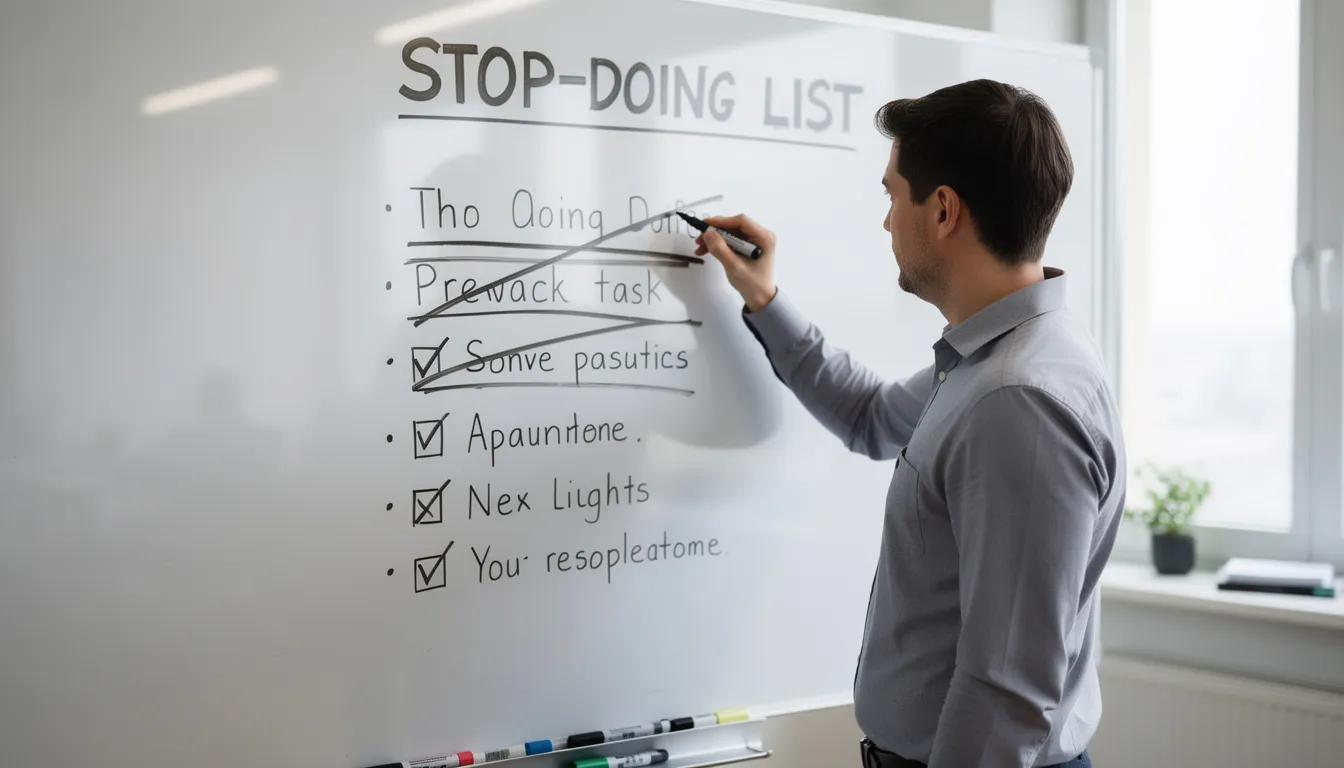
What To Stop Doing In 2026
“Stop” decisions create more growth than most “Start” decisions. Strategic Coach focuses heavily on eliminating energy drains—activities that pull you away from your Unique Ability and trap you in tasks anyone else could do.
Here’s what to stop:
Stop low-value admin tasks by March 31, 2026
Set a hard deadline. Identify every task below your skill level and delegate, automate, or eliminate it:
- Manual invoicing and payment chasing
- Calendar scheduling and juggling
- Data entry and basic reporting
- Email inbox management
These tasks feel productive but carry zero value relative to what you could be doing instead.
Stop custom, one-off projects
If you find yourself constantly creating bespoke solutions for every client, you don’t have a business—you have a practice that exhausts you. Replace custom work with standardized packages and clear boundaries. The hard part is saying no. Do it anyway.
Stop reactive email and messaging habits
Checking messages every five minutes destroys focus and creates overwhelm. By May 2026, move to 2–3 scheduled blocks per day for communication. Let clients and team know your response windows. Protect your execution time.
Stop working with misaligned clients
Create a “no more” list for 2026. Define the patterns you refuse to accept:
- Late payers
- Scope creep without additional budget
- Values misalignment
- Clients who drain your team’s motivation
Enforce this list. One bad client costs you three good ones in energy and opportunity.
Stop starting projects without a one-page plan
No 2026 initiative should begin without clarity on why, what success looks like, and the first five actions. If you can’t articulate these on a single page, the project isn’t ready. This discipline prevents the project graveyard that haunts most entrepreneurs.
Stop comparing yourself to social media highlight reels
The posts you see on Facebook and LinkedIn are curated. They miss the struggle. Instead, track your own scorecards and 90-day wins. Your story matters more than someone else’s carefully edited version. Quietly track your progress and let results speak.
What To Keep Doing In 2026
“Keep” items protect compounding gains. Strategic Coach emphasizes momentum and confidence—when something works, don’t abandon it for the next shiny object. Refine it.
Here’s what to keep:
Keep marketing channels with proven ROI
If email, referrals, or a specific social platform delivered results in 2024–2025, double down on consistency in 2026. Don’t chase new channels out of boredom. The value is in execution over time, not in switching tools every quarter.
Keep regular client review conversations
Maintain quarterly or biannual review calls with your best clients. These conversations uncover new opportunities, deepen relationships, and generate referrals. If you rely on new leads alone, you miss the compounding value of existing relationships.
Keep and refine existing scorecards
If you already have a simple dashboard or scorecard, don’t abandon it for a new tool. Refine what you have. Switching systems wastes time and breaks accountability. The answer isn’t a new tool—it’s consistent use of the current one.
Keep a weekly “wins” ritual
Every Friday, record your wins from the week. Do this solo or with your team. This ritual feeds entrepreneurial confidence and creates a record of progress that combats the emotion of feeling stuck.
Keep time blocked for health and recovery
Sleep, workouts, and days off are not luxuries—they’re assets. Structure your schedule to protect them. If you sacrifice recovery for short-term speed, you’ll fail to sustain the energy required for long-term success.
The theme here is stability and refinement. Don’t start over. Preserve what compounds.
Applying The Strategic Coach Strategy Lens To Your 2026 Plan
Strategic Coach concepts like Unique Ability, Free Days, Focus Days, and Buffer Days provide the structure for turning Start/Stop/Keep into a working system. Here’s how to apply them.
Map each decision to your Unique Ability
Your Unique Ability is work you excel at, love doing, and gain energy from. For every 2026 decision:
- Start what aligns with your Unique Ability
- Stop what distracts from it
- Keep what supports your best contribution
If you’re not clear on your Unique Ability, that’s the first problem to solve.
Design your calendar for 2026
Strategic Coach divides days into three types:
Day Type | Purpose | Example Activities |
|---|---|---|
Focus Days | Revenue-generating work | Client delivery, sales, high-value creation |
Buffer Days | Systems and preparation | Planning, admin, team development |
Free Days | Complete rest and recovery | No work, no email, full disconnection |
Dedicate specific days each week to each category. Leaders who scale their company protect Focus Days and never skip Free Days.
Create a one-page 2026 Strategic Snapshot
Build a simple document with:
- Three Starts (with measurable outcomes by December 31, 2026)
- Three Stops (with deadlines for elimination)
- Three Keeps (with consistency targets)
Example for an agency owner:
Category | Item | Outcome |
|---|---|---|
Start | Quarterly thinking days | Four completed by year-end |
Start | AI proposal workflow | 50% time reduction on proposals |
Start | Weekly team scorecard review | Team accountability established |
Stop | Manual invoicing | Automated by March 31 |
Stop | One-off custom projects | Zero accepted after Q1 |
Stop | Daily inbox reactivity | Two blocks per day by May |
Keep | Email newsletter | Weekly send maintained |
Keep | Client quarterly reviews | 100% completion rate |
Keep | Friday wins ritual | 48+ weeks completed |
This framework gives you authority over your year instead of letting the world dictate your priorities.

Turning Your 2026 Decisions Into Daily Momentum
Decisions only matter if they show up in daily and weekly behavior. A plan without execution is inspiration without impact. Here’s how to translate your Start/Stop/Keep list into action.
Create a 12-week plan for Q1 2026
Break each Start/Stop/Keep into specific weekly actions and constraints:
- Week 1: Block all four quarterly thinking days on your calendar
- Week 2: Draft your one-page decision filter template
- Week 3: Automate invoicing or delegate to team
- Week 4: Communicate email response windows to clients
Twelve weeks is enough time for meaningful progress without losing urgency.
Establish a weekly review ritual
Every Friday in 2026, answer three questions:
- What did I start this week that moved me forward?
- What did I protect (keep) that maintains momentum?
- What did I actively stop or say no to?
This practice creates accountability without needing coaches or external pressure. It’s a habit that compounds.
Use simple tools
You don’t need complexity. Use:
- Calendar blocks for protected time
- A single checklist for weekly commitments
- A short written commitment for each 90-day period
Visibility drives execution. If your plan isn’t somewhere you see daily, it won’t drive behavior.
Revisit at quarter-end
At the end of each quarter in 2026, review your Start/Stop/Keep list based on results, not feelings. What worked? What needs adjustment? What should you add or remove? This reflection prevents drift and ensures your strategy evolves with reality.
The choice in front of you
December 31, 2026 is coming whether you prepare or not. The difference between regret and relief is a few intentional decisions made now.
You can act with courage and intention, or you can let the year happen to you like it does to most people.
Make your Start/Stop/Keep list this week. Block your first quarterly thinking day. Talk to your team about what you’re changing.
The environment will be noisy. The challenge will be real. But freedom belongs to entrepreneurs who plan their growth and have the discipline to follow through.
Be grateful for the clarity you’ve gained here. Now go create the 2026 you’ll be proud of.
Your Friend,
Wade