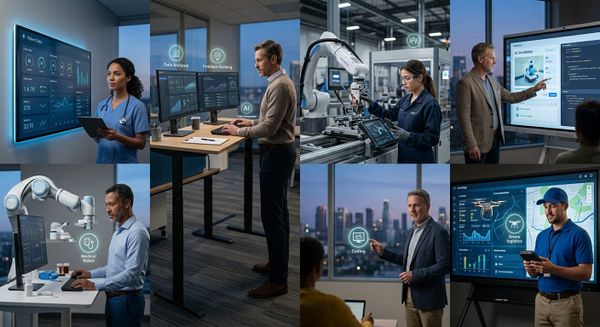




Key Takeaways:
- AI’s Impact on Employment: Certain jobs, particularly in customer service and data entry, are at high risk of being replaced by AI tools.
- AI Exposed Occupations: Administrative and clerical support roles—such as data entry specialists, office clerks, and payroll processors—are among the most AI exposed occupations, with risk ranges from 80% to 95%.
- Demographics of Exposure Among American Workers: Among American workers, those in the most exposed occupations are more likely to be female (16 percentage points higher than in jobs with zero exposure) and earn about 47% more than those in jobs with zero AI exposure.
- Young Workers at Risk: The younger workforce, often in entry-level positions, faces significant exposure to AI-driven job losses.
- Evolving Job Landscape: While some roles may vanish, new opportunities will emerge, requiring adaptability and new skills.
The Rise of AI: A Double-Edged Sword
Artificial Intelligence is like that friend who shows up uninvited to a party, takes over the music, and suddenly everyone is dancing to a different tune. While AI can streamline processes and boost productivity, it also raises eyebrows about job security. The question on everyone’s lips is: which jobs are most exposed to the AI labor market? Spoiler alert: it’s not just the folks in sci-fi movies who should be worried.
As we dive into this topic, let’s keep in mind that AI isn’t just a futuristic concept; it’s already here, shaking hands with various industries. From customer service representatives to financial analysts, many roles are feeling the heat. The Federal Reserve Bank has even noted that certain job tasks are more exposed than others, leading to a potential shake-up in employment levels.
Researchers assess affected employment by analyzing a job's exposure to AI, which is determined by the percentage of its tasks that could potentially be automated. However, there is a significant gap between AI's theoretical capabilities and its actual deployment in the workforce. For example, a study found that while AI could theoretically perform 94% of tasks in computer and math occupations, it currently covers only about a third of those tasks in practice.
Customer Service Representatives: The Frontline Warriors
Customer service representatives are like the unsung heroes of the corporate world, fielding customer inquiries and resolving issues faster than you can say “AI takeover.” However, with AI tools like chatbots and virtual assistants on the rise, these workers are facing a tough battle. Customer service representatives follow closely in terms of AI exposure, with about 70% of their tasks exposed to AI capabilities. Imagine a world where your customer service rep is a robot that never needs a coffee break—sounds appealing, right?
The suggestive evidence from previous research indicates that customer service roles are among the most exposed occupations. AI chatbots and voice agents can now handle 60% to 80% of standard customer service queries. Jobs most likely to be affected or replaced by AI include customer service representatives, data entry clerks, basic content writers, paralegals, and financial analysts. Professions highly susceptible to AI include clerks, telemarketers, customer service representatives, and junior programmers. With AI capable of handling routine inquiries and even grading homework, the future looks a bit bleak for those in this field. But fear not! While some jobs may disappear, new jobs will emerge, requiring a different skill set. So, it’s time to dust off those resumes and get ready for a career pivot.
Data Entry Keyers: The Unsung Victims
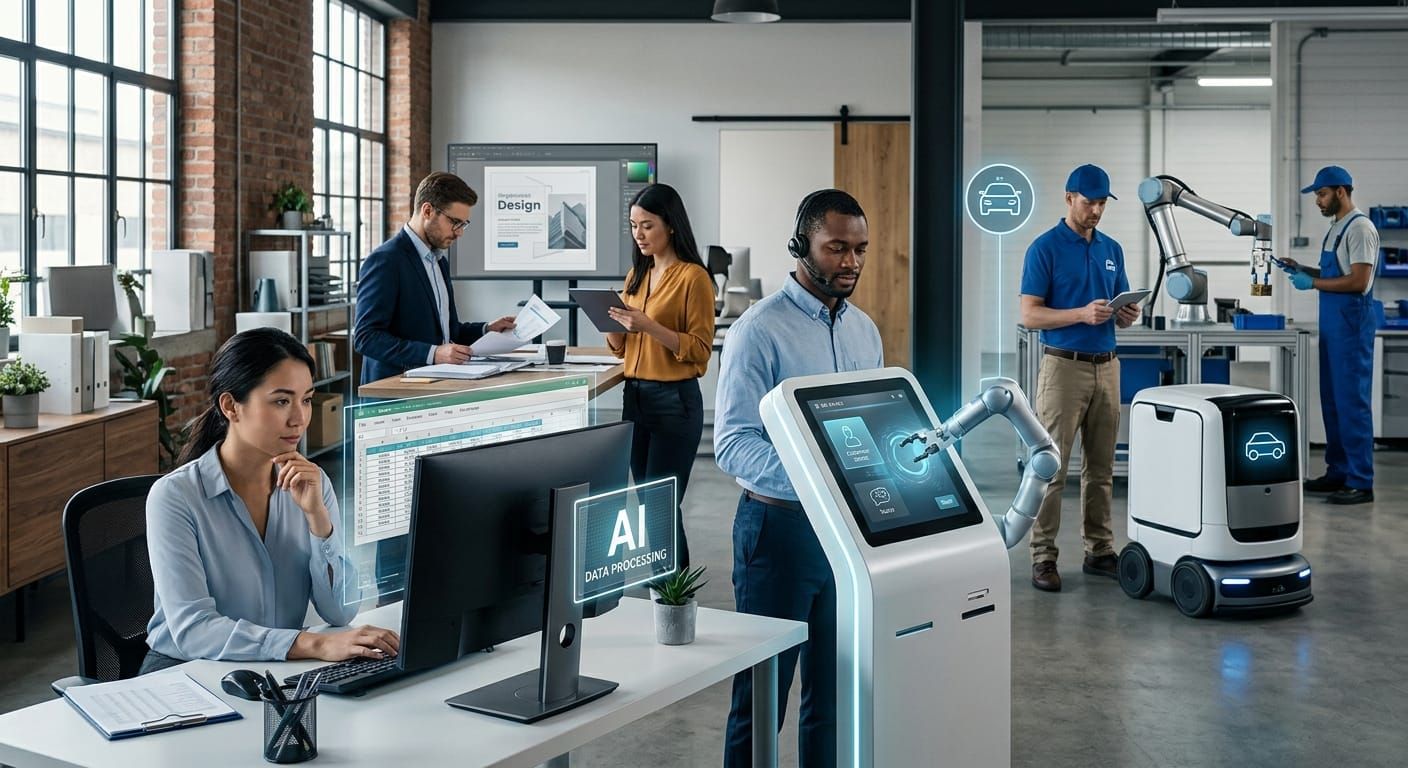
Data entry keyers are the unsung heroes of the office world, tirelessly typing away to keep information organized. However, data entry keyers are among the most easily replaced roles due to the repetitive and rule-based nature of their tasks. In fact, 67% of their tasks are highly exposed and susceptible to automation by AI. Jobs requiring repetitive, rule-based tasks and structured data processing are primarily affected by AI advancements as of 2026. High exposure roles in administrative support, such as data entry, typically exceed 90% risk due to AI automation. With industrial robots and AI algorithms capable of processing data faster than a caffeinated intern, data entry roles are at high risk of being phased out.
The economic innovation group has highlighted that these exposed workers are particularly vulnerable to job losses. As AI continues to evolve, the tasks associated with data entry are becoming increasingly automated. So, if you’re a data entry keyer, it might be time to consider a career change before you find yourself in a job that’s as outdated as a flip phone.
Financial Analysts: The Numbers Game
Financial analysts and investment analysts are the number crunchers of the corporate world, analyzing data to help businesses make informed decisions. However, with AI’s theoretical capabilities in processing vast amounts of data, these professionals are also feeling the heat. In fact, financial and investment analysts have about 57% of their tasks exposed to AI, indicating a significant risk of automation. Imagine a world where your financial analyst is an AI that can predict market trends with pinpoint accuracy—scary, right?
The labor statistics show that financial analysts and investment analysts are among the exposed occupations, with AI tools increasingly taking over tasks that were once the bread and butter of these professionals. AI excels at automating tasks involving data processing, pattern recognition, and content generation, which significantly disrupts white-collar roles. Pattern matching is a key strength of machine learning, making it suitable for tasks like underwriting and fraud detection. While it’s true that AI can enhance productivity gains, it also raises questions about job security. So, if you’re a financial analyst or investment analyst, it might be time to brush up on your skills and explore new avenues before the robots take over.
White Collar Workers: The Office Dilemma
White collar workers have long enjoyed the comforts of office life, complete with coffee breaks and water cooler gossip. However, the rise of AI is turning this cozy environment into a battleground. Many white collar jobs are at risk of being replaced by AI, especially those that involve repetitive tasks. Increasingly, 'knowledge work'—high-skilled professions involving analysis, writing, and other cognitive activities—are also being affected by AI automation. Generative AI tools are now capable of creating text, code, and visuals, which impacts professions in content creation and translation. Routine content creation tasks such as basic copywriting and technical writing are already facing declines due to these AI tools. Think about it: why hire a human when a machine can do the same job without needing a salary?
The observed exposure of white collar jobs to AI is a growing concern, with many professionals wondering if their roles will survive the next decade. While some tasks may be automated, it’s essential to remember that AI can also create new opportunities. The key is to adapt and evolve, ensuring that you’re not left behind in the dust of technological advancement.
Young Workers: The New Generation at Risk
Young workers often find themselves in entry-level positions, which are typically the first to be affected by AI exposure. With many tasks being automated, these workers face a unique challenge. It’s like being the last one picked for a team—nobody wants to be the one left out when the robots come to play.
The data shows that young workers are among the most exposed to AI job losses, particularly in roles like customer service and data entry. Research shows that young workers aged 22 to 25 in high AI-exposure occupations have experienced a 14% drop in job finding rates compared to previous years, indicating potential early effects of AI on employment opportunities for this demographic. In response to these changes, some young workers may remain in their existing jobs, switch to different jobs, seek other jobs, or return to education to adapt to the evolving labor market. Historical trends show that while some jobs are lost due to technological advancements, new opportunities often arise, suggesting that adaptability can lead to new job creation in the long run. So, young workers should embrace the change and be ready to learn new skills to stay relevant in the job market.
The Great AI Job Swap: Who's Getting the Short End of the Stick?
Picture this: a customer service representative, once the shining star of the office, now finds themselves in a heated debate with a chatbot named “Chad.” Chad, with his impeccable grammar and 24/7 availability, is stealing the spotlight. Our hero, the customer service rep, is left wondering if they should start taking notes from Chad on how to handle customer inquiries or just accept that their job is now a game of hide-and-seek. Spoiler alert: Chad always wins.
Among the most exposed jobs to AI, computer programmers top the list, with approximately 75% of their tasks potentially being automated. Medical record specialists and market research analysts are also among the most exposed jobs, with 67% and 65% of their tasks exposed to AI, respectively.
Meanwhile, data entry keyers are having their own existential crisis. Imagine typing away, feeling like a human typewriter, only to realize that an industrial robot is now your competition. These machines can churn out data faster than you can say “job security.” The irony? The very tasks that once defined your job are now being performed by a glorified calculator. Talk about a plot twist!
The AI Job Security Circus: Tightrope Walking on a High Wire
Welcome to the circus of job security, where white-collar workers are juggling their careers while balancing on a tightrope of uncertainty. One minute, they’re sipping coffee and discussing quarterly reports; the next, they’re dodging the looming shadow of AI tools that threaten to take their jobs. It’s like watching a magician pull a rabbit out of a hat, except the rabbit is your paycheck disappearing into thin air.
And let’s not forget about the young workers, who are entering the job market with dreams as big as their student loans. They’re stepping into a world where AI is not just a buzzword but a reality that could leave them jobless faster than you can say "economic innovation." With every new AI tool, they’re left wondering if they should be brushing up on their coding skills or just perfecting their resume for the next round of layoffs. It’s a wild ride, folks!
The Role of Education: A Lifeline for Workers
Education plays a crucial role in helping workers navigate the changing job landscape. As AI continues to evolve, workers must adapt by acquiring new skills and knowledge. It’s like trying to ride a bike uphill—without the right training, you’re bound to fall off.
Research indicates that workers with more education are better equipped to handle the challenges posed by AI. Those who invest in their education and skill development are more likely to thrive in an AI-driven job market. So, if you’re looking to future-proof your career, consider pursuing additional training or education to stay ahead of the curve.
The Future of Work: Embracing Change
The future of work is like a rollercoaster ride—full of twists, turns, and unexpected drops. As AI continues to reshape the job market, workers must embrace change and be willing to adapt. It’s not just about surviving; it’s about thriving in a world where AI is becoming increasingly prevalent.
While some jobs may be at risk, new opportunities will emerge, requiring a different set of skills. The key is to stay informed and be proactive in your career development. By embracing change and continuously learning, you can position yourself for success in the ever-evolving job market.
The Great AI Debate: Job Losses vs. Job Creation
The debate surrounding AI and its impact on employment is as heated as a chili cook-off. On one side, you have those who argue that AI will lead to massive job losses, while on the other side, proponents believe that AI will create new opportunities. So, who’s right? The truth is likely somewhere in the middle. Despite fears of job losses due to AI, research indicates that there is currently limited evidence that AI has significantly affected employment levels in the U.S.
While it’s true that certain jobs are at risk of being replaced, AI also has the potential to create new roles that we can’t even imagine yet. The key is to focus on the skills that will be in demand in the future and be prepared to adapt. After all, the only constant in life is change, and the job market is no exception.
The Role of AI Tools: A Double-Edged Sword
AI tools are like a double-edged sword—while they can enhance productivity and efficiency, they also pose a threat to certain job roles. For example, customer service representatives may find themselves competing with chatbots that can handle inquiries 24/7 without breaking a sweat. It’s like bringing a knife to a gunfight—good luck winning that battle!
AI's current utilization is primarily within professional settings, especially in roles involving tasks like coding, customer service, and data entry. However, many roles such as healthcare providers, educators, and skilled trades are among the safest professions with low susceptibility to AI, as these jobs remain largely outside the scope of automation in typical professional settings.
The exposure of workers to AI tools varies by industry and job function. Some roles may be more susceptible to automation, while others may benefit from AI assistance. The key is to understand how AI tools can complement your work rather than replace it. By leveraging AI to enhance your skills, you can stay relevant in an increasingly automated world.
The Importance of Adaptability: A Survival Skill
In a world where AI is reshaping the job market, adaptability is the name of the game. Workers must be willing to learn new skills and embrace change to stay relevant. It’s like trying to catch a wave—if you’re not ready to ride it, you’ll get wiped out.
The ability to adapt is crucial for workers in exposed occupations. Those who can pivot and learn new skills will be better positioned to thrive in an AI-driven job market. So, whether it’s taking a course, attending workshops, or seeking mentorship, investing in your adaptability is essential for long-term success.
The Role of Government: A Helping Hand
As the job market evolves, the role of government becomes increasingly important. Policymakers must consider how to support workers who are at risk of job losses due to AI. It’s like being a lifeguard at the beach—if you see someone struggling, you jump in to help.
Government initiatives can play a crucial role in providing training and support for workers in exposed occupations. By investing in education and skill development programs, governments can help workers transition to new roles and ensure that they’re not left behind in the AI revolution.
The Bottom Line: Embracing the Future
As we navigate the changing job landscape, it’s essential to embrace the future with open arms. While certain jobs may be at risk, new opportunities will arise, requiring a different set of skills. The key is to stay informed, be adaptable, and invest in your education to thrive in an AI-driven world.
The journey ahead may be filled with challenges, but it’s also an opportunity for growth and innovation. By embracing change and continuously learning, you can position yourself for success in the ever-evolving job market.
The rise of AI is reshaping the job market, with ai exposed occupations and the most common jobs facing significant risk of automation and AI-driven change. Customer service representatives, data entry keyers, and financial analysts are among the most affected roles, as these ai exposed occupations are particularly vulnerable to task automation. Many jobs are at risk of automation and AI-driven change, making adaptability and upskilling increasingly important for workers. Affected employment spans across various sectors, highlighting the need for early warning systems and frameworks to monitor which jobs are most at risk of displacement by AI technology. Young workers, often in entry-level positions, face significant exposure to AI-driven job losses. However, while some jobs may vanish, new opportunities will emerge, requiring adaptability and new skills. Education plays a crucial role in helping workers navigate this changing landscape, and government support can provide a safety net for those at risk. Embracing change and investing in personal development will be key to thriving in an AI-driven world.

Q1: Which jobs are most exposed to AI?
A1: Jobs such as customer service representatives, data entry keyers, financial analysts, computer programmers, and medical records specialists are among the most exposed to AI, as many of their tasks can be automated. In contrast, motorcycle mechanics are an example of a profession with limited AI automation coverage due to the physical and manual nature of their work. Anthropic researchers, such as Massenkoff and McCrory, develop metrics like 'observed exposure' to evaluate AI's impact on workplace tasks and worker displacement.
Q2: How can workers prepare for AI job displacement?
A2: Workers can prepare by investing in education and skill development, staying informed about industry trends, and being adaptable to new roles and technologies. Researchers often present their findings on AI's impact in working papers, and Sam Manning's research at GovAI analyzes how AI exposure affects occupational vulnerability and adaptability, with a particular focus on women and clerical staff.
Q3: Will AI create new jobs?
A3: Yes, while some jobs may be lost due to AI, new opportunities will emerge that require different skills, making adaptability and continuous learning essential for success. Claude conversations are used to estimate productivity gains and evaluate AI's relevance across occupations. Unemployment rates are a key metric for assessing AI's impact on employment, and the Great Recession is often used as a benchmark to compare how large-scale economic downturns affected unemployment rates for certain groups, providing context for potential impacts from technological disruptions.