

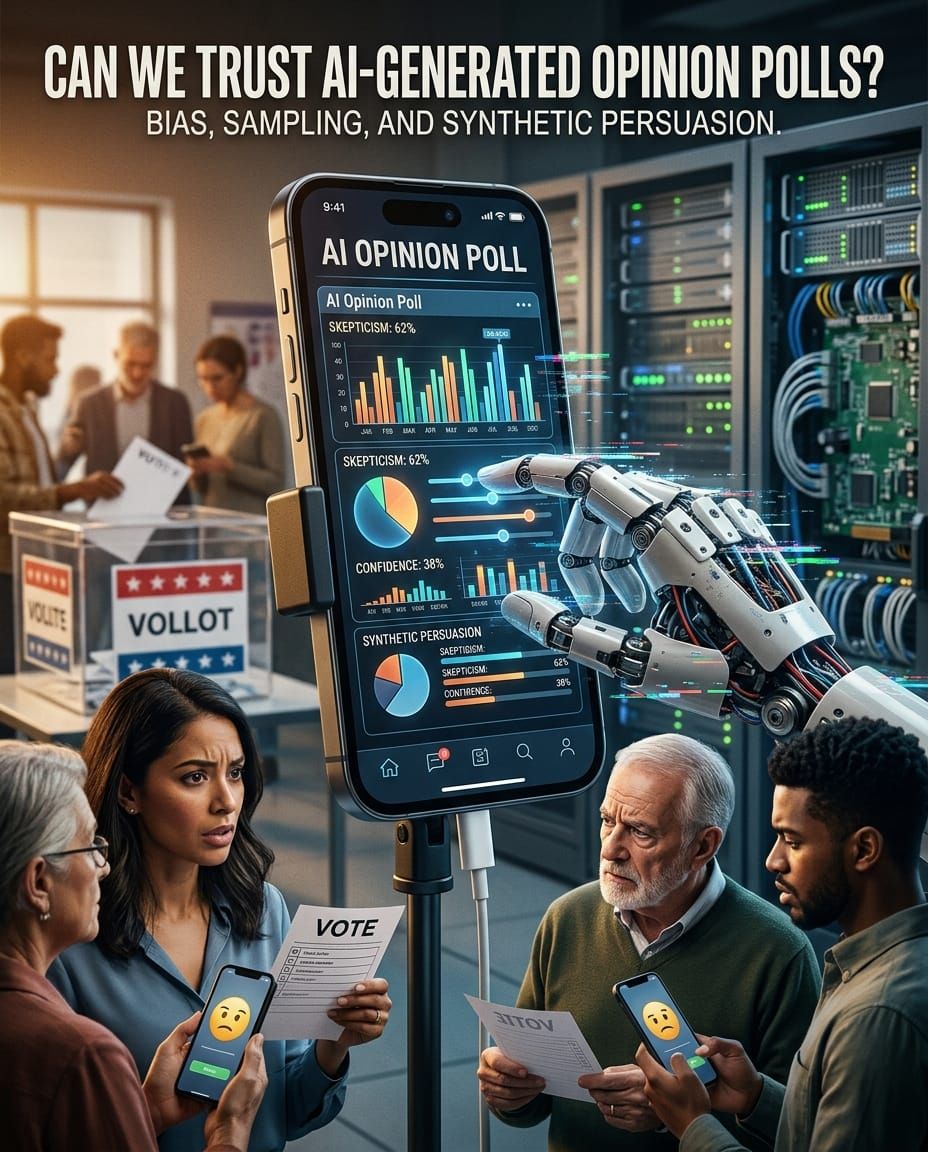



Key Takeaways:
- AI-generated opinion polls can provide insights but may lack the nuance of human understanding.
- The accuracy of these polls often hinges on the quality of data and algorithms used.
- Public perception of AI polls varies significantly across different demographics and political affiliations.
In a world where artificial intelligence (AI) is becoming as common as your morning coffee, the question arises: can we trust AI-generated opinion polls? Picture this: you’re at a party, and someone brings up the latest poll results generated by a fancy AI model. You might think, “Wow, that sounds high-tech!” But then, a nagging thought creeps in: “Wait, can I really trust this?”
AI has made its way into various aspects of our lives, from recommending the next binge-worthy series on Netflix to predicting the weather. But when it comes to gauging public opinion, the stakes are higher. After all, we’re not just talking about whether people prefer pineapple on pizza (which, let’s be honest, is a contentious topic). We’re diving into the depths of human behavior, political beliefs, and societal trends. So, let’s roll up our sleeves and dig into the nitty-gritty of AI-generated opinion polls.
The Rise of AI in Polling
The advent of AI in polling has been nothing short of revolutionary. Traditional polling methods often relied on human respondents, who could be as unpredictable as a cat on a hot tin roof. Enter AI, with its large language models and data analysis capabilities, which promise to streamline the process. But does this mean we can trust the results?
AI models are designed to analyze vast amounts of data quickly. They can simulate responses based on patterns gleaned from previous surveys, which sounds impressive. However, the question remains: are these synthetic samples truly reflective of actual human opinions? After all, a computer can crunch numbers faster than you can say “public opinion poll,” but can it understand the nuances of human emotion?
The Mechanics of AI Polling
At the heart of AI polling lies a complex web of algorithms and data inputs. Polling companies employ AI models to sift through mountains of data, looking for trends and insights. This process can be likened to searching for a needle in a haystack, but with a super-powered magnet. The AI tools can analyze responses from various age groups, political affiliations, and even job sectors, creating a comprehensive picture of public sentiment.
However, the effectiveness of these AI-generated polls hinges on the quality of the data fed into them. If the input data is skewed or biased, the output will be too. It’s like baking a cake: if you use stale ingredients, you’re not going to end up with a delicious dessert. Similarly, if AI models are trained on flawed data, the results can be misleading, leading to fake polls about AI that don’t accurately reflect public opinion.
Human vs. AI: The Great Debate
When it comes to polling, the debate between human respondents and AI-generated data is as heated as a debate over the best superhero. On one hand, human respondents bring their unique perspectives, experiences, and emotions to the table. They can provide open-ended survey responses that capture the complexity of human thought. On the other hand, AI can process and analyze data at lightning speed, offering insights that might take human pollsters weeks to uncover.
But here’s the kicker: while AI can simulate responses, it lacks the ability to truly understand context. For instance, a human might respond to a question about job satisfaction with a nuanced answer that reflects their personal experiences. An AI, however, might generate a response based on statistical averages, missing the emotional weight behind the words. This raises the question: can we really trust AI to capture the full spectrum of human opinions?
The Impact of AI on Public Opinion
AI’s impact on public opinion is a double-edged sword. On one side, it can provide valuable insights that help researchers and pollsters understand trends and shifts in sentiment. For example, AI models can analyze survey responses from various demographics, revealing how different age groups view issues like climate change or healthcare. This data can be invaluable for companies and organizations looking to tailor their messaging.
On the flip side, there’s a growing concern among Americans about the reliability of AI-generated polls. A significant portion of the population, including both Democrats and Republicans, expresses skepticism about the accuracy of these models. Many worry that AI might not capture the true essence of public opinion, leading to misguided conclusions. This skepticism is not unfounded; after all, if we can’t trust the data, what’s the point of conducting polls in the first place?
The Role of AI Companies in Polling
AI companies play a crucial role in shaping the landscape of opinion polling. They develop the algorithms and models that power these polls, and their choices can significantly impact the results. For instance, some companies focus on creating AI tools that prioritize accuracy and transparency, while others may prioritize speed and efficiency. This divergence can lead to varying levels of trust in the polls produced.
Moreover, the relationship between AI companies and polling organizations is complex. Pollsters rely on AI to enhance their capabilities, but they must also be cautious about the potential biases embedded in the algorithms. It’s a bit like a dance: both parties need to work in harmony to ensure that the final product is reliable and reflective of actual public sentiment.
Understanding AI Polls: A Public Perspective
The public’s understanding of AI-generated polls is as varied as the flavors of ice cream at your local parlor. Some people embrace the technology, viewing it as a way to gain insights into societal trends. Others, however, remain skeptical, questioning the validity of results produced by machines. This divide often falls along political lines, with Democrats generally more open to AI’s potential than Republicans.
Interestingly, a recent survey revealed that two-thirds of Americans are concerned about the accuracy of AI-generated polls. This concern is particularly pronounced among older age groups, who may be less familiar with the technology. As AI continues to permeate our daily lives, it’s essential for companies and researchers to bridge this knowledge gap and foster trust in AI-generated data.
The Ethics of AI Polling
As with any technology, the ethical implications of AI polling cannot be ignored. The use of AI in public opinion polling raises questions about privacy, consent, and data security. For instance, how are survey respondents’ data collected and used? Are individuals aware that their opinions may be analyzed by AI models? These are critical questions that need to be addressed to ensure transparency and build trust.
Moreover, the potential for bias in AI algorithms poses ethical dilemmas. If certain demographics are underrepresented in the data, the resulting polls may not accurately reflect public opinion. This can lead to skewed results that misinform decision-makers and the public alike. It’s crucial for polling companies to prioritize ethical practices in their use of AI to maintain credibility and integrity.
The Future of AI in Polling
As we look to the future, the role of AI in polling is likely to expand. With advancements in technology, AI models will become increasingly sophisticated, enabling more accurate and nuanced analysis of public opinion. However, this evolution comes with its own set of challenges. Polling companies must remain vigilant in ensuring that their AI tools are transparent, ethical, and representative of diverse perspectives.
Moreover, as AI continues to shape the landscape of public opinion polling, it’s essential for researchers and pollsters to engage with the public. By fostering open dialogue and educating individuals about the capabilities and limitations of AI, we can build trust and understanding. After all, polling is not just about numbers; it’s about capturing the voices of actual people.
Case Studies: AI Polling in Action
To illustrate the impact of AI on polling, let’s take a look at a couple of case studies. One notable example is a recent survey conducted by a leading polling company that utilized AI to analyze public sentiment regarding climate change. By employing AI tools, the company was able to gather insights from a diverse range of respondents, revealing significant differences in opinion across age groups and political affiliations.
In another instance, an AI-driven polling company conducted a survey on job satisfaction among Americans. By analyzing responses from various demographics, the company uncovered trends that traditional polling methods might have missed. For example, younger respondents expressed greater concern about job security compared to older age groups. These insights can help organizations tailor their messaging and policies to better address the needs of their workforce.
The Skepticism Surrounding AI Polls
Despite the potential benefits of AI-generated polls, skepticism remains a significant hurdle. Many Americans express doubts about the accuracy and reliability of these models. This skepticism is fueled by concerns about data privacy, algorithmic bias, and the potential for manipulation. As a result, polling companies must work diligently to address these concerns and build trust with the public.
Moreover, the media plays a crucial role in shaping public perception of AI polls. Sensational headlines and exaggerated claims can contribute to mistrust, making it essential for journalists to report on AI-generated polls responsibly. By providing context and highlighting the limitations of these models, the media can help foster a more informed public discourse.
AI Polls vs. Traditional Polling: A Comparison
When comparing AI-generated polls to traditional polling methods, it’s essential to consider the strengths and weaknesses of each approach. Traditional polling often relies on human respondents, which can provide rich, nuanced insights. However, this method can be time-consuming and costly, leading to delays in data collection and analysis.
In contrast, AI-generated polls can process vast amounts of data quickly, offering real-time insights into public sentiment. However, the reliance on algorithms raises concerns about accuracy and representation. Ultimately, the choice between AI and traditional polling methods depends on the specific goals and context of the research.
The Role of Data Analysis in AI Polling
Data analysis is the backbone of AI-generated polls. By employing advanced algorithms, polling companies can identify trends and patterns in public opinion. This process involves analyzing survey responses, demographic information, and historical data to create a comprehensive picture of sentiment.
However, the effectiveness of data analysis hinges on the quality of the input data. If the data is flawed or biased, the resulting analysis will be too. This highlights the importance of rigorous data collection and validation processes to ensure that AI-generated polls accurately reflect public opinion.
The Importance of Transparency in AI Polling
Transparency is crucial in building trust in AI-generated polls. Polling companies must be open about their methodologies, data sources, and algorithms to foster confidence among respondents and the public. By providing clear explanations of how AI models work and how data is collected, companies can demystify the process and alleviate concerns.
Moreover, transparency can help address issues of bias and representation. By openly sharing data and methodologies, polling companies can invite scrutiny and feedback from researchers and the public, leading to more accurate and reliable results.
Engaging the Public in AI Polling
To build trust in AI-generated polls, it’s essential to engage the public in the process. This can involve educating individuals about the capabilities and limitations of AI, as well as encouraging participation in surveys. By fostering a sense of ownership and involvement, polling companies can create a more informed and engaged public.
Additionally, engaging with diverse communities can help ensure that AI-generated polls accurately reflect the opinions of all demographics. By actively seeking input from underrepresented groups, polling companies can create more inclusive and representative surveys.
The Role of AI in Shaping Public Discourse
AI-generated polls have the potential to shape public discourse by providing insights into societal trends and opinions. By analyzing survey responses, polling companies can identify emerging issues and shifts in sentiment, informing policymakers and the public alike. This can lead to more informed discussions and decision-making.
However, the influence of AI polls on public discourse also raises concerns about manipulation and misinformation. As AI-generated polls become more prevalent, it’s essential for researchers and pollsters to prioritize accuracy and transparency to maintain credibility and trust.
The Future of Public Opinion Polling
As we look to the future, the landscape of public opinion polling is likely to evolve significantly. With advancements in AI technology, polling companies will have access to more sophisticated tools for analyzing public sentiment. However, this evolution comes with its own set of challenges, including the need for ethical practices and transparency.
Moreover, as AI continues to shape the way we understand public opinion, it’s essential for researchers and pollsters to engage with the public. By fostering open dialogue and educating individuals about the capabilities and limitations of AI, we can build trust and understanding in the polling process.

Summary
In the grand tapestry of public opinion polling, AI-generated polls represent a new thread woven into the fabric of understanding human behavior. While they offer exciting possibilities for data analysis and trend identification, they also come with a fair share of skepticism and ethical considerations. As we navigate this brave new world of AI, it’s crucial to strike a balance between embracing innovation and ensuring that the voices of actual people are heard and represented.
Your Friend,
Wade

Q1: Are AI-generated polls more accurate than traditional polls?
A1: AI-generated polls can process data quickly and identify trends, but their accuracy depends on the quality of the input data. Traditional polls may provide richer insights but can be slower and more costly.
Q2: How do AI companies ensure the reliability of their polls?
A2: AI companies must prioritize transparency, ethical practices, and rigorous data validation processes to ensure that their polls accurately reflect public opinion.
Q3: What are the main concerns about AI-generated polls?
A3: Concerns include data privacy, algorithmic bias, and the potential for manipulation, which can lead to mistrust among the public.