

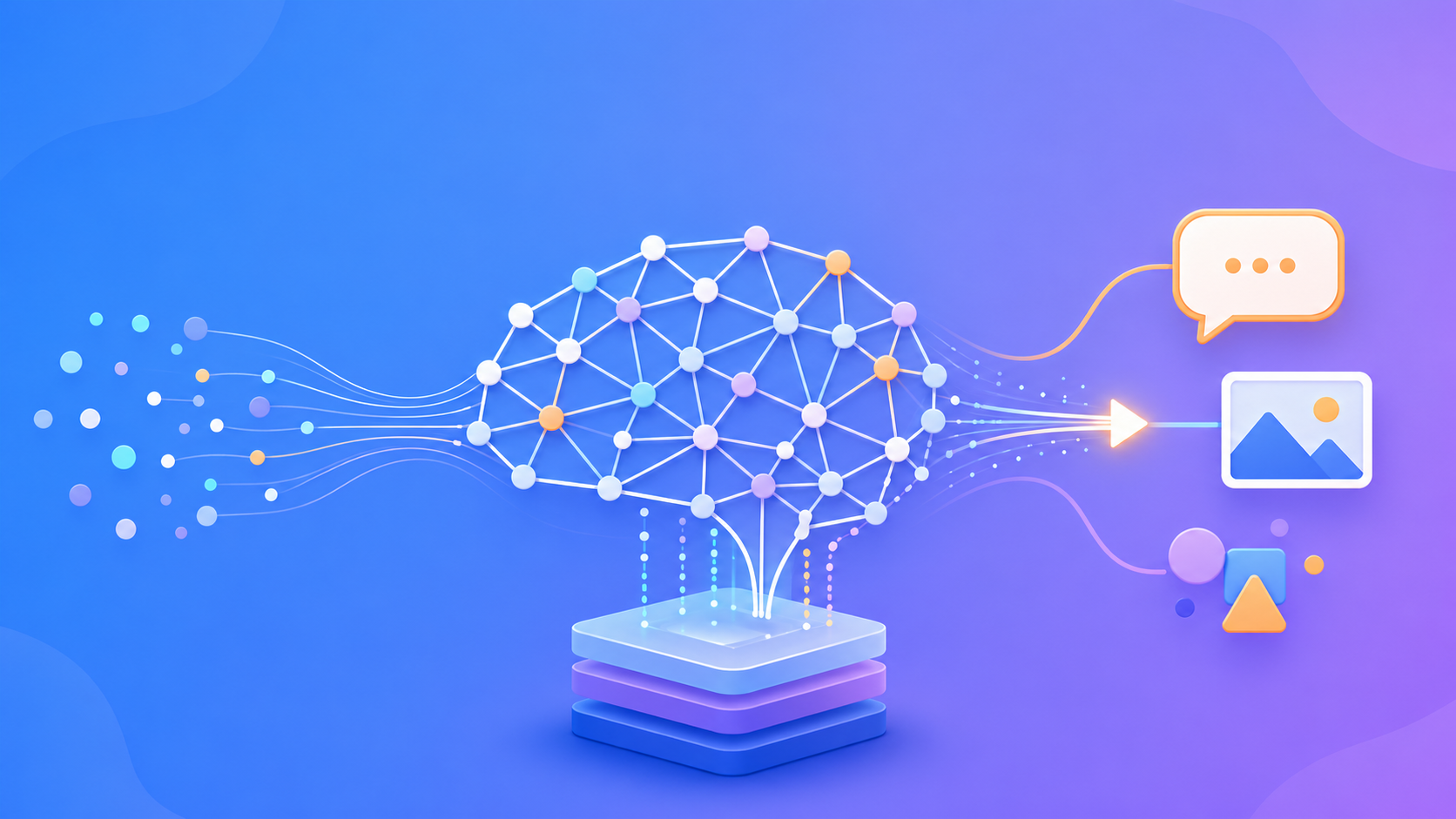



AI is everywhere: recommendations, navigation apps, chatbots, translation, photo tagging, and more. But the question remains: how does ai actually work behind the scenes?
At its core, artificial intelligence is a set of methods in computer science and data science that enable machines to learn from experience. AI systems generally follow a multi-step lifecycle including data collection, learning algorithms, reasoning, decision-making, perception, and iteration. Instead of being fully explicitly programmed with a long list of rules, many modern ai systems learn from training data, using machine learning to detect structure, recognize patterns, and perform tasks that people associate with human intelligence.
This guide explains the main ideas—without skipping the important details—so you understand how AI can analyze data, handle unstructured data, and solve complex problems in the real world, with feature extraction being a key process in how AI systems analyze and classify data.
What AI Is (and What It Isn’t)
AI technologies are software systems designed to do things that would otherwise require human intelligence—like understanding language, identifying objects, or planning actions. These systems don’t have emotions, goals, or consciousness by default; they’re tools built to optimize for measurable outcomes.
A common misconception is that AI “thinks” like a person. The reality is that AI is mostly advanced pattern learning plus optimization—powerful, sometimes surprising, but not the same as a mind.
Why AI Is Often Compared to the Human Brain?
People compare AI to the human brain because both can learn from experience and can recognize patterns. Some models are even inspired by the human brain’s structure, especially the idea of many simple units working together.
But the analogy has limits. The brain is biological and embedded in the world; AI runs on computer systems and learns from curated datasets. AI can mimic outcomes that look intelligent, but it does not replicate human understanding.
The Basic Goal: Make Computers Do “Intelligent” Work
The purpose of AI is to enable machines and enables computers to make decisions, predictions, or creations that are useful to people. This can range from handling repetitive tasks to dealing with highly complex data like images and conversations.
Many AI successes are not about replacing people. They’re about speeding up work, reducing error rates, and helping humans focus on higher-value judgment.
The Big Divide: Explicit Rules vs. Learning From Data
Traditional software is often explicitly programmed. A developer writes logic in computer code to handle expected scenarios.
AI systems often take a different route: instead of hard-coding every rule, you train a model to learn behavior from examples. That’s the big practical shift behind modern AI.
Machine Learning in One Sentence
Machine learning is a method where a computer program learns patterns from data, improving performance on a task without needing every rule written by hand.
It’s still a computer program, but the “knowledge” is stored in learned parameters rather than hand-crafted if-else statements.
What “Perform Tasks” Means in Real AI Products
When vendors say AI can perform tasks, they usually mean tasks like classification, prediction, ranking, generation, and control.
These tasks can be narrowly defined—like detecting spam—or broader—like drafting a report. Either way, there’s usually an input, a learned transformation, and an output.
Training Data: The Raw Material of Learning
Most AI systems learn from training data: examples that show what the system should do. Data is essential for AI; it must be exposed to massive amounts of information to learn.
Training data can include text documents, labeled images, audio, click logs, sensor feeds, or other records. The system uses these examples to identify patterns and learn correlations that generalize to new inputs.
Why “More Data” Often Improves AI
In many real deployments, more data helps because it covers more variation: accents, lighting conditions, writing styles, edge cases, and rare events.
However, quality matters. If the data is biased, incomplete, or wrong, the model may learn the wrong lessons—no matter how large the dataset is.
Computing Power: The Engine Behind Modern AI
Modern AI depends heavily on computing power (also called computational power). Training large models can require enormous compute resources.
This is why breakthroughs in AI often track improvements in specialized hardware (GPUs/TPUs) and distributed training. With enough compute, models can learn far richer representations from the same data.
The Model: A Function That Maps Inputs to Outputs
An AI model is essentially a learned function. You give it an input (text, image, numbers), and it outputs something useful: a label, a prediction, or generated content.
This is true for small models used in business analytics and for large models powering modern generative applications.
Neural Networks: The Workhorse of Deep Learning
A major class of AI models is neural networks. These are mathematical structures inspired loosely by brains, consisting of interconnected “neurons” that transform information.
In practice, neural networks are flexible tools for approximating complex relationships in data. They are especially good at handling images, language, and other unstructured inputs.
Artificial Neural Networks and Their Structure
Artificial neural networks are typically arranged in layers:
input layer: receives the raw input features
hidden layers: intermediate layers that learn transformations
output layer: produces the final prediction or output
Those hidden layers are where much of the “learning” lives: they shape how the network represents the world.
Deep Neural Networks and Multiple Layers
When a network has multiple layers, it becomes a deep neural network. This is the foundation of deep learning.
Depth allows the model to build increasingly abstract representations: simple features first, then more complex structures, and eventually high-level patterns that correlate with the task.
What Deep Learning Actually Does
Deep learning is not magic—it’s training deep networks using large datasets and lots of compute so they can learn useful representations automatically.
Instead of manually engineering features, deep learning often learns features directly from raw data, which is why it works so well in vision and language.
The Learning Process: Optimization and Error Reduction
Training usually works by making predictions, measuring how wrong they are, and then updating model parameters to reduce error.
Repeat that many times over many examples, and the model gets better at the task. This loop is one reason AI can scale: more data and compute often yield better results.
Recognize Patterns vs. Understand Meaning
AI can recognize patterns extremely well, sometimes better than humans in narrow domains.
But pattern recognition is not the same as understanding. A model can produce correct answers without having a human-like mental model of the world, which matters for reliability and safety.
NLP: Making Machines Work With Human Language
Natural language processing—also written as natural language processing nlp—helps AI systems read, interpret, and generate text.
NLP enables machines to work with human language at scale: customer support, document search, translation, summarization, and analysis.
How AI Can Generate Human Language
Modern language systems can generate human language that sounds fluent by learning statistical patterns in text.
They learn what word sequences are likely, what structures commonly follow others, and how meaning is often implied by context—even if they don’t “understand” meaning as a human does.
Large Language Models and the Language Model Idea
A large language model is a kind of language model trained on massive text corpora to predict the next token.
This next-token objective seems simple, but at scale it produces impressive behaviors: drafting, summarizing, translating, and answering questions.
Generative AI: Content Creation With AI Models
Generative ai refers to models that create new content rather than only classifying or predicting.
These systems are behind many modern experiences: writing assistants, code assistants, image generators, and voice tools. They are typically built using deep learning and large-scale training.
Generative AI Tools in Business and Education
Generative ai tools can speed up drafting, brainstorming, and synthesis.
Common examples include tools that rewrite text, propose outlines, write emails, or summarize documents. Used carefully, they augment human output; used carelessly, they can introduce errors.
Computer Vision: How AI Sees Images
Computer vision is the area of AI that lets machines process images and video.
Vision systems can interpret visual information such as objects, faces, text in images, and scene context. This is central to automation in manufacturing, healthcare imaging, and autonomy.
Image Recognition and Pattern Learning in Pixels
Image recognition works by training models on many images so they learn visual features.
Instead of coding rules like “a cat has pointy ears,” deep learning learns statistical features directly from pixels, improving as it sees more examples.
Convolutional Neural Networks: A Classic Vision Approach
A convolutional neural network (CNN) is a deep architecture designed for images.
CNNs exploit spatial structure: local patterns like edges combine into textures, then shapes, and finally object-level features. This layered feature building is one reason CNNs became dominant in vision.
Speech Recognition: Turning Audio Into Text
Speech recognition converts spoken audio into text. It typically involves acoustic modeling plus language modeling.
Real-world speech recognition must deal with noise, accents, speaking speed, and domain vocabulary—another reason training data breadth matters.
AI Chatbots and Virtual Assistants
AI chatbots are conversational interfaces that can answer questions, guide users, or complete workflows.
They often combine language models with tools: searching knowledge bases, looking up policy documents, or calling business APIs. This is how many modern virtual assistants operate.
Voice Assistants in Daily Lives
Voice assistants bring speech recognition and NLP together, allowing hands-free interaction.
They help with reminders, information queries, navigation, and smart home control—examples of AI quietly embedded in our daily lives.
Analyze Data: AI in Data Science Workflows
In data science, AI models are widely used to analyze data: forecasting, anomaly detection, customer segmentation, risk scoring, and more.
Many of these models aren’t “generative.” They’re predictive and diagnostic, built to spot signal in noisy, high-dimensional datasets.
Unstructured Data: Where AI Shines
A lot of valuable information is unstructured data: emails, PDFs, images, audio, call transcripts, and chat logs.
AI makes this data usable by extracting entities, categorizing content, summarizing, and mapping it into structured outputs that businesses can act on.
Complex Patterns and Complex Problems
AI is effective when problems involve complex patterns that are hard to describe with explicit rules.
Examples include fraud detection, medical imaging triage, and language understanding. These tasks are difficult to hand-code but learnable from data if labeled and curated correctly.
Weak AI and Narrow AI: What We Mostly Have Today
Most AI deployed today is weak ai or narrow ai.
That means it’s optimized for a specific domain or specific task and doesn’t generalize reliably outside it. Even highly capable chat systems can fail in unfamiliar settings.
Strong AI and Artificial General Intelligence
Strong ai is the idea of a system with flexible, human-like general intelligence.
That concept overlaps with artificial general intelligence (also called general ai): AI that can learn new tasks, reason across domains, and adapt like humans. Today’s systems are not there yet, despite impressive demos.
“Typically Require Human Intelligence”: What That Phrase Really Means
When people say AI can do things that typically require human intelligence, they usually mean tasks humans used to do because automation wasn’t good enough.
But “human-level” performance in one benchmark doesn’t imply broad competence. It means the model learned patterns sufficient for that measurable task.
The Turing Test and Why It’s Not the Whole Story
The turing test evaluates whether a machine can convincingly imitate human conversation.
Modern systems can appear to pass casual versions of this test, but conversational ability doesn’t guarantee truth, reasoning, or reliability. It’s a milestone in history, not a comprehensive metric.
AI Agents: From Single Answers to Multi-Step Action
AI agents are systems that plan and take actions, not just respond.
They can decide which tools to use, run searches, call APIs, write summaries, and iterate. This is part of the move toward more autonomous workflows.
Agentic AI and Tool Use
Agentic ai often means a model that can operate with goals and tool access: calendars, CRM systems, code execution, web search, or document repositories.
This is how modern assistants can go beyond chat and complete tasks end-to-end, especially in business operations.
Self Driving Cars: A High-Stakes AI System
Self driving cars combine computer vision, sensor fusion, localization, prediction, and planning.
They must interpret their environment in real time, handle uncertainty, and make safe choices. The difficulty of edge cases shows why building robust AI for the physical world is so challenging.
Google Maps: An Everyday Example of AI at Scale
Google maps uses AI for traffic prediction, route optimization, ETA estimation, and incident detection.
It’s a practical example of narrow AI: it doesn’t “understand” your life, but it is excellent at optimizing navigation based on huge volumes of historical and live data.
AI Tools: How People Actually Use AI at Work
Most users interact with AI through ai tools: copilots, chat interfaces, document assistants, and analytics features.
These tools help automate drafting, classification, routing, summarization, and search—saving time on repetitive work while keeping humans in control.
Automate Repetitive Tasks Without Losing Oversight
One of the safest and most common uses of AI is to automate repetitive tasks.
Examples include ticket tagging, invoice extraction, basic customer responses, and first-pass document summaries. Humans can then review, correct, and make final decisions.
Problem Solving vs. Critical Thinking
AI can look like it’s doing problem solving, but much of that performance comes from learned patterns and statistical associations.
Human critical thinking includes grounding, values, context, and real-world accountability. The best deployments treat AI as a powerful assistant, not an unquestionable authority.
Where AI Makes Mistakes: Hallucinations and Overconfidence
Generative systems can produce fluent outputs that are wrong. This is a predictable failure mode: the model is optimizing for plausible language, not guaranteed truth.
Mitigations include better data curation, tool-based retrieval, citations, evaluation, and strong human review processes.
What AI Researchers Focus On Today
Many ai researchers work on reliability, alignment, interpretability, robustness, and safer deployment practices.
Other areas include efficiency (doing more with less compute), multimodal learning (text + images + audio), and better reasoning and planning—especially for agentic systems.
Final Takeaway: How Does AI Actually Work?
So, how does ai actually work in a clear summary?
AI uses ai models—often artificial neural networks trained with machine learning and deep learning—to learn from training data. With enough computational power, these models can analyze data, identify patterns, and perform tasks like natural language processing, computer vision, speech recognition, and content creation in generative ai systems. Most real-world AI is weak ai or narrow ai, excellent at a specific task, while strong ai and artificial general intelligence remain open challenges beyond today’s mainstream tools.
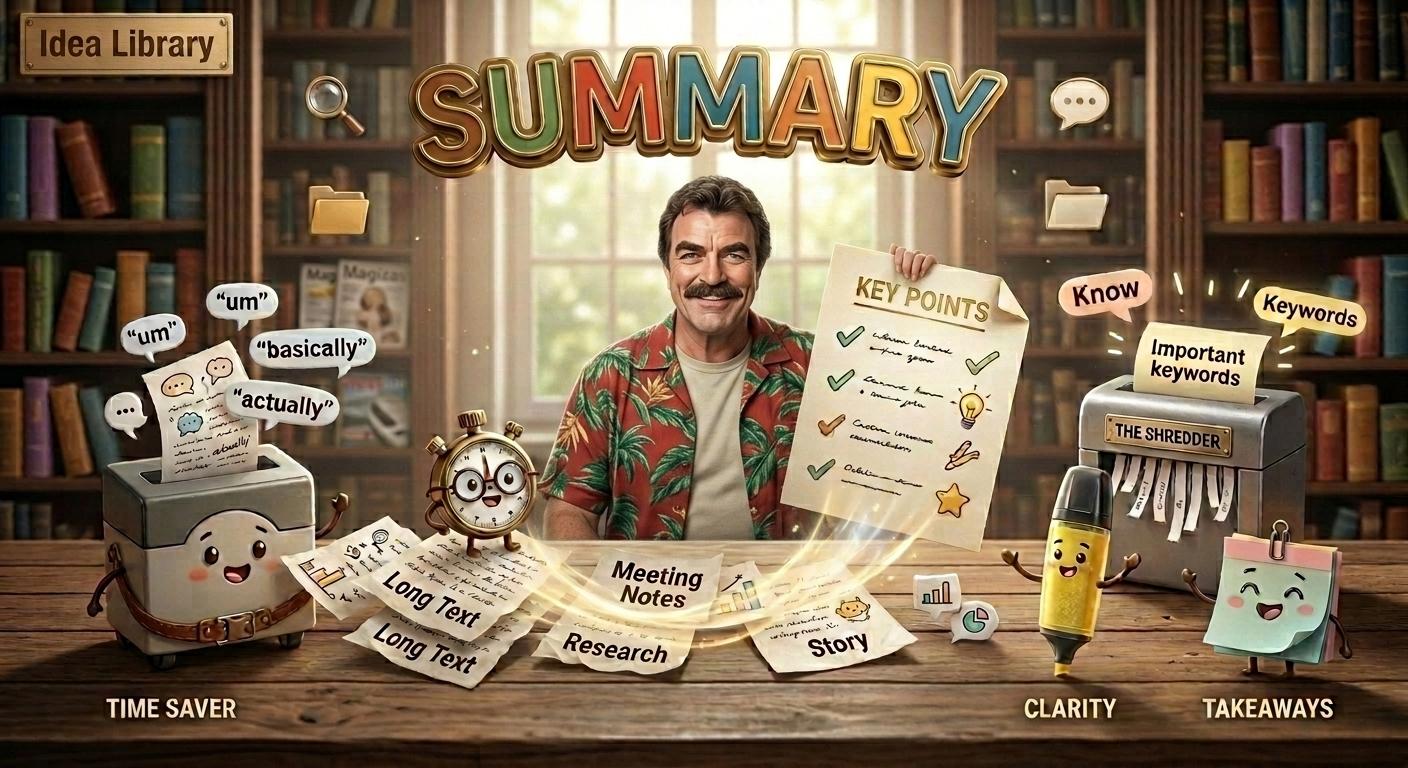
Artificial intelligence works by training ai models on training data so they can recognize patterns, analyze data, and perform tasks that often seem to require human intelligence—like understanding human language with natural language processing (NLP) or interpreting images with computer vision. Modern breakthroughs come from neural networks and deep learning, powered by large datasets and significant computing power. In practice, most real-world systems are narrow AI (weak AI) built for a specific task, while artificial general intelligence (strong AI / general AI) remains a longer-term research goal.
Q1: How does AI actually work?
AI learns from examples. Using machine learning, an ai system trains on training data to identify patterns and then uses those patterns to make predictions or generate outputs in new situations.
Q2: What’s the difference between machine learning and deep learning?
Machine learning is the broader approach of learning patterns from data. Deep learning is a subset that uses deep neural networks with multiple layers (input layer, hidden layers, output layer) to learn complex patterns, especially in vision and language.
Q3: What is NLP in AI?
Natural language processing (natural language processing nlp) is the branch of AI that helps computers work with human language—for example, powering ai chatbots, translation, search, and tools that summarize documents.
Q4: What are large language models and generative AI?
Large language models are a type of language model trained to predict the next token in text. They power generative AI and generative ai tools that can generate human language, write drafts, answer questions, and create content.
Q5: Is today’s AI “strong AI” or artificial general intelligence?
No. Most AI today is weak ai / narrow ai, optimized for a specific task (like image recognition or speech recognition). Strong ai and artificial general intelligence (general ai)—flexible intelligence across many domains—remain research goals rather than everyday reality.
Your Friend,
Wade