





What happens when you take an abandoned finance channel with 300 monthly views and hand the entire production pipeline to ai? You either crash and burn, or you figure out something that changes how you think about content forever. This is the story of the second outcome.
Key Takeaways
In January 2025, my finance youtube channel was pulling roughly 300 views per month and earning under $20 in AdSense. By March 2026, it was consistently hitting over 1.2 million monthly views and generating more than $9,000/month across ads, affiliates, and sponsorships.
- Reviving a finance channel often involves a systematic AI-driven approach to content creation, from research and scripting to editing and thumbnail design.
- Ad revenue jumped from under $20/month to over $9,000/month, with affiliate and sponsor income adding another $3,900 on top.
- AI can speed up production in content creation without replacing human judgment - production time dropped from 15+ hours per video to roughly 3–4 hours.
- The exact same thing can be replicated on other small or abandoned channels if you're willing to systematize, iterate, and stay honest with your audience.
- Monthly ai tools cost stayed between $120 and $200 for most of the rebuild, far below hiring a human editor or scriptwriter.
How I Ended Up With a 'Dead' Finance Channel
I launched a faceless finance youtube channel in late 2021. The idea was simple: cover budgeting basics, credit card rewards, and making money online for beginners. I figured if I just kept uploading, the algorithm would eventually notice. That guess turned out to be dead wrong.
By mid-2023, uploads became inconsistent. I had a full-time job eating 50+ hours a week, and the reality of spending every weekend editing in Premiere Pro for a video that would get 400 views was honestly soul-crushing. The channel had about 2,300 subscribers, 40 published videos, and most of those videos were stuck under 500 views forever.
Between August and December 2024, the channel was averaging fewer than 300 views per month. AdSense was paying under $15/month. No comments, no suggested feed traffic, no growth whatsoever. The internet is littered with channels like this - started with enthusiasm, abandoned when the money never showed up.
The core problem wasn't talent or even the niche. It was that I had no system. I'd write a script when inspiration struck, edit when I felt like it, and post whenever I finished. There was no strategy beyond "make another video about personal finance and hope it hits." That's not a business. That's a hobby with a prayer.

The Moment I Decided to Try an AI-Only Rebuild
The turning point came in December 2024. I kept seeing faceless channels in the finance and business niche blowing up across youtube and TikTok. Channels reading Reddit money stories with ai generated voiceovers. Stock market recap videos narrated by neural voices. Side hustle explainers with AI avatars. Some of these were pulling millions of views with zero face on camera.
My first reaction was fear and skepticism. I figured this stuff was nonsense - low-quality, spammy content the algorithm would bury. But then I started paying attention to the retention numbers these channels were posting. Some were hitting 50–60% average view duration on 10-minute videos. High audience demand drives the virality of finance videos, and these creators were riding that wave hard.
So in January 2025, I committed to a 90-day challenge. The rules: rebuild the channel using ai for every step except publishing decisions and high-level strategy. My goals were modest - reach 10,000 subscribers, hit 4,000 watch hours, and get to $1,000/month by end of April 2025. I didn't care about going viral. I just wanted to prove the channel wasn't actually dead.
The AI Stack I Used to Revive the Channel
Let me walk through the tool stack without turning this into a tutorial. AI tools can assist throughout the entire production pipeline for finance content, and that's exactly what I needed - coverage across every step.
Research and scripting: I used a GPT-style assistant for topic research, outline generation, and full script drafts. The ai software could pull together a 2,000-word script draft in under 10 minutes. I'd then spend 15–20 minutes editing for accuracy and voice.
Voiceover: A neural voice tool (think ElevenLabs-tier quality) gave me a calm, consistent narrator voice. No more recording at 11 PM in a closet with a $40 mic.
Visuals and B-roll: I used generative ai image tools for custom thumbnails and scene-specific b-roll. AI tools are used for scripting, image, and video generation in ways that would've required a small team two years ago.
Video editing: An AI video editor handled rough cuts, auto-generated chapters from the transcript, and synced on-screen text. I'd then manually tighten pacing and transitions.
Workflow: prompt → outline → script → voiceover → visuals → edit → upload. The whole process was linear and repeatable.
Monthly cost in Q1 2025 was around $120/month in subscriptions. By mid-2025, it crept to about $200/month as I upgraded voice quality and added a stock footage library. For context, producing a long-form AI video can cost between $400 and $1,070 at professional production houses. My per-video cost hovered around $15–25 once the system was dialed in.
Redesigning the Channel Strategy Around Data, Not Feelings
The first thing I did in January 2025 wasn't create new content. It was pull analytics on every video I'd ever posted.
AI helps analyze top-performing content to generate relevant topic ideas, so I fed my top 10 historical videos into a GPT tool along with their CTR, average view duration, and traffic sources. The answer was clear:
- Videos about "making money as a beginner" and "side hustles" had 2–3x the watch time of generic saving tips
- Credit card rewards content had strong CTR but low retention - people clicked but bounced
- Debt payoff rants performed the worst across every metric
I also used ai to analyze competitors and identify themes and successful strategies in similar channels. One faceless business channel had shifted from general business content to company scandal deep dives, which dramatically improved their engagement. Data-driven validation of topics prevents investment in low-potential content, and that lesson applied directly to my situation.
I narrowed the channel to three pillars: side hustles and online income, beginner investing, and practical money systems (budgeting automation, banking hacks). Then I used AI to cluster viewer questions from comments, Reddit threads, and Quora into a list of 100+ specific video ideas. Data-driven ideation ensures the content addresses audience search interests directly, and finding underserved topics matters enormously for the success of finance channels. I wasn't guessing anymore. I was building from demand.
Turning AI Prompts Into High-Retention Finance Scripts
This is where the rebuild either works or falls apart. A bad script kills a video no matter how good the thumbnails are.
Here's the workflow I landed on: start from a keyword like "make money with high-yield savings accounts in 2025," feed it to the AI with instructions for a hook, angle, and 10-point outline aligned with youtube best practices. The first few seconds of a video should address viewer interest to capture attention, so every script opened with a pattern-interrupt - a surprising stat, a provocative question, or a mini-story.
Strong hooks in the first 15–30 seconds significantly influence viewer retention. I forced every script into a structure:
- Hook (0–15 seconds): pattern-interrupt that creates curiosity
- Credibility (15–30 seconds): why this channel knows what it's talking about
- Roadmap (30–45 seconds): what the viewer will learn
- Body (core value, 3–7 main points with transitions)
- CTA (subscribe, check links, watch next video)
Using AI for script generation improves content flow and engagement, but the human editing pass was non-negotiable. I'd cut exaggerated claims, reorder points for better narrative flow, and inject personal anecdotes from earlier money failures. Transforming dry financial content into storytelling can enhance viewer interest more than any production trick.
A concrete example: in March 2025, I published "5 Side Hustles That Still Work in 2025 (No BS)" - scripted in under 25 minutes using this method. That video hit 380,000 views in its first month. The script was tight, the hook landed, and the structure kept people watching. Excellent retention is crucial for YouTube's recommendation systems, and that video proved the point.
Automating Video Production Without Looking Automated
The biggest fear with ai generated content is that it looks and sounds like a machine made it. That fear is justified if you're lazy about it. But it doesn't have to be that way.
High-quality AI voices increase viewer retention compared to robotic narration, so I invested time upfront training a custom voice profile - calm, conversational, slightly faster than a typical finance narrator. The difference between a cheap TTS voice and a properly tuned neural voice is the difference between a person watching 30 seconds and watching 8 minutes.
AI video production involves multiple complex steps. Creating AI videos involves dozens of production steps - from transcript timing to visual selection to chapter placement. I fed final scripts into the voice generator, then imported audio into an AI video editor that assembled stock footage, simple charts, and on-screen text based on transcript timing. Each 15-second clip costs about $3 to produce when you factor in tool subscriptions and stock footage licensing.
The manual pass was critical: tightening pacing, removing awkward pauses, and making sure chart animations synced with the narration. I also used AI to auto-generate chapter markers ("Intro," "Side Hustle #1," "Tax Warning") that became YouTube chapters to boost watch time.
AI-generated visuals can replace generic stock footage to increase viewer engagement. Instead of the same way every finance channel uses that tired "person typing on laptop" clip, I generated custom scenes - a person checking a bank app in a coffee shop, a simple bar chart of savings growth, a split-screen comparing two investment paths. High-quality visuals and audio contribute to increased trust and shareability of content.
Note: creating a single AI video can take weeks to produce if you're starting from scratch without a system. My first few videos took 8–10 hours each. But once the workflow was locked in, production dropped to 3–4 hours per video. The system is the shortcut, not the tool.

Designing Clickable Thumbnails and Titles With AI Assistance
The channel's click-through rate almost doubled once thumbnails and titles were redesigned. Effective thumbnails and titles enhance click-through rates and viewer retention - this isn't a matter of opinion, it's what the data shows.
My workflow: generate 10–15 title ideas per topic with AI, filter for clarity and curiosity ("Why You're Still Broke on $80K/Year" beats "Budgeting Tips for High Earners"), then A/B test variations across similar videos.
For thumbnails, I used ai image generation tools to create base concepts: bold text overlays, expressive faces, clear money-related props like charts, cash, and red/green arrows. Then I'd manually polish in a graphics editor - moving elements, standardizing fonts and colors, adding a subtle brand badge in the corner.
The results were concrete. CTR went from ~3.1% in February 2025 to ~6.8% by June 2025 on long-form videos. For reference, finance channel CTR benchmarks typically fall around 3–6%, so breaking past 6% consistently put the channel in strong territory.
The 90-Day Posting Schedule That Woke Up the Algorithm
Publishing consistency is key for growth in finance channels. I swear by this more than any other single factor in the rebuild.
From February 1 to April 30, 2025, I uploaded 3 long-form videos per week (Monday, Wednesday, Friday) plus 2–3 short vertical clips repurposed from each video. That's roughly 36+ long-form videos and 70+ Shorts in 90 days.
AI batching made this possible. One weekend was dedicated to research and scripting (batch 4–5 scripts), the next to recording and assembly. I maintained a content buffer of 2–3 weeks so I never scrambled. Timing of content publication can leverage major financial news or trends - when the Fed announced rate changes or a major company like fast company or business insider covered a side hustle trend, I'd bump related videos to publish that week.
By late March 2025, browse and suggested traffic overtook search traffic. That's the algorithm signal that youtube is testing your videos with broader audiences beyond people who searched for your topic. Each video followed a consistent intro style and structure, so returning viewers immediately recognized and committed to the content.
From $20 to $9,000+/Month: Exact Revenue Breakdown
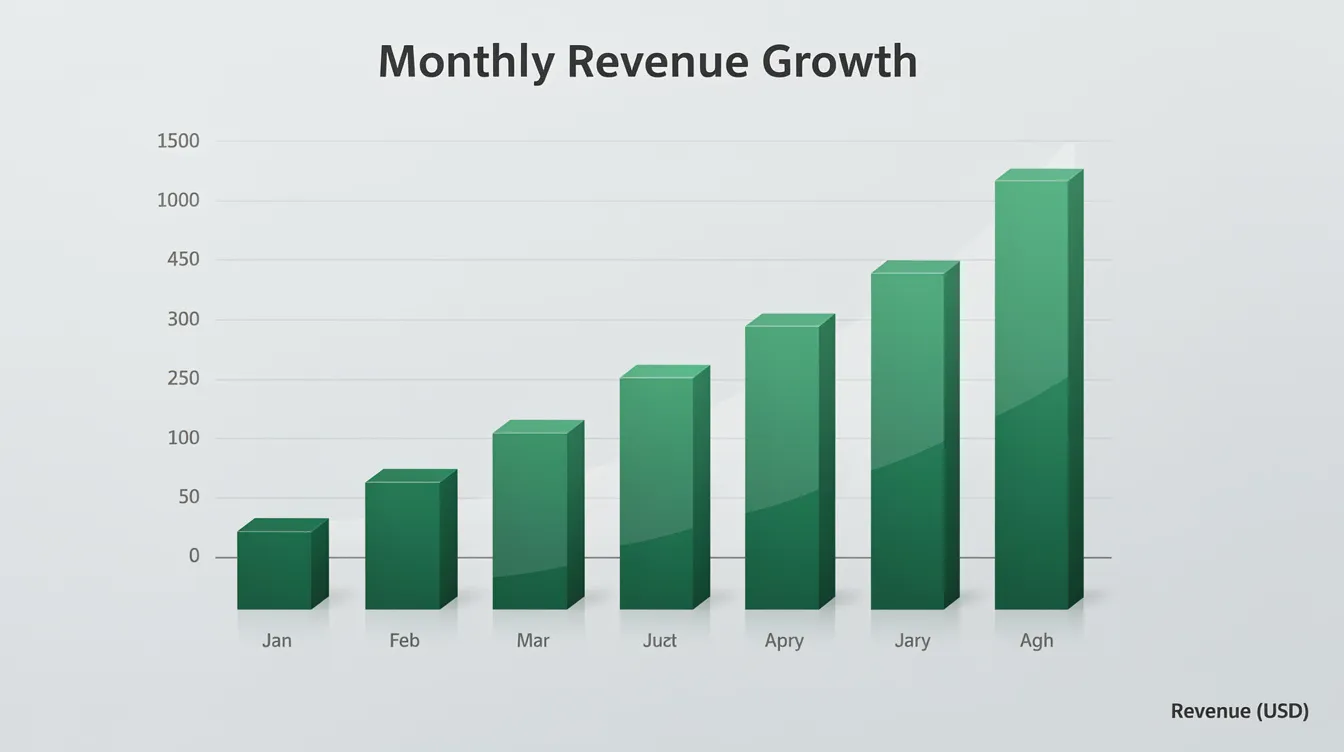
By March 2026, the finance youtube channel was consistently making money at levels that exceeded a mid-level salary. Here's the month-by-month snapshot:
- March 2025: $280 (first real ad revenue month after hitting YPP)
- June 2025: $1,450 (affiliate income starting to trickle in)
- September 2025: $4,200 (two videos crossed 500K views)
- December 2025: $7,600 (sponsorship deals kicking in)
- March 2026: $9,300 (stable multi-stream income)
The March 2026 breakdown: approximately $5,400 from YouTube ad revenue, ~$2,700 from affiliate programs (brokerages, budgeting apps, high-yield savings account sign-ups), and ~$1,200 from two mid-tier sponsorship deals.
Finance content commands CPMs of roughly $15–$25 in 2026, with RPM after YouTube's cut landing around $10–$15. That's significantly higher than most niches, which is why the market attracts so many creators.
Scripts were deliberately structured to integrate ethical affiliate mentions - linking to a broker sign-up during a segment about index funds, with clear disclaimers in both the video and description. No bullshit "get rich overnight" promises. Just honest recommendations for tools I'd actually tested.
Costs scaled too: $200–$300/month for AI subscriptions, occasional freelancer spend on data visualization, and reinvestment into better audio libraries. AI-generated content often incurs costs regardless of video success, so not every dollar spent translated to a winning video. But the overall ROI was undeniable. For comparison, one real-world case study documented a finance channel reaching $13,247/month by month 8 with a similar investment structure.
What Actually Went Viral (And Why)
Only a handful of videos drove the majority of growth. Here are the hits and the patterns behind them.
"I Tried 7 Online Side Hustles for 30 Days" (April 2025): 1.1 million views. The hook was simple - "I spent $0 and 30 days testing every side hustle the internet swears by." Strong emotional pull around escaping paycheck-to-paycheck life, simple math visuals generated with ai, and concrete step-by-step breakdowns.
"How to Turn $100/Month Into $100,000" (August 2025): 850,000 views. This one worked because compound interest is basically god-tier storytelling material for finance content. The video used a single animated chart that showed growth over 20 years, and viewers couldn't stop watch-ing.
Audience retention stats on these videos: 65–70% view duration for the first 2 minutes, with minimal drop-off after mid-roll ad points. That signals viewers found the content genuinely useful, not just clickbait.
The key insight: once a topic formula worked, I used the exact same thing - structure, pacing, thumbnail style - to create 3–4 related videos that also performed above average. High audience demand drives the virality of finance videos, and riding a proven format is the same way established media channels scale their hits.
Limitations, Compliance, and Where Human Judgment Was Non-Negotiable
Let me be direct: AI accelerated production but could not handle compliance, ethics, or nuanced financial advice. Humans are still non-negotiable here.
Every investment-related script was manually fact-checked against sources like the SEC, major brokerages, IRS pages, and occasionally publications like the wall street journal. If contribution limits changed or tax rules shifted during 2025–2026, scripts were updated before publishing.
Every video included disclaimers: not a financial advisor, educational only, viewers must do their own research, investments can lose money. This wasn't optional window dressing - it was a legal and ethical requirement.
AI-generated videos require extensive revisions and editing. AI video production can require 10–15 revisions per video before the content is accurate and watchable. Examples of AI mistakes I caught: suggesting outdated 401(k) contribution limits, overly aggressive ROI assumptions, and confusing gross vs. net income in making money scenarios. If I'd published those errors, credibility would have been destroyed.
Long-term trust required a human reviewing comments, responding honestly, and occasionally filming personal story segments with real voice and webcam. YouTube has also begun auto-detecting significant AI use and applying disclosure labels, especially for sensitive topics like finance. Transparency isn't just smart - it's increasingly required.
How You Can Do the Exact Same Thing With Your Own Channel
Here's the practical action plan. No nonsense, no filler.
Step 1: Pick or revive a niche. Choose something adjacent to money - finance, freelancing, small business - where evergreen topics exist and monetization is strong. If you have a dormant channel, even better. An old account with some watch history gives you a head start over a new account.
Step 2: Audit what already works. Look at your existing uploads (or competitor channels) and find videos with the highest watch time and engagement. Then ask AI to generate a topic map around those themes. Don't create content based on what you think is interesting. Create based on what the data says viewers want.
Step 3: Choose an affordable AI stack. One tool for research and scripting, one for editing or generating visuals, one for thumbnails, one for voice or captions. You don't need the most expensive ai software on the market. Start lean.
Step 4: Commit to consistency. Post 2–3 long-form videos per week for at least 90 days, tracking CTR, retention, and RPM as your main KPIs. Publishing consistency is what wakes up the algorithm. Not talking about it. Actually doing it.
Step 5: Reinvest and refine. Pour early revenue back into better tools or occasional human collaborators. Refine prompts and formats based on your best-performing videos. The process gets faster and cheaper over time.
Common Mistakes People Make When Using AI on YouTube
A quick warning list to help you avoid the pitfalls that kill channels:
- Mass-producing generic videos. Pumping out 5 low-quality videos a day with zero research leads to worse retention and algorithm suppression. YouTube's updated "inauthentic content" policy specifically targets mass-produced, templated content without meaningful original insight.
- Blindly trusting AI financial claims. If your ai generated script says "this investment guarantees 12% annual returns," and you don't verify that, you're publishing misinformation. Fact-check every detail. Every single one.
- Over-automating thumbnails and titles. Clickbait that drives initial clicks but terrible retention creates negative feedback loops. The algorithm notices.
- No recognizable style. If your channel looks and sounds like every other faceless finance channel, subscription growth stalls. Develop a consistent voice, pacing, and visual identity. AI-generated content often incurs costs regardless of video success, so spending money on videos that don't build brand equity is a losing game.
- Ignoring the discussion in comments. Viewers notice when nobody responds. More comments drive engagement signals. Engage like a real person because you are one.
Long-Term Vision: Building a Brand, Not Just Views
By early 2026, the focus shifted from pure view counts to building something durable. I launched an email list, started selling simple digital products (budget templates, beginner investing checklists), and began treating the youtube channel as the front door to a broader finance brand.
AI helped draft newsletter content, generate course outlines, and write landing page copy. But the founder's voice - my voice - stayed present throughout. The goal was to become a trusted guide for viewers making their first financial moves, not just another faceless channel chasing ad revenue in san francisco tech culture.
Here's the broader context that keeps me motivated: apparently, 49.6% of internet traffic was automated in 2023, up from 52% generated by bots in 2016. Google reported AI-generated content flooding search results in 2024. Some estimates suggest 99% of online content could be ai generated by 2025 to 2030. The general public is increasingly surrounded by machine-produced content.
That means the possibility of standing out as a real person with genuine expertise and honest content only increases. The future belongs to creators who use technology as a tool but never lose the human element. Sam Altman and every major figure in AI have been arguing the same point in recent weeks - the technology amplifies what you bring to it.
My call to action is simple: pick one dormant video idea from your channel right now, run it through an AI-powered workflow, and publish within the next 48 hours. Stop reading articles about how to do this and actually do it. The tools exist. The playbook is here. The only variable is whether you start.

FAQ
Q1: Do I need an existing YouTube channel for this to work?
An existing "dead" channel helps because it already has some watch history, subscriber data, and proven topics you can double down on. But the same AI-driven workflow can absolutely be applied to a brand new account starting in 2026.
New channels may take longer to get algorithm traction - expect 3–9 months to reach monetization with consistent, high-retention uploads. The biggest advantage of an older channel is the analytics. You can see what already worked and stick with it instead of starting from zero.
Q2: How much money do I need to invest in AI tools to start?
Realistic range: $0–$50/month if you use mostly free tiers and handle editing manually, or $100–$200/month for a smoother workflow similar to what I described. AI-generated videos can cost between $400 to $1,070 to produce at professional studios, but a solo creator with the right system can produce comparable quality for a fraction.
Start lean. Upgrade to paid tools only when the channel begins making money. Premium stock libraries and advanced voice tools are nice to have but not mandatory at the beginning.
Q3: Is using AI for finance content allowed by YouTube?
YouTube does not ban ai generated content by default. All videos - AI or not - must comply with community guidelines, ad policies, and local financial regulations. The key issues are accuracy, transparency, and avoiding misleading "get rich quick" claims.
Always include disclaimers, verify numbers and legal details, and check YouTube's latest monetization policies before publishing high-volume AI videos about investing or making money. The platform is increasingly labeling synthetic content, so honesty about your process is both ethical and practical.
Q4: How many hours per week does this AI workflow actually take?
Once the system is in place, 10–15 focused hours per week is enough to script, produce, and upload 2–3 long-form videos. Compare that to 25–30 hours per week for the same output without AI assistance.
Early weeks will take longer while you learn the tools and refine prompts. But the process speeds up substantially after the first 10–15 videos. By month three, I could batch a full week of content in a single focused weekend.
Q5: Will viewers trust a channel that openly uses AI?
Trust comes from accuracy, clarity, and consistency - not from whether ai was involved behind the scenes. Be honest when asked. Say you use ai tools for research and production but personally verify all financial information.
Occasionally appear on camera or use your real voice for update videos to reinforce that there's a real person behind the channel. Viewers don't care about your production method. They care about whether your content helped them make better decisions with their money.
Your Friend,
Wade