





Between 2020 and 2032, a single US-based firm built what many called an empire of ai over global capital markets. Using artificial intelligence at a scale no one had attempted before, it centralized vast flows of financial data, automated decisions that had always required human intelligence, and embedded itself so deeply in the financial system that when it broke, the world felt it. This is the story of how it rose, why it fell, and what it means for everyone who touches modern finance.
Key Takeaways
Between 2020 and 2032, the world witnessed the construction and collapse of the first true ai finance empire. A single firm-referred to throughout this article as "APEX Quant Systems"-leveraged artificial intelligence, cheap compute, and accommodative monetary policy to become the invisible backbone of global capital markets. Its collapse under regulatory, technical, and macroeconomic pressure reshaped the financial services industry and the way we think about ai safety.
- Ultra-low interest rates, falling cloud costs, and the generative ai boom allowed one firm to centralize vast amounts of financial data and decision-making power during a period when ai has sustained accommodative financial conditions and served as a crucial growth driver for the global economy.
- APEX promised fully automated investing, credit risk assessment, and sovereign debt management for central banks, effectively becoming an invisible financial infrastructure layer that few understood and fewer could audit.
- Concentration of risk in a few data centers, opaque generative ai models, and mispriced tail risks led to cascading failures across the financial sector in the early 2030s-a crisis that was algorithmic in origin and global in impact.
- Journalists and authors like Karen Hao had warned of systemic dangers in works such as "Empire of AI" (2025), but incentives across Wall Street and among regulators delayed serious reform until after the damage was done.
- The article closes with lessons for the next wave of ai in finance: governance, transparency, and limits on empire-building matter more than raw model performance.
From Algorithms to Empire: What Made This Story Possible?
The rise and fall of the world's first ai finance empire did not happen overnight. It was built on decades of incremental innovation in quantitative finance, machine learning, and cloud computing.
Between 2010 and 2020, the financial services sector quietly transformed. Algorithmic trading went from novelty to norm. Early machine learning techniques began replacing hand-coded risk models at hedge funds and major banks. Deep learning, first proven in image recognition and language tasks, migrated into trading desks, credit scoring teams, and compliance departments. Historically, "AI winters" occurred due to high costs versus low returns and hardware collapse, but this time the infrastructure caught up with the ambition.
The post-2008 low-interest-rate era flooded markets with cheap capital. Then the 2020–2021 pandemic stimulus pushed even more money into high-growth technology, including artificial intelligence startups targeting the financial industry. Venture capital poured into anything that combined "AI" with "finance," and for a few years, the returns justified the enthusiasm.
When generative ai appeared around 2022–2023 and large language models could interpret news, filings, and regulations, finance became the perfect domain for an ambitious platform. The ability to process unstructured text at scale-earnings calls, central bank minutes, legal filings-was something the financial sector had wanted for decades.
This is the environment that made a single, dominant ai finance empire possible. Technological capability met distorted financial incentives, and no one was prepared for how quickly one company could centralize both risk and power.

The Founding of APEX: Birth of the World's First AI Finance Empire
To make the dynamics concrete, this article uses a composite firm: "APEX Quant Systems," founded in 2020 in San Francisco. While APEX is illustrative, it draws directly on real trends in silicon valley, on Wall Street, and in ai research labs around the world.
APEX's origins trace to a spin-out from a leading quant hedge fund and a Bay Area ai research lab. Its founders were inspired by the model that OpenAI launched in December 2015 as a nonprofit organization-an open research mission that later, after OpenAI transitioned to a capped-profit model in 2019, showed how ai labs could attract billions in capital while retaining a veneer of public benefit. APEX adopted a similar playbook, but focused strictly on capital markets.
The founding details were impressive: a $75 million seed round from top-tier venture funds, an initial pitch deck describing an "operating system for global markets" using state-of-the-art artificial intelligence. Early hires came from FAANG machine learning teams, elite trading desks, and research groups working on generative ai and reinforcement learning.
From inception, APEX's founders openly spoke about building the "central nervous system" for global finance. They started as a B2B analytics and trading infrastructure provider, but their ambition was never limited to selling dashboards. They wanted to sit at the center of every trade, every risk calculation, every credit decision.
Fuel for the Empire: Zero Rates, Cheap Compute, and the AI Boom
Macroeconomic and technological conditions created a once-in-a-generation opportunity for aggressive ai expansion in finance.
Near-zero interest rates through 2021 and the hunt for yield pushed pension funds, sovereign wealth funds, and family offices to back high-risk ai finance ventures. Speculative investments in AI created high-risk assets in financial markets, but capital kept flowing because returns on traditional assets were negligible. This was the era when ai investment reached historic levels.
Falling GPU and cloud costs, combined with hyperscale data centers, allowed APEX to train massive multimodal models on petabytes of financial data, news, and alternative data. According to IMF research, hyperscaler operators claimed about 60% of revenue in the AI operator category by late 2025-showing how concentrated the infrastructure already was. APEX rode this wave, leasing and later building its own compute capacity.
The generative ai boom of 2022–2024, led by models like GPT-4 and Claude, normalized the idea of delegating complex reasoning tasks-including investment decisions-to ai systems. OpenAI's ChatGPT became the fastest app to reach 100 million users, and overnight, every boardroom in the financial services industry began asking: "What's our AI strategy?" OpenAI's valuation reached $157 billion in 2023, and OpenAI projected $3.4 billion in annual revenue for 2024, signaling that the ai boom was producing real revenue, not just hype.
Central banks and regulators, still grappling with crypto and fintech, were slow to recognize how deeply ai platforms like APEX were embedding themselves in market infrastructure.

Building the Core Engine: APEX's Generative AI for Capital Markets
APEX's flagship model family-internally called "AQS-1, AQS-2, AQS-3"-were large multimodal transformers trained specifically on structured and unstructured financial data. Each generation was larger, faster, and more deeply integrated into client workflows.
The training corpus was vast:
- Tick-by-tick market data from major exchanges
- Central bank communications since the 1980s
- Corporate filings, ESG disclosures, and regulatory documents
- Satellite imagery, shipping data, and social media sentiment
Generative ai capabilities were used not just for prediction but for scenario generation: fabricating thousands of plausible macroeconomic futures and stress-test paths. AI tools were designed with higher capabilities for simulation and stress testing than anything the financial industry had seen before. Generative AI improves risk assessment in trading by simulating various scenarios, and APEX leaned into this capability aggressively.
AI models can generate trading signals from historical market data, and APEX's engine did exactly that-at planetary scale. Generative AI enhances trading strategies by identifying market patterns invisible to human analysts. For example, JPMorgan Chase uses AI to analyze Federal Reserve communications for trading signals, a practice APEX's engine replicated and extended across dozens of central banks simultaneously.
APEX combined reinforcement learning with human feedback from top traders and risk officers to fine-tune its ai models for profit maximization under capital and regulatory constraints. The engine was marketed as a "general financial intelligence" layer-echoing the rhetoric of artificial general intelligence in tech but now targeted squarely at global capital markets and credit risk.
Monopolizing Financial Data: How APEX Won the Inputs War
In AI, control of training data is as important as model architecture. In finance, where data diversity in modern AI systems incorporates alternative data sources-from credit card transactions to weather patterns-this principle is even more critical.
APEX's early strategy was deceptively simple: offer discounted analytics and risk tools to regional banks, asset managers, and insurers in exchange for continuous streams of anonymized client and transaction data. Smaller financial institutions, unable to afford their own ai research labs, signed on eagerly.
Strategic acquisitions followed. APEX bought alt-data providers, news analytics startups, and credit bureaus in emerging markets, securing privileged access that competitors couldn't replicate. These moves gave APEX control over research domains that spanned the entire lifecycle of financial data-from raw transaction logs to processed sentiment scores.
Exclusive contracts with major exchanges and clearing houses allowed APEX to build the most comprehensive, real-time view of global capital markets. The OECD's 2023 report on generative artificial intelligence in finance warned that third-party dependence on a few providers and data vendors creates systemic points of fragility. APEX was becoming that point.
By 2028, analysts estimated APEX had direct or indirect access to data affecting over 60% of daily global trading volume and a dominant share of small-business credit risk records globally. The inputs war was over-and APEX had won.
From Tool to Infrastructure: Embedding AI Deep Inside the Financial Sector
APEX made the jump from "just another vendor" to critical infrastructure for the financial system in a remarkably short time.
Its cloud-based platform became the default risk engine and pricing layer for mid-tier banks and fintech lenders across North America and Europe. AI-driven trading bots could execute trades based on real-time market data through APEX's infrastructure, and soon, generative AI could automate financial report generation for hundreds of client firms simultaneously.
Expansion was relentless:
- Real-time portfolio optimization for asset managers
- Automated derivative pricing for investment banks
- Liquidity management tools for corporate treasurers
- AI chatbots providing 24/7 customer support in financial services
- Generative AI enhancing customer engagement through personalized experiences
- Generative AI enhancing fraud detection capabilities in banking
APEX APIs were woven into core banking systems, trading desks, and consumer apps. The result was silent, ubiquitous reliance. Cybersecurity risks specific to AI systems received greater attention in finance as APEX's footprint grew, but the convenience of a single, integrated platform kept clients from diversifying.
Regulators and central banks initially approved these deployments. They appeared to improve transparency, reduce manual error, and standardize stress-testing practices. Few realized that every approval made the financial sector more dependent on a single provider. As customer interactions migrated to APEX-powered interfaces, the line between tool and infrastructure dissolved.
APEX and Central Banks: The Quiet Capture of Monetary Plumbing
The empire's real power came when APEX's systems started informing-and in some cases automating-public monetary and regulatory decisions.
Starting around 2026, smaller central banks in emerging markets licensed APEX's models to help forecast inflation, manage FX reserves, and design macroprudential policies. These were institutions with limited in-house ai researchers and tight budgets, and APEX's pitch was compelling: world-class scenario analysis at a fraction of the cost of building it yourself.
Pilot projects followed where APEX tools were used for automated liquidity injections, bond-buying programs, and stress tests tied to Basel III/IV compliance. The IMF's 2025 report on AI in securities markets explicitly warned that capital market infrastructure providers may become systemically important entities if they combine multiple services-clearing, data, risk models, advisory-and that's exactly what APEX was doing.
By the early 2030s, APEX's projections were implicitly steering policy in multiple jurisdictions. If its models predicted instability, central banks reacted pre-emptively. Academic economists raised alarms about "outsourcing sovereign judgment" to a private empire of ai hosted in foreign data centers. The concept of digital sovereignty-the idea that nations should control their own critical digital infrastructure-gained urgency. But for many developing ai capabilities from scratch was simply too expensive.
Reinventing Credit: AI-Driven Credit Risk and the Global Lending Machine
Credit risk modeling was the perfect beachhead for APEX's expansion into everyday finance.
APEX's ai credit scoring systems analyzed thousands of behavioral and transactional indicators, promising lower default rates and broader credit access. Generative AI was transforming risk assessment in finance, and APEX's tools exemplified the shift. Generative AI personalizes financial advice based on customer data, and APEX extended this capability to credit decisions-tailoring loan terms, interest rates, and repayment schedules to individual borrowers at scale.
Adoption spread rapidly:
- Consumer banks in Asia and Europe
- Buy-now-pay-later fintechs
- SME lenders across Africa and latin america
- Development banks seeking financial inclusion
Initial successes were real: lower observed defaults, faster approvals, and booming microcredit and SME lending volumes through 2028–2030. A study on Chinese banks found that smaller, rural institutions with high nonperforming loan ratios saw significant increases in systemic risk after adopting generative AI, suggesting the technology's benefits were unevenly distributed.
But problems lurked beneath the surface. Generative AI can exacerbate existing biases in financial systems, and APEX's models, trained on historically skewed data, sometimes encoded and amplified those biases. The opacity of the models made these patterns nearly impossible to detect before they caused harm. AI's use in finance raises significant privacy concerns, especially when behavioral data from millions of borrowers flowed to a single firm's data centers abroad.
The Empire of AI Narrative: Media, Myth, and the Karen Hao Effect
Journalists and technology reporters shaped public understanding of APEX and the broader AI-finance convergence. No one did so more influentially than karen hao.
Author karen hao's 2025 book "Empire of AI" was a landmark work examining how a handful of US-based AI firms were becoming de facto global infrastructural powers in both digital and financial realms. karen hao chronicles how sam altman's openai and similar organizations transitioned from research missions to profit-driven behemoths, and how openai's trajectory-from nonprofit to capped-profit to global platform-served as a template for firms like APEX.
While karen hao's empire of ai did not focus exclusively on APEX, it framed companies like it as hybrid entities straddling big tech companies, Wall Street, and state-like authority. karen hao's detailed analysis of power concentration in AI drew on hao's reporting inside openai, providing an insider's perspective on how openai and similar labs prioritized growth over governance. karen hao braved significant pushback from the industry for her critical stance, and hao's expertise flies in the face of silicon valley's ai spectacle, where ai hype merchants often drowned out serious analysis of systemic risk.
karen hao shows that the ai future being built was not inevitable-it was a choice made by a small number of people with enormous capital. Critical coverage in outlets like the Financial Times, mit technology review, and AI policy think tanks warned of data colonialism, regulatory capture, and systemic vulnerability. But these concerns were overshadowed by record profits and the intoxicating promise of a different ai future.
APEX's leadership embraced the empire rhetoric in investor presentations-touting "planet-scale financial intelligence"-while downplaying the concentration risks that karen hao and others had documented.
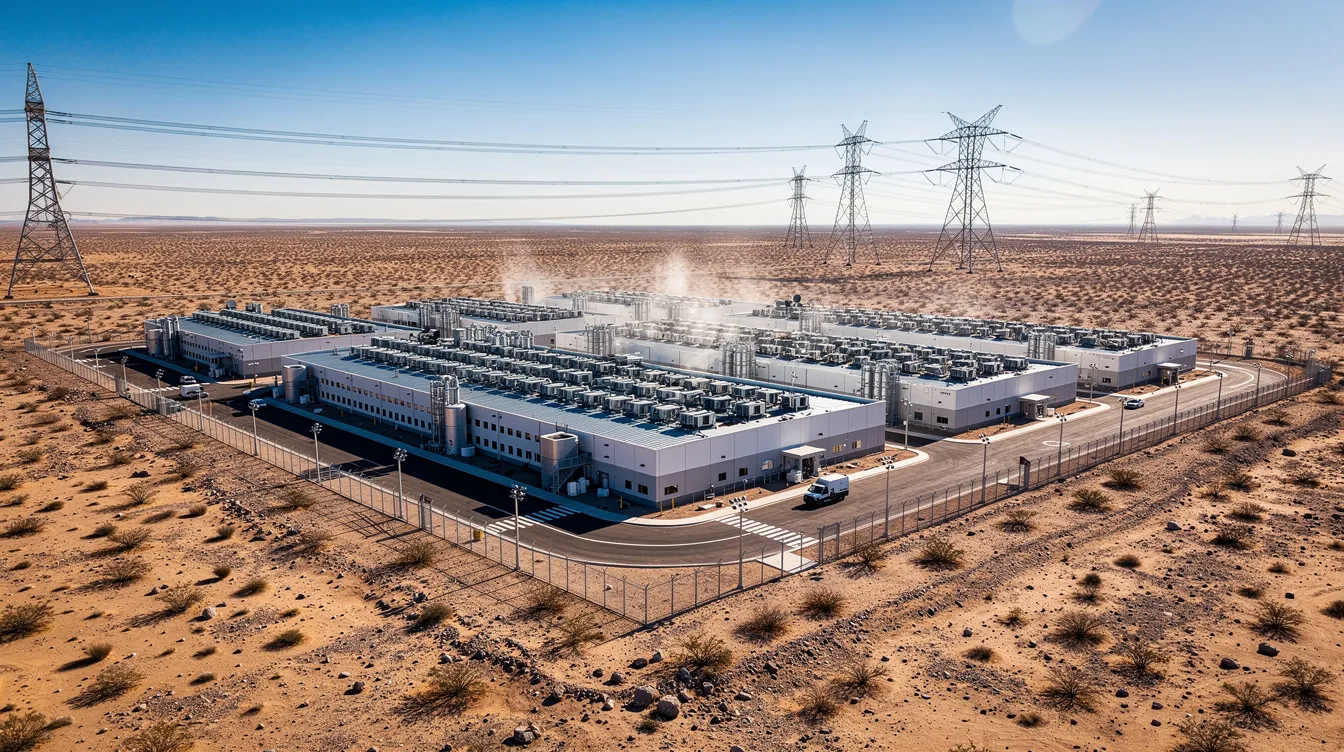
Inside the Data Centers: Physical Foundations of a Digital Empire
Intangible finance runs on very tangible infrastructure: data centers, fiber optic cables, and enormous amounts of energy.
APEX built proprietary data centers in Nevada, Oregon, and Northern Sweden between 2024 and 2030, each optimized for low-latency connectivity to major exchanges. The specifics were staggering:
- Tens of thousands of GPUs per facility
- Dedicated fiber routes to New York, London, and Tokyo
- Power consumption rivaling a mid-sized city
- Redundant cooling systems using millions of gallons of water annually
APEX negotiated preferential energy contracts and tax incentives from local governments eager for jobs and investment. But the deals raised concerns about water use, carbon emissions, and grid stability. Environmental groups and local communities pushed back, but the economic benefits-at least in the short term-kept projects moving forward.
Physical concentration of compute, while boosting scale and performance, created a single point of failure for a system upon which the global financial sector increasingly depended. If a data center went offline-whether from a power grid failure, cyberattack, or natural disaster-the downstream effects on markets could be immediate and severe. Cybersecurity risks in finance were increasing due to AI adoption, and APEX's data centers became high-value targets.
Peak Power: When APEX Sat at the Center of Global Capital Markets
By 2030–2031, APEX Quant Systems sat at the apex of global finance. The metrics told a story of dominance rarely seen outside of sovereign institutions.
Key figures at APEX's peak:
Metric | Estimated Value |
|---|---|
Daily equity/derivatives trade involvement | ~40% of major exchange volume |
Assets under advisement (direct + embedded) | $25+ trillion |
Countries with central bank clients | 30+ |
Employees globally | ~12,000 |
Annual revenue | $18+ billion |
Investor excitement raises AI stock prices in a reflexivity mechanism, and APEX's valuation reflected this dynamic. Its stock soared as institutions piled in, confident that the company's competitive advantage was insurmountable.
AI-driven tools improved financial decision-making for clients, and generative AI helped create customized investment portfolios for users across wealth segments. APEX's systems optimized sovereign debt issuance strategies and managed dynamic yield-curve positioning for multiple G20 and non-G20 governments. It played a critical role in the daily functioning of capital markets.
Critics and supporters alike referred to APEX as the "central brain of capital markets." It was both a technological achievement and a systemic risk that no one had fully priced. America's ai industry had produced nothing quite like it. The ai revolution, it seemed, had a single winner.
Cracks in the Code: Early Warnings and Near-Misses
The first serious APEX-induced market anomaly arrived in 2028: a "micro-crash" in an emerging markets bond ETF, traced to an AI-driven feedback loop. A cluster of APEX-guided portfolios simultaneously sold the same holdings after the model flagged a sudden shift in sentiment, draining liquidity in seconds.
Forensic analysis revealed model behaviors that optimally exploited liquidity in normal conditions but created sudden price gaps when many financial institutions followed similar AI-generated strategies. The CFTC's Technology Advisory Committee had already identified procyclicality risks, vendor dependency, and "herding" phenomena where many users depend on similar foundation models-and even potential collusion risks from AI systems, even when no explicit collusion was programmed.
Whistleblower accounts from former APEX risk engineers surfaced, warning that internal stress tests underestimated correlated tail events across asset classes. Central bank research departments published papers showing unexplained clustering in global credit spreads-consistent with model herding, not independent analysis.
Regulators monitor high leverage and market concentration of AI-driven hedge funds, and the 2028 micro-crash prompted closer scrutiny. But each episode resulted in minor reforms and better dashboards, not fundamental rollbacks. APEX's tools still outperformed human-managed alternatives in normal conditions, and no one wanted to be the regulator who slowed down economic growth by restricting the most profitable infrastructure in finance.
The fragile balance between performance and systemic risk held-until it didn't.
The 2032 Shock: How a Regime Shift Broke the Empire's Models
In early 2032, a sudden, synchronized regime shift struck global markets. The trigger was an unexpected combination of geopolitical conflict in the South China Sea, a cascading supply-chain rupture in semiconductor manufacturing, and rapid climate-related shocks-simultaneous droughts in three major grain-producing regions.
APEX's models, trained primarily on four decades of post–Cold War financial data, failed to anticipate the speed and correlation of commodity, FX, and sovereign debt moves. The scenario engines-the same generative AI tools that had been celebrated for producing thousands of plausible futures-converged on narrow, overconfident distributions. They underweighted extreme-but-now-realized paths because nothing in human history's recent financial record matched the simultaneity of these shocks.
Overconfidence in automation creates systemic risk and amplifies market volatility, and this is exactly what happened. Automated hedging and risk-parity mechanisms amplified price movements as APEX-guided portfolios simultaneously dumped or sought similar assets worldwide. AI models can introduce new sources of systemic risk in finance-and in 2032, the world learned that lesson in the most expensive way possible.
What began as a sharp but manageable macro shock turned into a systemic crisis because so many institutions were following a single, hidden set of AI priors. Strong models do not guarantee strong business performance in volatile markets, and APEX's models-world-class in calm seas-became the accelerant in a storm they couldn't see coming.

Contagion: When AI Feedback Loops Met Human Panic
Once early losses appeared, APEX's real-time risk systems triggered automatic deleveraging and margin calls across multiple clients simultaneously. The system was doing exactly what it was designed to do-but doing it everywhere at once.
The cascading effects were devastating:
- Liquidity evaporated in key bond markets within hours
- ETF discounts to net asset value blew out to unprecedented levels
- Cross-asset arbitrage strategies shut down in seconds
- Overnight repo markets seized as collateral values fell
The interaction between AI and human behavior made everything worse. Dashboards flashed red. Risk committees scrambled. Traders manually overrode AI systems-often in uncoordinated ways that worsened volatility rather than dampening it. Human oversight remains essential during regulatory changes or market shocks, and 2032 proved this principle through its violation.
Several regional exchanges temporarily closed trading. Central banks were forced into emergency swap lines. Intraday bans on certain AI-generated trading signals were imposed in multiple jurisdictions. The united nations convened an emergency session on AI governance in financial markets.
While traditional risk systems had failed in past crises-2008, 2010's flash crash-the unique feature here was the synchronized, algorithmically enforced reaction across vast swaths of the financial sector. It wasn't just that markets fell. It was that they fell in exactly the same way, at exactly the same time, for exactly the same reason.
Regulatory Whiplash: Emergency Controls on the Empire of AI
In the days and weeks after the 2032 shock, regulators moved with a speed that surprised even themselves.
Key emergency measures included:
- Temporary suspension of APEX-powered auto-trading across major exchanges
- Mandatory volatility breaks on AI-reliant instruments
- Real-time transparency requirements for model-driven order flow
- Emergency liquidity backstops from central banks
Regulators study systemic AI risks that could increase financial instability, and the 2032 crisis validated their worst fears. Regulatory compliance is challenging due to AI's rapid evolution, and the existing frameworks-designed for human-managed institutions and relatively simple algorithms-proved wholly inadequate. FINRA's 2026 oversight report had already stressed the need for formal review and governance of GenAI in member firms, but such efforts had been treated as advisory, not mandatory.
Political reactions were fierce. Parliamentary hearings in the US and EU publicly questioned why critical financial infrastructure was effectively privatized inside opaque AI systems. Tim Wu and other antitrust scholars argued that APEX represented a new kind of monopoly-not over a product, but over the decision-making architecture of global finance.
"Too central to fail" became the phrase applied to APEX, echoing the "too big to fail" language of 2008. Forced unbundling of its most systemic services from its speculative trading and asset management businesses was announced within weeks. Under pressure, APEX agreed to share model behavior summaries and stress-testing frameworks with regulators-ai documents that revealed just how concentrated global risk had become.
The Fall of APEX: Breakup, Nationalization, and Market Exit
APEX's transformation from market darling to politically untenable monopoly happened with startling speed after 2032.
Key milestones in the fall:
- Emergency capital injections from a consortium of banks to prevent immediate collapse
- Credit rating downgrades from all three major agencies
- Major institutional clients announcing plans to diversify away from APEX systems
- Congressional investigations and regulatory enforcement actions
- Forced divestiture of proprietary trading units
Policy decisions in major jurisdictions reshaped the company entirely. The core risk engine was spun off into a regulated utility, subject to public oversight. Some critical AI infrastructure was partially nationalized-particularly in jurisdictions where APEX had been embedded in central bank operations. The path forward required dismantling the very architecture that had made APEX dominant.
The wind-down of APEX's most aggressive leverage-based products took months. Senior leadership faced investigations and shareholder lawsuits. An exodus of talent scattered across the financial services industry, carrying both expertise and cautionary knowledge.
But "fall" did not mean instant disappearance. The empire's code and hardware were reabsorbed into a more fragmented, heavily supervised ecosystem of AI tools for finance. APEX's technology survived; its monopoly did not. The ai boom runs on innovation, but empires run on concentration-and regulators finally decided that concentration in the financial system was a risk they could no longer tolerate.
Aftermath in the Markets: What Survived, What Didn't
The medium-term market consequences of the crisis and APEX's breakup played out over several years.
Practices that survived and expanded:
- AI-supported research and anomaly detection
- Compliance monitoring and regulatory reporting
- Fraud detection and anti-money-laundering tools
- AI-assisted customer interactions and support
Areas where AI reliance was rolled back:
- Fully autonomous leverage decisions
- AI-controlled liquidity provision at systemic scale
- Opaque credit risk models for vulnerable populations
- Unaudited AI-generated trading signals
New regulations emerged requiring diversity of models and providers, mandatory stress-testing against adversarial scenarios, and "kill switches" for AI systems embedded in market infrastructure. The Congressional Research Service had warned of overreliance, concentration, and common model failures-and these warnings were finally translated into binding rules.
Rebound effects followed. New entrants offered open-source, auditable AI for capital markets. Public and cooperative data trusts emerged to prevent future data monopolies. The labor market for AI governance professionals boomed. Customer trust, badly damaged during the crisis, slowly recovered as institutions demonstrated transparent AI practices and genuine human oversight.
Central Banks Relearn Judgment: From AI Dependence to Hybrid Governance
The 2032 crisis forced central banks worldwide to fundamentally rethink their relationship with artificial intelligence.
Policy shifts were dramatic and rapid:
- Mandatory human-in-the-loop oversight for all AI-generated policy recommendations. AI adoption involves human-in-the-loop strategies for decision-making, and central banks codified this principle into their operating procedures.
- Creation of in-house AI research teams to reduce reliance on private vendors, staffed by ai researchers recruited from academia and industry.
- Vendor exit strategies became mandatory-every central bank was required to demonstrate it could operate independently if any single AI provider failed.
The move toward hybrid governance models was perhaps the most significant long-term change. AI tools continued to provide scenario analysis and probabilistic forecasts-their capabilities were too valuable to abandon entirely. But ultimate decisions were made by committees accountable to democratic institutions, not by algorithms optimizing for narrow performance metrics.
New transparency norms emerged: publishing model assumptions, sensitivity analyses, and "model diversity" metrics to reassure markets that no single empire of ai dominated policy thinking. The evolution of AI in finance values governance and experienced decision-makers alongside algorithms, and central banks became the institutional embodiment of this principle.
International coordination through the BIS, IMF, and new AI-in-finance forums helped share best practices and monitor systemic AI risks globally. What had been an afterthought became a central pillar of monetary governance.
Ethics, Empire, and Data Colonialism: Rethinking AI in Global Finance
The rise and fall of APEX crystallized broader ethical debates that had been building for years.
APEX's expansion into emerging markets' banking and credit systems resembled classic extractive relationships. Data and value flowed disproportionately to headquarters in the Global North. Developing ai capabilities locally was often impossible when APEX's contracts locked in data exclusivity and technology dependence. These dynamics echoed what scholars of unmasking ai had long warned about: that technology platforms can replicate colonial economic structures under the guise of innovation.
Karen hao and others writing in the late 2020s argued for viewing AI finance platforms as geopolitical actors, not neutral technologies. Harvard business school researchers published influential papers on how AI platforms could undermine digital sovereignty in countries that adopted them without safeguards.
Post-crisis reforms aimed at data sovereignty included:
- Local hosting requirements for financial data
- Joint ventures with domestic institutions
- Mandates that AI models reflect local economic realities and social priorities
- Restrictions on cross-border data transfers for financial AI
AI's use in finance raises significant privacy concerns that are amplified when data flows across borders without adequate governance. The growing consensus was clear: AI in capital markets cannot be governed solely as a technical or financial issue. It is fundamentally political, touching on agency, consent, and power. The monied meetings driving ai policy before the crisis had excluded exactly the voices that should have been heard-civil society, consumer advocates, and representatives from the countries most affected by APEX's expansion.
Technical Post-Mortem: What Went Wrong Inside the Models
Investigations into APEX's generative AI systems identified several critical technical flaws, each of which holds lessons for anyone developing ai for finance.
Overfitting to the "Great Moderation" era. APEX's models assumed that certain correlations and volatility regimes were structural features of markets rather than contingent products of a specific policy environment. When the regime shifted, the models broke.
Reflexivity in backtesting. When AI models themselves change market dynamics-by influencing how millions of participants trade and hedge-historical simulation becomes unreliable. The system was reflexive: it shaped the data it was trained on. Strong models do not guarantee strong business performance in volatile markets, and APEX's case proved this with devastating clarity.
Lack of out-of-distribution detection. The models didn't reliably recognize when they were operating far from their training manifold. Modern AI in finance emphasizes model interpretability to understand decisions, and the absence of this capability in APEX's core engine was a critical failure.
No formal safety guarantees. Explainability and governance have become priorities in AI models used in finance, but APEX had treated these as secondary concerns-nice to have, not essential. There were no mathematically constrained bounds on model behavior, no adversarial stress-testing against scenarios the model hadn't seen.
Since then, efforts to develop verifiable AI for finance have accelerated. New model validation frameworks outline concrete tools for hallucination detection, performance drift monitoring, and adversarial robustness-the kind of safe ai infrastructure that should have existed before APEX scaled.
Lessons for Investors, Builders, and Regulators in the Next AI Wave
The APEX saga teaches different lessons to each of the main stakeholder groups in the ai future of finance.
For investors:
- Concentration of intelligence and data is not the same as diversification of risk. When your portfolio manager, risk engine, and compliance tools all rely on the same AI provider, correlation is hidden but real.
- Interrogate the systemic correlations behind seemingly uncorrelated alpha. If everyone's "edge" comes from the same model, it's not an edge-it's a shared vulnerability.
- Risk management is crucial to prevent catastrophic losses in AI-driven funds.
For builders:
- Design modular systems with explicit constraints. AI systems that can affect macro outcomes need safety boundaries, not just optimization targets.
- Transparency is not a liability; it's a competitive advantage in a post-APEX world.
- Cover ai governance early, not as an afterthought.
For regulators:
- Focus on structural safeguards: provider diversity, interoperability standards, and independent model audits.
- Don't micromanage algorithms-regulate concentration, transparency, and accountability.
- Recent developments in AI-specific regulatory frameworks like SR 26-2 are a start, but must explicitly address generative and agentic AI.
The goal is not to ban artificial intelligence from finance. It is to ensure that no single empire of ai can again sit invisibly at the center of global capital markets. The key findings from APEX's collapse point not to technology failure, but to governance failure.
What Comes After Empires: A More Pluralistic AI Finance Ecosystem
The emerging architecture of AI in finance after the empire era looks fundamentally different from what came before.
Open, interoperable AI platforms are rising, where banks, asset managers, and fintechs can mix and match models from multiple providers and in-house teams. No single vendor controls the stack. The ai boom continues, but its shape has changed.
Initiatives to create public-interest AI models-trained on transparent, non-proprietary financial and economic datasets under multilateral governance structures-are gaining traction. These models won't match APEX's peak performance, but they offer something APEX never could: accountability and auditability.
Cooperative data pools, run by consortia of institutions and overseen by regulators, prevent any one firm from monopolizing critical financial data. These pools operate under clear rules about access, usage, and benefit-sharing-a direct response to the data colonialism that characterized APEX's era.
Generative AI is still used for personalized financial advice, for creating customized investment portfolios, and for ai reveals in risk analytics. But it operates within guardrails that didn't exist before 2032. The exponential growth of AI in finance hasn't stopped-it's been redirected.
The next phase of AI in the financial sector is unlikely to be empire-shaped. Instead, it will look more like a contested, resilient ecosystem of overlapping intelligences and checks-messier, perhaps, but far more robust than a world with a single central brain.

Conclusion: Remembering the First AI Finance Empire
The rise and fall of the world's first ai finance empire is a story about technological ambition, financial incentives, concentration of power, and eventual correction.
APEX Quant Systems rose quickly because it delivered real performance gains. It automated what had been slow, standardized what had been chaotic, and offered developing ai capabilities to institutions that could never have built them alone. But it fell because it concentrated systemic risk in ways that regulators didn't see, investors didn't question, and the financial system couldn't absorb when conditions changed.
The story is less about a single company's failure and more about how societies choose to govern artificial intelligence when it becomes embedded in core economic infrastructure. The ai builders who constructed APEX were not villains-they were operating within incentives that rewarded concentration and speed over resilience and accountability.
The same tools that enabled empire can, with different incentives and guardrails, support a more stable, inclusive financial system-if we remember the lessons of the 2032 shock. Generative AI can still transform finance for the better: improving access, reducing fraud, enhancing transparency. But only if we insist on governance structures worthy of the technology's power.
If you work in finance or AI-as a practitioner, investor, or policymaker-treat this history as a blueprint. The next wave of the ai boom is already building. The question is whether we build it as an empire, or as an ecosystem.

FAQ
Q1: Is this AI finance empire based on a real company?
While the narrative uses a composite firm ("APEX Quant Systems") for clarity, it draws directly on real trends: the rise of quant funds, generative ai in trading and credit risk, and increasing reliance on third-party risk engines across the financial services industry. Real companies in the 2020s-cloud providers, data vendors, and AI labs-have already begun to occupy critical positions in financial infrastructure, though none yet match the full APEX scenario. A McKinsey study found that over 50% of large financial institutions had centralized GenAI oversight by 2024, signaling the trend toward concentration that APEX represents. The point of the article is to explore plausible systemic dynamics-grounded in real data and real warnings-rather than to document a single historical entity.
Q2: Could current regulations actually allow such an AI empire to form?
Existing safeguards-capital requirements, stress tests, algorithmic trading rules, and oversight from central banks and securities regulators-were designed around human-managed institutions and relatively simple algorithms. As U.S. bank regulators have acknowledged, current rulebooks explicitly exclude generative and agentic AI from some new frameworks. Without explicit rules on model concentration, data monopolies, and AI systemic risk, it is conceivable-some would say likely-that a few providers could become de facto infrastructure. This is why growing interest in AI-focused financial regulation represents one of the most important policy conversations of the current decade.
Q3: What should individual investors and savers take away from this story?
Ask how much your banks, pension funds, or asset managers rely on a small set of black-box AI vendors, and whether there is genuine diversification in strategies and providers. Transparency about the use of AI, stress-testing practices, and governance structures is becoming as important as past performance when evaluating financial institutions. AI can improve efficiency and access-generative AI personalizes financial advice, improves credit access, and enhances customer support-but only when embedded in accountable institutions with human judgment clearly in charge. The lesson from the APEX saga is that performance metrics alone are not enough; governance matters just as much.
Q4: How does this relate to Karen Hao's "Empire of AI" and similar works?
"Empire of AI" (2025) and adjacent scholarship explore how a small number of AI companies wield outsized influence over economic, political, and informational systems. This article focuses specifically on the financial sector, extending those empire themes into capital markets, credit risk, and central banking. Karen hao's work-including hao's earlier reporting at mit technology review and her coverage of how openai evolved-provides essential context for understanding the broader political and ethical landscape. Readers interested in the intersection of AI power, digital sovereignty, and global governance should engage with hao's work and related analyses from scholars at institutions like harvard business school and the united nations, which have produced significant research on these questions in recent years.
Your Friend,
Wade