




Key Takeaways
Research in artificial intelligence is now a core driver of progress in science, industry, education, and public policy. In 2026, ai research is shaped by machine learning, deep learning, large language models, agentic systems, and big data analytics.
- Artificial intelligence research is moving beyond bigger models toward real world deployment, autonomy, safety, and measurable impact.
- AI applications now support health care, finance, transportation, nature conservation, astronomy, communications, and scientific research.
- Responsible AI now matters as much as benchmark performance, especially in bias, privacy, transparency, and governance.
- AI tools are enabling researchers to analyze literature, generate hypotheses, clean data, write code, and discover new patterns faster.
Introduction: What Is Artificial Intelligence Research Today?
Artificial intelligence research is the systematic study of algorithms, models, and systems that perform tasks linked to human intelligence, such as perception, language, planning, and complex decision making. Early artificial intelligence began with symbolic rules and concepts like the Turing Test; today, most progress comes from data-driven machine learning models and neural networks.
The difference is simple: artificial intelligence is often the application layer, such as chatbots or recommendation tools, while AI research creates the methods behind them. By 2026, artificial intelligence AI research spans computer vision, robotics, reinforcement learning, self driving cars, large language models, and interdisciplinary science. The national science foundation invests over $700 million each year in fundamental AI research to foster breakthroughs across all fields of science and engineering.

How Do AI Systems Learn? From Machine Learning to Deep Learning
Most modern AI systems learn from data rather than being explicitly programmed. In practice, an ai system adjusts a model until its outputs improve.
Here is how ai learning usually works:
Approach | What it does | Example |
|---|---|---|
Supervised learning | Learns from labeled data | Classifying medical images |
Unsupervised learning | Finds patterns in new data | Clustering customers |
Reinforcement learning | Learns through rewards | Game agents and robots |
Deep learning uses multi-layer neural networks, loosely inspired by the human brain, to process large volumes of text, images, audio, video, and code. AlexNet accelerated image recognition in 2012, transformers changed language modeling in 2017, and GPT-style large language models expanded from 2018 onward.
Big data, GPUs, TPUs, and scalable computation made this progress possible. Current emerging AI models utilize multimodal capabilities to understand and generate text, audio, video, and code simultaneously.
Core Areas of Artificial Intelligence Research
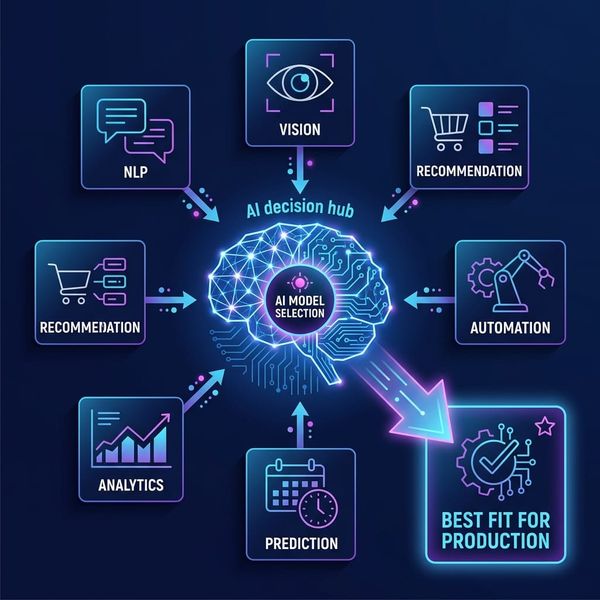
AI research is not one field. It is a set of related areas where computer scientists, engineers, scientists, and humanities scholars explore different problems.
- Machine learning theory studies why algorithms generalize, fail, or improve accuracy.
- Natural language processing develops large language models for translation, search, teaching, writing, and support.
- Computer vision helps machines interpret images, video, satellite data, and medical scans.
- Robotics and autonomous systems connect perception with action in the real world.
- Multi-agent systems study coordination, markets, traffic, logistics, and group decision making.
Advancing research is published through venues such as NeurIPS, ICML, ICLR, ACL, CVPR, and AAAI. Interdisciplinary centers, from a university AI lab to the ryan institute, increasingly connect neuroscience, law, economics, climate science, and human computer interaction.
The Northwestern Network for Collaborative Intelligence (NNCI) focuses on advancing responsible, high-impact research and education in AI and data science through interdisciplinary collaborations.
AI in Scientific and Industrial Research: Applications Across Domains
Artificial intelligence research is now embedded in how we conduct science and build products. Artificial intelligence is transforming communications, transportation, and scientific research by enabling new discoveries and technologies.
In health care, AI is being used to predict blood glucose levels using data from wearable sensors, which can enhance patient safety and reduce complications by anticipating blood glucose control problems. Deep learning models are also being utilized to support treatment decisions for cutaneous squamous cell carcinoma (cSCC) by predicting the seriousness of cases and optimal treatment options based on historical image data. AI technologies are being developed to detect medication errors in real-time, significantly improving patient safety during drug administration in healthcare settings.
In science, AI has evolved into a central partner in the scientific discovery pipeline, generating biological hypotheses and automating experimental designs. AlphaFold showed how AI technology can help researchers discover protein structures and accelerate new discoveries.
In education, the National Science Foundation (NSF) invests in the creation of educational tools, materials, curricula, scholarships, and fellowships to enhance learning and create an AI-ready workforce. Northwestern University offers over 51 educational programs designed to equip the next generation of workers and researchers in artificial intelligence and data science.
The NSF AI-Ready America initiative aims to boost artificial intelligence readiness across all U.S. states and territories, envisioning a future where every individual and community thrives in an AI-driven economy. The NSF TechAccess: AI-Ready America initiative aims to enhance AI readiness across the U.S., envisioning a future where communities and businesses thrive in an AI-driven economy. The NSF TechAccess: AI-Ready America initiative aims to enhance artificial intelligence readiness across all U.S. states and territories, promoting an AI-driven economy.
In business, organizations are adopting AI tools to drive competitive advantage and boost labor productivity across various sectors. Agentic AI is leveraged for advanced demand sensing, real-time logistics forecasting, and predictive maintenance to optimize business operations. Generative AI tools are used to augment creative teams by automating tasks like video dubbing and script analysis, streamlining production workflows.
AI-driven approaches are enhancing real-time fraud detection and hyper-personalized banking services in the financial sector. Legal AI tools can synthesize large amounts of data to evaluate complex legal cases, enhancing citation integrity and protecting against privilege exposure. AI applications are also being integrated into finance, nature conservation, and astronomy, showing their ability to address global challenges.

AI as a Research Tool: Large Language Models and AI-Driven Workflows
By 2024–2026, large language models and specialized ai tools became part of daily practice for researchers, students, and analysts. These tools support citation mapping, literature screening, summarization, data cleaning, coding, and early manuscript drafts.
Practical ways to use them:
- Use AI to brainstorm hypotheses, but validate with human expertise.
- Use AI for code, but test it carefully.
- Use AI to summarize papers, but check sources.
- Use private systems when handling sensitive data.
AI’s role in coding has evolved from basic autocomplete assistance to participating in continuous code deployment and active vulnerability patching. Developing autonomous AI agents capable of multi-step reasoning, tool usage, and independent execution of complex enterprise workflows is now a major focus in artificial intelligence research.
Responsible Artificial Intelligence: Ethics, Governance, and Trust
As AI becomes more integrated into society, there is a growing need to understand its economic and societal implications, including ethical considerations surrounding its use. Bias, privacy risk, surveillance, misinformation, and opaque automated decision making can all create harm.
Responsible AI practice includes model cards, data sheets, impact assessments, audits, and human interaction in high-stakes workflows. The concept of eXplainable AI (XAI) is crucial for building trust in AI systems, as it aims to make AI models more transparent and understandable to users, thereby addressing ethical concerns about decision-making processes.
The EU AI Act and U.S. AI safety actions are shaping development standards. Ethical AI development emphasizes the importance of interdisciplinary collaboration, bringing together technologists, ethicists, and social scientists to explore the societal impacts of AI and ensure responsible innovation.
Challenges, Open Questions, and the Future of AI Research
Despite rapid progress, AI still faces hard problems: data efficiency, robustness, interpretability, energy use, and safe deployment on devices and machines. Current artificial intelligence research has shifted focus from purely building larger models to optimizing system-level deployment, agentic autonomy, and real-world industrialization.
AI research has shifted towards generative AI expansion, agentic AI, and Auto-ML, transitioning to proactive systems that automate various tasks. The industrialization of AI is driving significant transformation across major sectors by integrating AI into deep operational workflows rather than isolated use cases.
The future will likely include neurosymbolic AI, stronger human-AI collaboration, quantum machine learning, and edge AI. The goal is not just faster technology, but committed, responsible innovation that solves real world problems.
FAQ
Q1: How is AI research different from just using AI tools in my work?
AI research creates new algorithms, architectures, evaluation methods, and theory. Using ai tools usually means applying an existing model to a task. Both matter, but they require different levels of technical understanding.
Q2: Do I need a PhD to work in artificial intelligence research?
A PhD helps, but it is not always required. Strong skills in programming, statistics, data science, experimentation, and reading research papers can open many research and development paths.
Q3: How can researchers use AI responsibly without compromising data privacy?
Researchers should anonymize data, use secure environments, follow IRB or legal rules, and document how data is collected, stored, and processed. Sensitive projects may require on-premise models or restricted access.
Q4: What skills should students develop now?
Students should learn linear algebra, probability, Python, machine learning frameworks, scientific writing, experiment design, and ethics. These skills support the next generation of AI researchers and practitioners.
Q5: Will AI replace human researchers?
AI will automate repetitive work, but human expertise remains essential for framing questions, interpreting results, teaching, and accountability. The strongest progress will come from people leveraging AI wisely.
Your Friend,
Wade