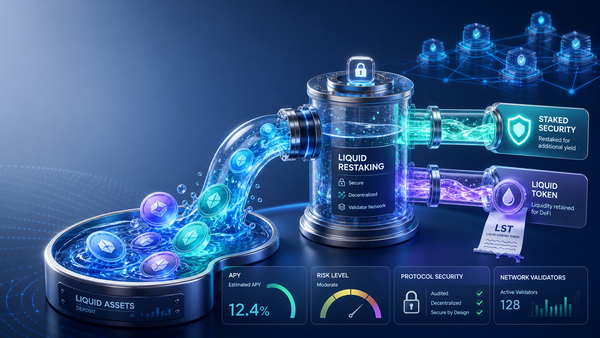
What is Liquid Restaking for Higher Returns in Crypto?
1. Liquid restaking allows users to earn additional rewards by utilizing their staked assets across multiple protocols without losing liquidity.


1. Liquid restaking allows users to earn additional rewards by utilizing their staked assets across multiple protocols without losing liquidity.
Understanding the intricacies of cryptocurrency requires asking profound questions about its technology, security, and market dynamics. The crypto landscape is vast, encompassing various digital assets, blockchain technology, and decentralized finance.
The cryptocurrency market is highly volatile, presenting both opportunities and risks for investors. Diversifying a portfolio with digital assets can enhance potential returns, but it requires careful risk management.
The crypto market has faced significant downturns due to rising interest rates and geopolitical uncertainties. Panic selling and investor sentiment have contributed to the market's decline, leading to a loss of confidence in digital assets.
The crypto market is poised for potential growth, driven by institutional adoption and evolving regulatory clarity. Historical trends suggest that digital assets may experience significant price movements, especially as investor sentiment shifts.
In a world where geopolitical tensions seem to rise like bread in an oven, many investors are left scratching their heads, wondering where to put their hard-earned cash.
The crypto market is experiencing fluctuations reminiscent of past downturns, raising questions about the potential return of a crypto winter. Bitcoin ETFs and digital asset treasuries are becoming increasingly popular, but they also come with risks that income investors should consider.
The current state of the crypto market presents both significant opportunities and risks, making it crucial for investors to assess their strategies carefully.
January 2026 witnessed a staggering $370 million in crypto theft, representing a fourfold increase compared to January 2025. 117.8 million was lost to scams in December, serving as a benchmark for the sharp rise in January's losses.