



Key Takeaways:
- The closure of the Strait of Hormuz could lead to rising oil prices, impacting global markets and creating volatility in the crypto space.
- Bitcoin, often referred to as digital gold, may experience price fluctuations as investors react to geopolitical developments and inflation fears.
- Market participants should closely monitor the situation, as the interplay between oil prices and Bitcoin could signal trading opportunities or risks.
Understanding the Strait of Hormuz
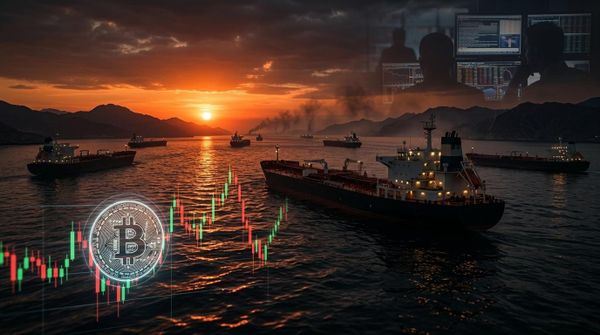
The Strait of Hormuz is a narrow waterway that serves as a crucial passage for oil tankers, with approximately 20% of the world’s oil supply passing through it. When tensions rise in this region, particularly involving Iran in the Middle East, the implications can ripple through global markets, affecting everything from oil prices to cryptocurrencies like Bitcoin. Iran's closure of the Strait, often described as a blockade, has significant implications for countries dependent on oil trade. Reports have also indicated that increased demand for oil payments has led Iran to utilize Bitcoin and stablecoins as payment for safe passage through the Strait. The closure of this strait can create a domino effect, leading to increased uncertainty and volatility in various asset classes.
As geopolitical tensions escalate, the potential for a blockade of the Strait of Hormuz becomes a pressing concern. Iranian officials have previously threatened to block this vital route, which could lead to significant disruptions in oil supply. Such actions can trigger a surge in oil prices, which in turn can influence the broader financial landscape, including the crypto markets.
The Impact on Oil Prices
When the Strait of Hormuz faces closure, oil prices typically rise due to supply constraints, with crude oil potentially spiking to $110–$200 per barrel. Such increases per barrel heighten global inflation fears, as higher oil prices often translate to increased costs for consumers and businesses alike. Spiking crude oil prices at these levels can lead to expectations of higher interest rates, which typically pressure Bitcoin's value. Historically, rising oil prices per barrel correlate with increased inflation expectations, influencing central bank policy decisions and affecting risk asset valuations, including Bitcoin. As traders react to these developments, the volatility in oil markets can spill over into the cryptocurrency space, particularly Bitcoin.
For instance, during previous geopolitical crises, Bitcoin has often been viewed as a hedge against inflation and economic instability. As oil prices soar, investors may flock to Bitcoin, driving up demand and potentially leading to price surges. However, this relationship is not always straightforward, as market sentiment can shift rapidly based on news and data.
Bitcoin as Digital Gold
Bitcoin is often touted as “digital gold” for its perceived value as a store of wealth and is promoted as a safe haven asset. In times of geopolitical uncertainty, many investors turn to Bitcoin as a potential refuge. The closure of the Strait of Hormuz could amplify this trend, as rising oil prices and inflation fears push investors to seek alternatives like cryptocurrencies.
However, recent bitcoin dips during the Iran conflict have challenged Bitcoin's safe-haven appeal, as it struggled to maintain its value amid heightened uncertainty. The recent volatility, including significant drops below $75,000, highlights Bitcoin's sensitivity to macroeconomic and geopolitical developments. While rising oil prices can lead to increased interest in Bitcoin, they can also create a risk-off sentiment among investors. This duality means that while some may see Bitcoin as a safe haven, others may choose to liquidate their positions in favor of more traditional assets during times of crisis.
Market Participants and Their Reactions
Market participants, including traders and investors, are always on the lookout for signals that could indicate future price movements. The closure of the Strait of Hormuz would likely send mixed signals throughout the markets. Some traders may see this as an opportunity to capitalize on rising oil prices, while others may adopt a more cautious approach, fearing potential market downturns. According to the Kobeissi Letter, such geopolitical events, especially US-Iran tensions, have a direct impact on oil prices and can significantly influence cryptocurrency markets, including BTC.
Data from platforms like Coinglass can provide insights into market sentiment and trading volumes. For example, if BTC experiences significant drops during periods of heightened geopolitical risk, it may indicate that investors are reacting to broader market concerns rather than solely focusing on Bitcoin’s fundamentals. Bitcoin's price action has become increasingly sensitive to geopolitical developments, particularly the US-Iran conflict, which has led to notable volatility and liquidations in the crypto derivatives market. Monitoring liquidity is crucial, especially during periods of token unlocks, as thin order books and changes in stablecoin trading volumes can amplify price swings. Traders should regularly assess their BTC position and remain aware of how token unlocks may impact overall market liquidity.
The Role of the US Dollar
The US dollar plays a pivotal role in global markets, particularly in relation to oil prices. As oil is typically priced in dollars, any fluctuations in the dollar’s value can impact oil prices and, by extension, the pricing of cryptocurrencies like Bitcoin. Central bank monetary policy decisions, especially those concerning interest rates and inflation control, also influence the pricing of risk assets such as Bitcoin in response to geopolitical and economic shocks. A strong dollar may lead to lower oil prices, while a weaker dollar could have the opposite effect.
When the Strait of Hormuz is closed, concerns about the dollar’s strength may arise. If traders anticipate rising oil prices, they may seek to hedge their positions by investing in Bitcoin. This dynamic can create a feedback loop, where the interplay between oil prices, the dollar, and Bitcoin leads to increased volatility in the crypto markets.
Geopolitical Risks and Bitcoin Price Action
Geopolitical risks are a significant factor influencing Bitcoin price action. The current situation represents an escalation in the US-Iran conflict, with tensions returning in full force. The market is reacting to an assumed ceasefire, which remains unconfirmed and fragile, adding to the uncertainty. Trump's role in escalating tensions and threatening Iran's infrastructure has further intensified the crisis, especially regarding the Strait of Hormuz.
As these tensions rise, Bitcoin may experience sharp price movements, reflecting the uncertainty in the broader market. For instance, during previous geopolitical escalations, Bitcoin has seen both dramatic surges and steep declines. Traders must remain vigilant, as the interplay between geopolitical developments and Bitcoin price action can create both opportunities and risks. Understanding these dynamics is crucial for anyone looking to navigate the crypto markets effectively.
The Importance of Market Analysis
In times of uncertainty, thorough market analysis becomes essential for traders and investors. Traders should focus on key technical levels and watch for significant events that could impact Bitcoin, such as geopolitical developments related to the Strait of Hormuz. Monitoring these events, along with upcoming happenings in the crypto industry, may influence market trends and provide valuable insights. By staying informed, market participants can make more informed decisions and potentially capitalize on trading opportunities.
Tools like technical analysis and sentiment indicators can help traders gauge market sentiment and identify potential entry and exit points. For example, if Bitcoin shows signs of resilience despite rising oil prices, it may indicate strong underlying demand, prompting traders to consider long positions.
The Role of Inflation Fears
Inflation fears often accompany rising oil prices, as increased energy costs can lead to higher consumer prices. In such an environment, Bitcoin, as a digital asset within the broader digital asset ecosystem, may be viewed as a hedge against inflation, attracting investors seeking to preserve their purchasing power. During periods of conflict, money often flows into cryptocurrencies as an alternative to traditional banking. The closure of the Strait of Hormuz could exacerbate these fears, leading to increased demand for Bitcoin and other digital assets. In regions where traditional banking is restricted due to conflict, cryptocurrency usage often spikes as it becomes the only available channel for cross-border transfers and wealth preservation.
However, it’s essential to recognize that not all investors will react the same way. Some may choose to liquidate their Bitcoin holdings in response to rising oil prices, fearing a broader market downturn. This divergence in sentiment can create volatility in Bitcoin prices, making it crucial for traders to stay attuned to market developments.
Trading Profits and Volatility
The potential for trading profits during periods of heightened volatility is a double-edged sword. Such times can bring both optimism and warning for traders—optimism, as positive market sentiment may trigger significant liquidity and price rallies, and warning, as the risks and potential negative consequences of regulatory gaps and market volatility require caution. The closure of the Strait of Hormuz could lead to rapid price swings in both oil and Bitcoin, requiring traders to exercise vigilance.
For example, if Bitcoin experiences sharp dips in response to rising oil prices, traders may need to act quickly to protect their positions. Conversely, if Bitcoin shows resilience and begins to rally, it could present lucrative trading opportunities for those willing to take on the associated risks. Additionally, some reports suggest that during regional conflicts, certain entities may require ships to pay transit fees in cryptocurrency, creating a baseline demand independent of financial markets.
The Future Outlook for Bitcoin
As the situation surrounding the Strait of Hormuz unfolds, the future outlook for Bitcoin remains uncertain. Traders should closely monitor Bitcoin's price behavior around Sunday's weekly close for technical signals, as these can provide insight into potential support and resistance levels for the upcoming week. Additionally, key economic data from March, such as US retail sales and Canada’s inflation figures, have influenced recent market trends and should be considered when analyzing the broader impact of geopolitical events.
A closure of the Strait creates unique pressure by increasing demand for Bitcoin as a sanctions-resistant payment tool for oil. Market participants must remain vigilant, as geopolitical developments can change rapidly. Keeping an eye on oil prices, inflation fears, and overall market sentiment will be crucial for anyone looking to navigate the crypto landscape in the coming days.
In the face of uncertainty, some traders may adopt a more cautious approach, while others may see opportunities to capitalize on price movements. The key is to stay informed and be prepared to adapt to changing market conditions.

The closure of the Strait of Hormuz could have far-reaching implications for Bitcoin and the broader financial markets. Rising oil prices may lead to increased volatility in the crypto space, as investors react to geopolitical developments and inflation fears. Understanding the interplay between oil prices, the US dollar, and Bitcoin is essential for market participants looking to navigate these uncertain waters.

Q1: How does the closure of the Strait of Hormuz affect oil prices?
A1: The closure can lead to supply constraints, causing oil prices to rise due to increased demand and geopolitical tensions.
Q2: Why is Bitcoin considered a hedge against inflation?
A2: Bitcoin is often viewed as a store of value, similar to gold, making it attractive to investors during times of rising prices and economic uncertainty.
Q3: What should traders monitor during geopolitical crises?
A3: Traders should keep an eye on oil prices, market sentiment, and geopolitical developments to make informed trading decisions.
Your Friend,
Wade