

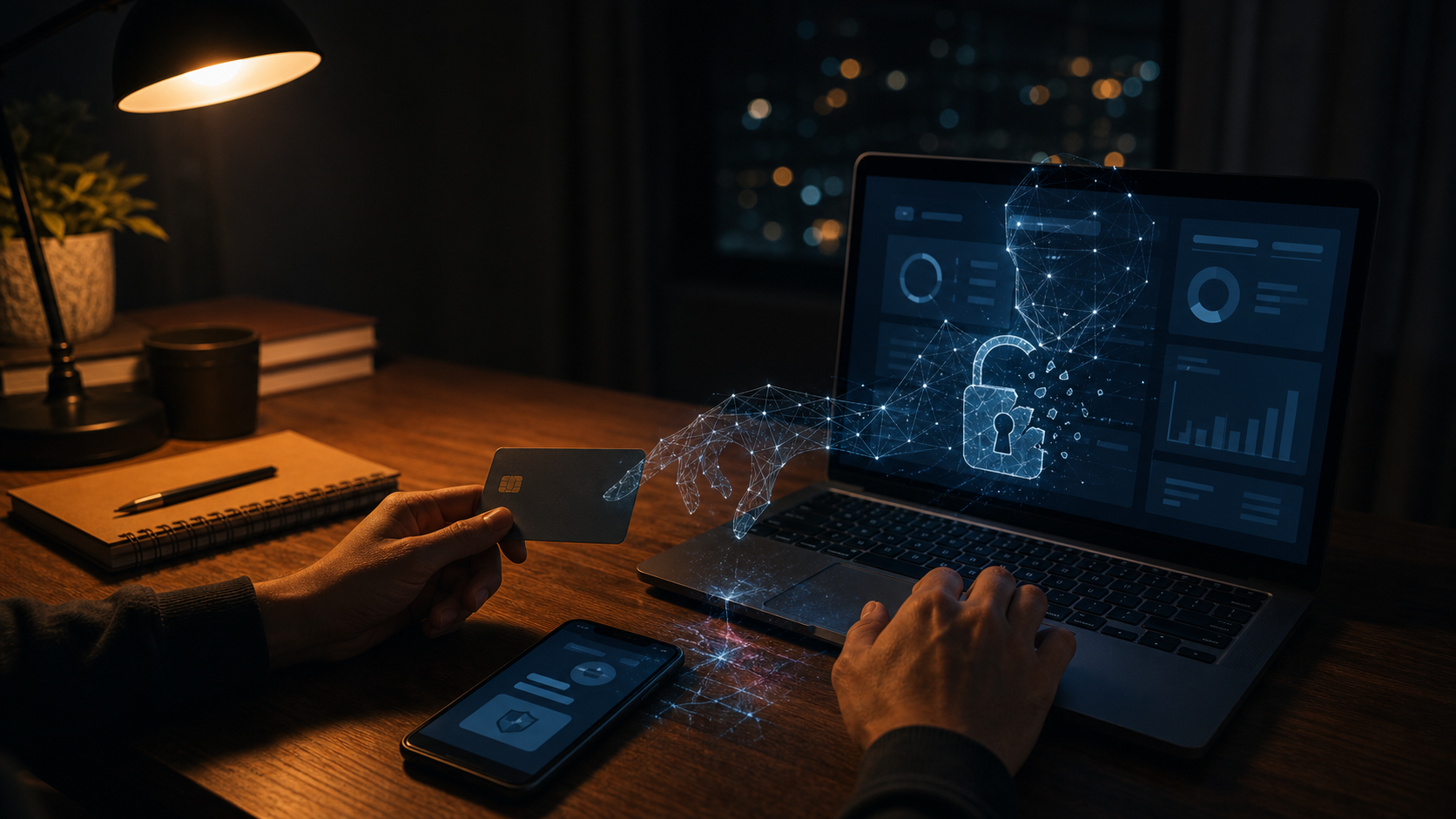



Artificial intelligence is everywhere in the headlines, and it's natural to wonder whether ai is going to invade my private bank account. Here's the short answer-and the practical steps you need right now.
Key Takeaways
- Artificial intelligence itself does not break into bank accounts. Criminals use ai tools to trick you into handing over access to your financial accounts. As of mid-2026, financial institutions still rely on strong encryption and multi factor authentication that ai cannot simply bypass on its own.
- The real risk is ai scams-voice cloning, deepfakes, and smarter phishing-that pressure you to share sensitive information or transfer money yourself.
- Protect yourself now: never share passwords or full account numbers, verify urgent requests by phone through trusted contact methods, and enable multi factor authentication on all financial accounts.
- Below, we'll walk through how criminals use ai technology to target your bank account, what financial information to keep away from ai tools, and what to do if you slip up.
Can AI Really Invade My Bank Account?
No, ai systems cannot just log in to your bank on their own. They still need your login details, one-time codes, or authorization to access anything. Modern online banking uses encryption, fraud monitoring, and factor authentication that aren't magically broken by artificial intelligence.
The real threat is humans using ai to run scams that persuade you to share sensitive information, approve a transfer, or bypass normal caution. Hackers utilize ai to write sophisticated malware and automate attacks, but they still depend on you making a mistake. AI technology increases banking efficiency while expanding fraud risk, and ai often operates across borders, making compliance challenging for regulators.
Banks in the U.S., U.K., and EU must follow strict security regulations-but criminals aren't bound by those rules and freely use ai tools.
What Is Artificial Intelligence in Everyday Banking?
AI is software that learns from data to recognize patterns, make predictions, or generate content like text, images, or audio. Your bank likely uses ai for:
- Fraud detection on credit card numbers and debit transactions
- Chatbots on your banking app for customer service
- Credit risk scoring based on past repayment data
Generative ai-like ChatGPT-style tools-can create realistic emails, messages, and synthetic voices. This differs from traditional rule-based systems. Note that ai tools might perpetuate biased outcomes based on flawed training data, and a single error in an ai banking workflow can cause widespread transaction failures. Using ai in your banking app for account alerts or budgeting is not the same as exposing your accounts to public ai tools on the internet.
How Criminals Use AI Tools to Target Your Bank Accounts
Cybercriminals use ai to create hyper-personalized phishing emails that reference your bank's name, recent purchases, or social media posts. About 82% of phishing emails now use ai-generated content to evade detection, and what once took 16 hours to build now takes under five minutes with generative ai. AI generates highly realistic phishing emails and texts, and ai scams create highly realistic messages to trick users across text messages and email.
Here's how these scams play out:
- Voice cloning: AI can clone a person's voice using just a short audio clip-sometimes only three seconds from social media. AI voice cloning can mimic familiar voices to gain trust, and deepfake fraud attempts surged 1,300% year-over-year. Scammers call pretending to be family members, create urgency, and push you to transfer money.
- Deepfake video: Organized criminal groups utilize ai to create deepfakes. AI can produce deepfake videos that impersonate real people-posing as employers, advisers, or business partners on video calls.
- Fake customer service: Scammers use ai to create fake customer service bots on fraudulent websites, asking you to verify your password, PIN, or one-time passcode.
- Investment scams: Automated scam kits enable large-scale financial fraud. AI agents often operate in automated, chained sequences, building long-term relationships before steering you to move money into fraudulent platforms.
- Synthetic identity theft: AI tools can create synthetic identities for fraud, and bad actors use ai algorithms to create synthetic identities to open fake accounts.
- Malware: AI-driven malware exploits outdated systems and software vulnerabilities. Malicious actors can manipulate ai systems using prompt injection tactics.

Financial Information You Should Never Share With AI Tools
Public ai tools can expose personal data to cybercriminals, and generative ai tools store user data by default. AI tools can store personal data by default. Even if a company promises not to train on your data, ai systems might leak sensitive data or use it without proper consent. Generative ai necessitates large datasets, which increases the risk of exposing PII, and ai tools can automate sharing of personal data across services.
Never type or upload these to public ai tools:
- Full bank account numbers, account numbers, debit and credit card numbers, CVV codes, or PINs
- Social security numbers, National Insurance numbers, or similar ID numbers
- Full tax documents, bank statements showing routing numbers
- Screenshots from your banking app, mortgage or brokerage PDFs
- Your phone number, dedicated email address, or personal details tied to your finances
Instead, describe your situation in general terms-approximate balances, ranges, or scenarios-when asking ai for budgeting or financial goals guidance.
AI Scams vs. Traditional Fraud: Why They Are So Convincing
Old scams were obvious. Modern ai-powered fraud is not. AI tools generate flawless grammar, natural tone, and personalized details that make scam emails look like genuine messages from your actual bank. Criminals feed stolen data or scraped social media information into an ai model to tailor scams to your job, city, or recent life events. AI models can be manipulated through prompt injection or jailbreaking to produce even more convincing output.
Emotional manipulation is central: ai scams stage emergencies-accidents, legal trouble, frozen accounts-to rush you into acting quickly without double checking. Voice recordings cloned from short clips, synthetic faces, and polished conversations mean you can't rely on "it sounded weird" as a warning sign. Implementing out-of-band verification counters ai threats like deepfake voice cloning.
How to Protect Your Bank Accounts From AI-Enhanced Threats
Adopting a zero-trust mindset is crucial for protecting bank accounts from ai threats. You can make yourself significantly harder to target:
- Enable multi factor authentication on every bank account and brokerage account, using authenticator apps or hardware keys rather than SMS
- Never share one-time passcodes, security codes, or login details over phone calls, email, or chat-even if someone claims to be from the bank
- Always verify the source of unexpected messages or calls. Call back on official numbers from your card or bank website to double check
- Create a family safe word for urgent requests from family members, so you can verify phone calls claiming emergencies
- Limit personal information shared on social media platforms-job title, travel plans, kids' names. Reducing social media sharing limits information available to cybercriminals and shrinks your digital footprint
- Setting up account alerts can instantly flag unusual activity. Use daily transfer limits and transaction notifications to spot suspicious activity
- Use long unique passwords for every account to enhance account security
- Keep devices updated to protect against vulnerabilities. Regular software updates patch security vulnerabilities
- Monitoring accounts for unusual activity is crucial despite ai detection systems
Smart Ways to Use AI Without Exposing Sensitive Information
You can safely use ai for money tasks if you stay within clear boundaries:
- Ask how interest works, compare loan types, or plan sample budgets using rounded numbers
- Replace real names, address details, and exact balances with approximate figures and generic labels
- Avoid connecting ai assistants directly to email, cloud drives, or password managers that contain financial information
- Review privacy settings on any ai tools you use and turn off long-term "memory" or data sharing
- AI can be a powerful educational tool, but it should never replace the security practices of established financial institutions, licensed advisers, or cybersecurity experts at your bank
What To Do If You've Already Shared Sensitive Information With AI
Stay calm. You can still protect your finances and funds by acting quickly:
- Immediately change passwords for any bank, credit card, or financial platform whose details were shared
- Turn on or strengthen multi factor authentication on all financial and email accounts
- Contact your bank or credit union if full account numbers, card details, or security codes were exposed-ask about new numbers or extra monitoring
- Check the ai tool's settings to delete chats, disable training on your data, and review what has been stored
- Monitor bank and credit card statements closely for several months. Use free annual credit reports to watch for identity theft
Choosing Financial Institutions and Tools in an AI-Driven World
Where you bank matters more as ai evolves. JPMorgan Chase and other big tech companies in finance now publicly disclose cybersecurity standards and fraud protection policies. When evaluating a bank or credit union:
- Favor institutions offering strong digital controls: transaction alerts, biometric logins, device management, and rapid fraud-response hotlines
- Be cautious about third-party apps that request direct access to your bank accounts, especially those with limit regulatory oversight
- Periodically review and revoke open banking connections, budgeting apps, or investment platforms that no longer need access to your financial information
- Look for institutions that use ai defensively-fraud detection, anomaly scoring-while maintaining strict compliance with regulations like PSD2 and the EU AI Acting quickly

Q1: Can AI guess my online banking password on its own?
While an ai model can help criminals try many passwords quickly, modern banks rate-limit login attempts, lock accounts after failed tries, and flag suspicious activity from unfamiliar devices or IP addresses. Simple "guessing" attacks are impractical against any well-run bank. Your best defense is using long, unique passwords and enabling multi factor authentication.
Q2: Is it safe to upload my bank statement to an AI tool to help me budget?
Avoid uploading full statements with account numbers or transaction details. Instead, manually summarize your income and spending categories using approximate figures. This keeps your sensitive information off servers you don't control while still letting you use ai for financial goals planning.
Q3: Could a scammer really clone my voice from social media and drain my bank account?
Yes, voice cloning from short clips is possible-ai can replicate voices using just a short audio clip. However, the scammer still needs you or a bank employee to act on that cloned voice. Banks increasingly require additional verification beyond voice alone. A family safe word and out-of-band verification make this type of fraud far less likely to succeed.
Q4: Do banks themselves use AI in ways that put my sensitive information at risk?
Regulated financial institutions use ai mainly for fraud detection, risk management, and customer service under strict compliance rules. Data breaches are more likely to come from external attackers or poor third-party practices than from the bank's internal ai systems. That said, always review what data your bank shares with partners and how they identify and protect your personal information.
Q5: Is it safer to turn off AI features in my banking app?
Optional ai assistant features can usually be disabled on your computer or phone if they make you uncomfortable. But core security functions powered by ai-fraud monitoring, anomaly detection-are beneficial and should stay active. These are not the same as public generative ai tools and they actually help protect your money and accounts from scammers.
Your Friend,
Wade