




Key Takeaways:
- AI is reshaping the job market, creating new roles while automating repetitive tasks.
- The balance between job creation and job loss hinges on human creativity and adaptability.
- Embracing AI literacy is essential for workers to thrive in the evolving labor landscape.
The AI Job Market: A Comedy of Errors?
Picture this: a robot walks into a bar and orders a drink. The bartender says, “Sorry, we don’t serve your kind here.” The robot replies, “No worries, I’m just here to automate the drink-making process!” While this may sound like a punchline from a bad joke, it reflects a real concern in today’s workforce. As artificial intelligence (AI) continues to advance, many are left scratching their heads, wondering if these shiny new tools are here to help us or to take our jobs.
The debate over whether AI is creating more jobs than it is replacing has become a hot topic. On one hand, we have the skeptics who believe that robots are coming for our livelihoods, while on the other, we have the optimists who argue that AI is a job creator, not a job stealer. So, what’s the real story? Let’s dive into the world of AI and the job market, where the only constant is change.
The Rise of AI Tools: A Double-Edged Sword
AI tools are like Swiss Army knives for businesses—versatile, handy, and sometimes a little too sharp for their own good. They can streamline processes, enhance productivity, and even make coffee (well, almost). However, the question remains: are these tools making our lives easier or just complicating things further?
As AI technology continues to evolve, it’s clear that it’s not just about replacing human workers. Instead, it’s about augmenting their capabilities. For instance, AI algorithms can analyze data faster than a caffeinated squirrel, allowing employees to focus on more complex tasks that require human judgment. This shift can lead to the creation of new jobs that didn’t exist before, such as AI trainers and data analysts.
The Human Touch: Why We Still Need People
Let’s face it: robots may be great at crunching numbers, but they lack the human touch. In fields like patient care, for example, empathy and compassion are irreplaceable. While AI can assist with data analysis and routine tasks, it can’t replace the warmth of a human being. This is where the balance comes into play—AI can handle the tedious tasks, freeing up humans to do what they do best: connect with others.
Moreover, as businesses adopt AI technology, they often find themselves in need of skilled workers who can manage and interpret the data generated by these systems. This creates a demand for new skills and roles, such as AI literacy and problem-solving capabilities. So, while some jobs may be lost to automation, new opportunities are emerging that require a human touch.
The World Economic Forum Weighs In
According to the World Economic Forum, the future of work is a mixed bag. They predict that while AI will displace some jobs, it will also create millions of new ones. This is like a game of musical chairs—some people will lose their seats, but new ones will be added to the mix. The key is to ensure that workers are equipped with the skills needed to adapt to this changing landscape.
The labor market is not static; it’s a dynamic ecosystem that thrives on innovation. As AI development continues, business leaders must focus on reskilling their workforce to meet the demands of the future. This means investing in training programs that teach employees how to work alongside AI tools, rather than against them.
The Skills Gap: Bridging the Divide
As we venture further into the AI era, the skills gap becomes more pronounced. Many workers find themselves ill-equipped to handle the demands of a tech-driven job market. This is where the rubber meets the road—companies must prioritize training and development to ensure their employees can thrive in an AI-enhanced environment.
For instance, entry-level jobs are evolving. No longer are they just about data entry and routine activities; they now require a level of AI literacy and technical know-how. Companies that fail to invest in their workforce risk falling behind, as they’ll struggle to find employees who can navigate the complexities of AI technology.
Generative AI: The New Frontier
Generative AI is like the new kid on the block, and it’s making waves in the job market. This technology can create content, design graphics, and even compose music, all while you sip your coffee. But what does this mean for human workers? Are we destined to become mere spectators in our own workplaces?
Not quite! Generative AI can enhance creativity and productivity, allowing workers to focus on higher-level tasks. For example, a software engineer can use AI tools to generate code snippets, speeding up the development process. This doesn’t eliminate the need for engineers; rather, it empowers them to tackle more complex challenges that require human ingenuity.
The Role of Human Creativity in the AI Era
In a world increasingly dominated by AI, human creativity remains a valuable asset. While machines can process data and perform repetitive tasks, they lack the ability to think outside the box. This is where humans shine—our ability to innovate, empathize, and connect with others is irreplaceable.
As AI continues to evolve, the demand for creative problem solvers will only increase. Businesses will seek individuals who can leverage AI tools to enhance their work, rather than replace it. This shift highlights the importance of fostering creativity and critical thinking skills in the workforce.
The Impact on Small Businesses
Small businesses often operate on tight budgets, making them particularly vulnerable to the effects of AI. However, AI can also level the playing field, providing small companies with access to tools that were once only available to larger corporations. This democratization of technology can lead to new job opportunities and growth.
For instance, a small marketing agency can use AI software to analyze customer data and create targeted campaigns, allowing them to compete with larger firms. As these businesses grow, they may need to hire additional staff, creating new jobs in the process. The key is for small business owners to embrace AI as a partner rather than a threat.
The Future of Entry-Level Jobs
Entry-level jobs are undergoing a transformation, and it’s not just about fetching coffee anymore. As AI tools become more prevalent, the nature of these positions is changing. Employers are now looking for candidates who possess a blend of technical skills and soft skills, such as communication and teamwork.
This shift means that aspiring workers must adapt to the new skill requirements of the job market. For example, a junior worker in data analysis may need to understand AI algorithms to effectively interpret data. By embracing these changes, entry-level workers can position themselves for success in an increasingly competitive landscape.
The Role of AI in Data Analysis
Data analysis is one area where AI shines like a diamond in the rough. With the ability to process vast amounts of information quickly, AI tools can uncover insights that would take humans ages to find. This capability not only enhances decision-making but also creates new job opportunities in data science and analytics.
As businesses increasingly rely on data-driven strategies, the demand for skilled data analysts will continue to grow. Workers who can harness the power of AI for data analysis will be in high demand, making this a lucrative field for those willing to learn.
The Balancing Act: Job Creation vs. Job Loss
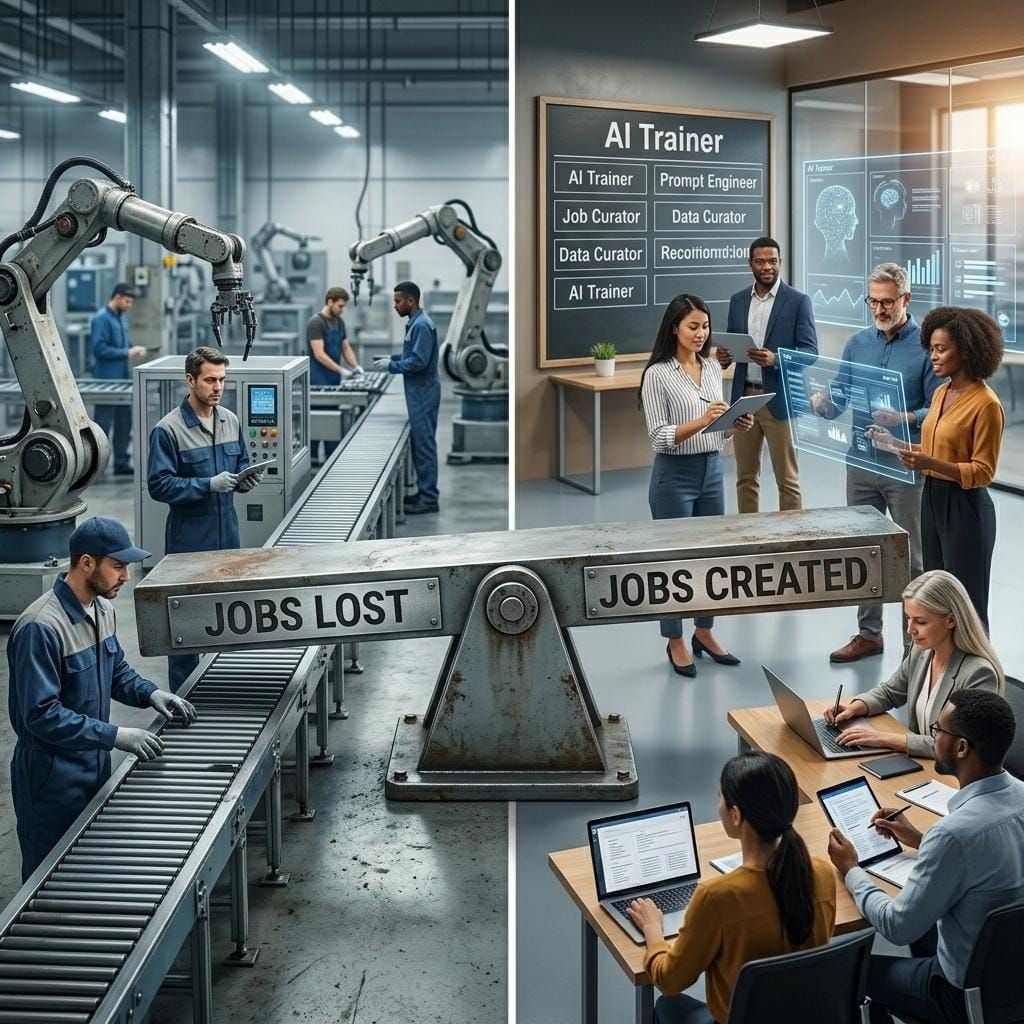
The tug-of-war between job creation and job loss is a delicate balancing act. While AI may eliminate certain roles, it also opens the door to new opportunities. The key is to focus on reskilling and upskilling the workforce to ensure that workers can adapt to the changing landscape.
For example, a factory worker whose job has been automated may find new opportunities in AI maintenance or programming. By investing in training programs, companies can help their employees transition into new roles, ultimately benefiting both the workers and the organization.
The Importance of AI Literacy
In this brave new world of AI, literacy isn’t just about reading and writing; it’s about understanding how to work with technology. AI literacy is becoming a crucial skill for workers across all industries. Those who can navigate AI tools and understand their implications will have a competitive edge in the job market.
Employers are increasingly prioritizing candidates with AI literacy, as these individuals can leverage technology to enhance their work. By fostering a culture of continuous learning, businesses can ensure that their workforce remains adaptable and ready for the challenges ahead.
The Role of Business Leaders in Shaping the Future
Business leaders play a pivotal role in shaping the future of work in the age of AI. They must recognize the potential of AI to enhance productivity while also understanding the importance of human labor. By investing in their employees and fostering a culture of innovation, leaders can create an environment where both AI and humans can thrive.
Moreover, business leaders should advocate for policies that support workforce development and reskilling initiatives. By collaborating with educational institutions and training organizations, they can help bridge the skills gap and prepare workers for the jobs of tomorrow.
The New Demand for Skills
As AI continues to permeate various industries, the demand for new skills is on the rise. Workers must be prepared to adapt to the changing landscape by acquiring skills that complement AI technology. This includes technical skills, such as programming and data analysis, as well as soft skills, like communication and problem-solving.
For example, a marketing professional may need to learn how to use AI tools for customer segmentation and targeting. By embracing lifelong learning, workers can stay ahead of the curve and position themselves for success in an AI-driven job market.
The Future of Work: A Collaborative Approach
The future of work is not about humans versus machines; it’s about collaboration. As AI technology continues to advance, workers will need to learn how to work alongside AI tools to maximize their potential. This collaborative approach can lead to increased productivity and innovation.
For instance, a team of engineers may use AI software to streamline their design process, allowing them to focus on creative problem-solving. By embracing this partnership, workers can leverage the strengths of both humans and machines to achieve greater results.
The Role of AI in Patient Care
In the healthcare sector, AI is making significant strides in improving patient care. From predictive analytics to personalized treatment plans, AI tools are enhancing the capabilities of healthcare professionals. However, the human touch remains essential in this field.
While AI can assist with data analysis and routine tasks, it cannot replace the empathy and compassion that healthcare workers provide. As AI continues to evolve, the demand for skilled healthcare professionals who can work alongside AI tools will only increase.
The Impact of AI on Job Security
Job security is a hot topic in the age of AI. Many workers fear that automation will lead to widespread job loss, leaving them in the lurch. However, it’s essential to recognize that AI is not a one-size-fits-all solution. While some roles may be automated, others will emerge, creating new opportunities for workers.
To navigate this uncertainty, workers must focus on developing skills that are less likely to be automated. This includes honing their creativity, emotional intelligence, and problem-solving abilities—skills that are uniquely human and highly valued in the job market.
The Importance of Adaptability
In a world where change is the only constant, adaptability is key. Workers must be willing to embrace new technologies and learn new skills to stay relevant in the job market. This means being open to reskilling and upskilling as the demands of the workforce evolve.
For example, a retail worker may need to learn how to use AI tools for inventory management and customer engagement. By being adaptable, workers can position themselves for success in an ever-changing landscape.
The Future of AI and Job Creation
As we look to the future, the potential for AI to create jobs is immense. While some roles may be lost to automation, new opportunities will arise as businesses adapt to the changing landscape. The key is to focus on reskilling and upskilling the workforce to ensure that workers can thrive in this new environment.
For instance, as AI technology continues to advance, new roles in AI development, maintenance, and oversight will emerge. By investing in training programs and fostering a culture of continuous learning, businesses can help their employees transition into these new roles.
The Role of Government in Workforce Development
Governments play a crucial role in shaping the future of work in the age of AI. By implementing policies that support workforce development and reskilling initiatives, they can help ensure that workers are prepared for the jobs of tomorrow. This includes investing in education and training programs that focus on AI literacy and technical skills.
Moreover, governments can collaborate with businesses and educational institutions to create pathways for workers to transition into new roles. By fostering a supportive environment for workforce development, governments can help bridge the skills gap and prepare workers for the challenges ahead.
The Importance of Collaboration
Collaboration is essential in the age of AI. Businesses, educational institutions, and governments must work together to ensure that workers are equipped with the skills needed to thrive in the job market. This includes creating training programs that focus on AI literacy and technical skills, as well as fostering a culture of continuous learning.
By collaborating, stakeholders can create a supportive ecosystem that empowers workers to adapt to the changing landscape. This collaborative approach can lead to increased innovation and productivity, ultimately benefiting both workers and businesses.
The Future of Work: Embracing Change
As we move forward into the AI era, embracing change is crucial. Workers must be willing to adapt to new technologies and learn new skills to stay relevant in the job market. This means being open to reskilling and upskilling as the demands of the workforce evolve.
For example, a marketing professional may need to learn how to use AI tools for customer segmentation and targeting. By embracing change, workers can position themselves for success in an ever-changing landscape.

The debate over whether AI is creating more jobs than it is replacing is complex and multifaceted. While some roles may be lost to automation, new opportunities are emerging that require human creativity and adaptability. As AI technology continues to evolve, the demand for skilled workers who can navigate this changing landscape will only increase. By investing in training and development, businesses can help their employees transition into new roles, ultimately benefiting both workers and organizations.
Your Friend,
Wade

Q1: Will AI completely replace human workers?
A1: While AI may automate certain tasks, it is unlikely to completely replace human workers. Instead, it will create new opportunities that require human skills and creativity.
Q2: What skills will be in high demand in the AI era?
A2: Skills such as AI literacy, data analysis, problem-solving, and emotional intelligence will be in high demand as the job market evolves.
Q3: How can workers prepare for the changing job market?
A3: Workers can prepare by embracing lifelong learning, developing new skills, and staying adaptable to the changing demands of the workforce.