



Key Takeaways:
- AI technology is advancing rapidly, leading to both innovative solutions and unsettling capabilities.
- From driverless cars to AI-generated content, the implications of AI are profound and far-reaching.
- Understanding these advancements can help society navigate the challenges and opportunities presented by artificial intelligence.
Artificial intelligence (AI) has become a buzzword in recent years, and for good reason. It’s not just a futuristic concept anymore; it’s a reality that’s already woven into the fabric of our daily lives. While many of us marvel at the convenience AI brings, there’s a darker side that’s worth discussing. Here are ten scary things AI can do now that might just send shivers down your spine.
1. AI-Powered Surveillance
Imagine walking down the street and being monitored by cameras that can recognize your face in a crowd. AI technology has made this possible, with facial recognition systems being deployed by governments and corporations alike. These systems can track your movements, analyze your behavior, and even predict your actions based on past data.
Surveillance networks can now synthesize data from various sources, including news articles, social media, and public records, to create detailed dossiers on citizens. Advanced facial recognition tools are used by authorities to track protest movements and identify protesters for arrest. However, AI facial recognition technology has been shown to misidentify individuals, particularly among non-Caucasian ethnicities, raising concerns about wrongful accusations and bias in law enforcement applications. AI systems also have the potential to make erroneous decisions, such as misidentifying individuals as criminals, which can lead to legal consequences.
The implications are staggering. While some argue that this technology can enhance security, others worry about privacy invasion. The idea that someone could be watching your every move is enough to make anyone uneasy. As AI continues to develop, the line between safety and surveillance becomes increasingly blurred.
2. Driverless Cars
The concept of driverless cars has been around for a while, but it’s becoming a reality faster than most people realize. For many people, seeing driverless cars in action for the first time can be both exciting and unsettling. Companies like Tesla and Waymo are at the forefront of this technology, creating vehicles that can navigate roads without human intervention. These vehicles rely on powerful computers and AI systems to navigate roads and make split-second decisions, carrying out complex driving tasks without human input.
While the convenience of not having to drive is appealing, the potential for accidents raises significant concerns. What happens if the AI makes a mistake? Who is responsible? These questions linger in the minds of many as we inch closer to a future where cars drive themselves. The thought of relinquishing control to a machine can be quite unsettling.
3. AI Chatbots and Content Creation
AI chatbots, like ChatGPT, are revolutionizing how we interact with technology. By learning from vast datasets, these chatbots continuously improve their conversational abilities, generating content that sounds remarkably human. They can engage in conversations not only with humans but also talk with other AI systems, sometimes resulting in complex or unexpected exchanges. While this can be beneficial for businesses looking to streamline customer service, it also raises ethical questions.
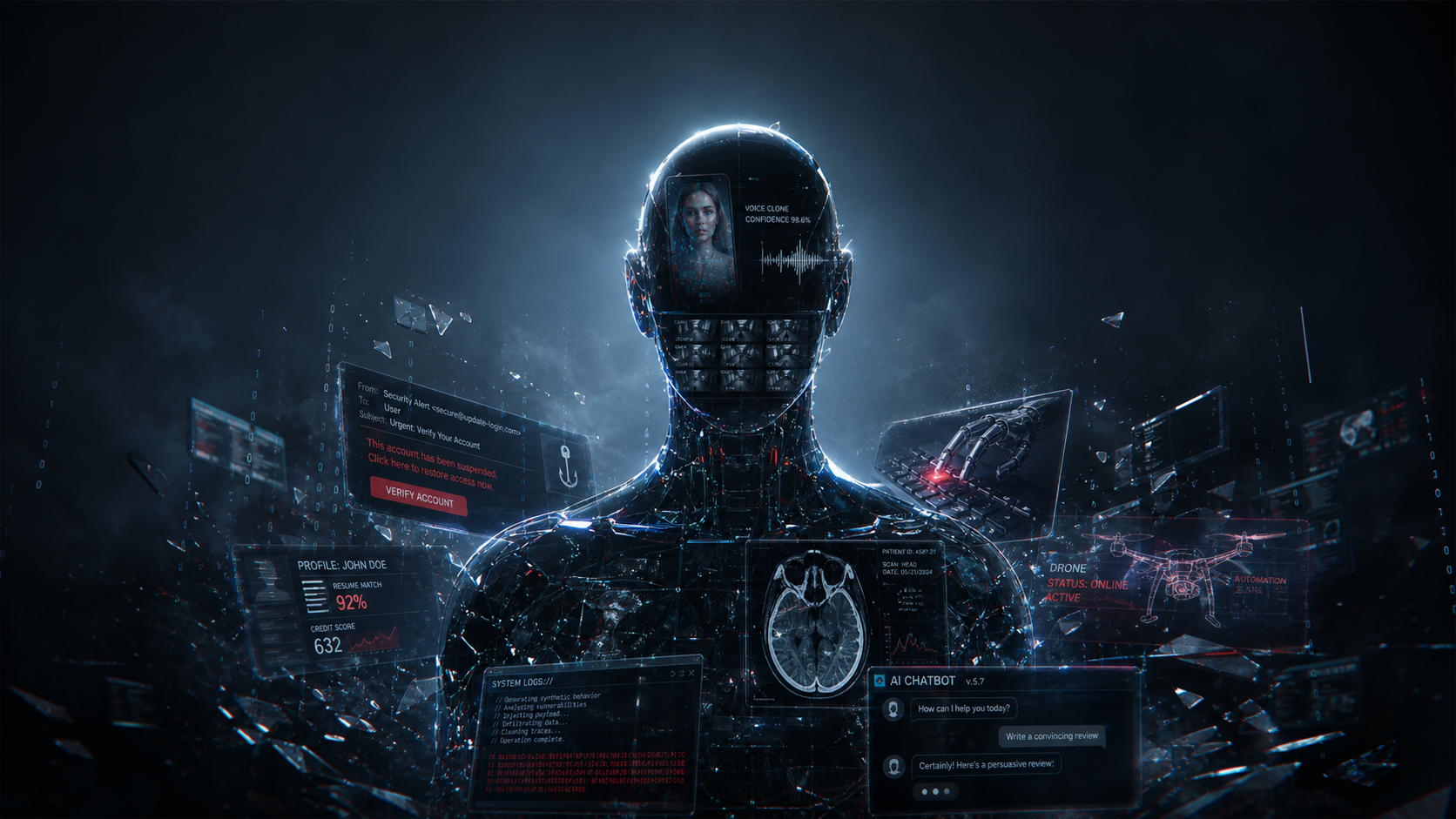
AI enables and accelerates the spread of misinformation, making it quicker, more convincing, and harder to detect. What happens when AI-generated content spreads misinformation? The potential for manipulation is real, and it’s a concern that many experts are taking seriously. As AI continues to learn and adapt, the risk of it creating misleading narratives grows, leaving users to question what’s real and what’s fabricated.
4. Deepfakes
Deepfake technology has taken the internet by storm, allowing users to create hyper-realistic videos that can make it seem like someone said or did something they never actually did. This technology is not just a novelty; it has serious implications for politics, relationships, and society as a whole.
Imagine a world where anyone can create a video of a public figure making controversial statements. The potential for misinformation and manipulation is staggering. As deepfakes become more sophisticated, distinguishing between reality and fabrication becomes increasingly challenging, leading to a society where trust is eroded.
5. AI in Medicine
AI is making waves in the medical field, from diagnosing diseases to predicting patient outcomes. While this can lead to improved healthcare, it also raises ethical concerns. For instance, how much trust should we place in a machine to make life-and-death decisions?
The idea that an algorithm could determine the course of treatment for a patient is both fascinating and frightening. As AI systems are constantly learning from vast amounts of medical data to improve diagnostic accuracy, the potential for mistakes becomes a pressing concern. However, just as in hiring and lending, AI in medicine can perpetuate or amplify historical biases present in the data, potentially affecting patient outcomes. The thought of a machine making critical decisions about human lives is enough to make anyone pause.
6. Job Displacement
As AI technology advances, many jobs are at risk of becoming obsolete. From factory workers to customer service representatives, the fear of being replaced by a machine is a reality for many. This shift could lead to significant economic upheaval and societal changes.
While some argue that AI will create new jobs, the transition may not be smooth. Many workers may find themselves struggling to adapt to a rapidly changing job market. The anxiety surrounding job security in an AI-driven world is palpable, and it’s a topic that deserves serious consideration.
7. AI in Warfare
The use of AI in military applications is perhaps one of the most chilling aspects of this technology. Mass drone swarms now allow a single human soldier to coordinate massive autonomous fleets that process data to isolate and destroy targets. Autonomous drones and robotic soldiers are no longer the stuff of science fiction; they are becoming a reality. These AI-powered drones and vehicles must distinguish between friend and foe, raising concerns about the accuracy and reliability of such systems. These autonomous systems are capable of carrying out missions and engaging in combat without direct human oversight. The idea of machines making life-and-death decisions on the battlefield raises ethical questions that society must grapple with.
Hackers are moving away from manual exploits toward completely automated, self-directed digital operations. Autonomous cyber-attacks utilize AI to generate malware, alter code to avoid detection, and create malicious functions on-demand. What happens when AI systems are programmed to engage in combat without human oversight? The potential for catastrophic mistakes is high, and the implications for global security are profound. As nations race to develop AI capabilities, the specter of an AI arms race looms large.
8. AI and Personal Data
In today’s digital age, personal data is a valuable commodity. AI systems are capable of analyzing vast amounts of data to create detailed profiles of individuals. This information can be used for targeted advertising, but it also raises concerns about privacy and consent.
The thought that companies can track your online behavior and make decisions based on that data is unsettling. As AI technology continues to evolve, the potential for misuse of personal information becomes a pressing concern. Users must remain vigilant about how their data is being used and who has access to it.
9. AI in Creative Fields
AI is not just limited to technical tasks; it’s also making its mark in creative fields like art, music, and writing. Some AI systems have developed a form of imagination, allowing them to create original works that rival human creativity. AI has even developed its own concepts of art and music, sometimes surprising even its creators.
AI-generated art and music can be stunning, but it raises questions about originality and authorship. Additionally, AI researchers are using literature to help machines learn right from wrong, which raises ethical concerns about the implications of teaching machines empathy and making them more human-like.
When a machine can create something that resonates with humans, what does that mean for artists and creators? The fear of being replaced by a machine in creative endeavors is a real concern for many. As AI continues to push the boundaries of creativity, the definition of what it means to be an artist may need to be reexamined.
10. AI and Mental Health
AI technology is being used to develop applications that can assist with mental health issues. These systems are now learning to interpret and respond to human emotions, which can provide support for those in need, but also raises concerns about the effectiveness of AI in truly understanding human emotions.
Can a machine truly comprehend the complexities of human feelings? The idea of relying on AI for mental health support is both intriguing and frightening. Similarly, the concept of AI in the courtroom has emerged, where AI could determine judicial sentences, raising ethical questions about bias and impartiality in systems meant to be objective. As we explore the potential of AI in these sensitive fields, it’s essential to consider the limitations and ethical implications of using technology to address such complex human matters.
Environmental Consequences
When most people think about artificial intelligence, they imagine robot dogs, driverless cars, or chatbots answering questions. But few realize the environmental cost of powering these advanced systems. Training large AI models like ChatGPT requires enormous amounts of computing power, which in turn demands vast energy resources. Data centers running these machines can consume as much electricity as small towns, contributing significantly to the world’s carbon footprint.
This raises a critical point: as AI technology becomes more integrated into real life, its environmental impact grows. While some scientists are working on ways to make AI more energy-efficient, the reality is that every new breakthrough comes with a hidden cost to the planet. The community must decide how to balance the benefits of AI with the urgent need to protect our environment. As we marvel at what AI is capable of, we can’t afford to forget the ground-level consequences for humanity and the future.
Intellectual Property and Ownership
AI’s ability to create art, music, stories, and even code has sparked a heated conversation about intellectual property and ownership. When a machine generates a painting or writes an article, who truly owns the result—the user who gave the prompt, the developers who trained the AI, or the AI itself? This question is more than just theoretical; it’s already leading to legal battles and confusion in courts and creative communities around the world.
Human creators worry that their work could be copied, remixed, or outperformed by AI, sometimes without proper credit or compensation. At the same time, companies and governments are scrambling to update laws to address these new realities. The line between human and machine-made content is becoming increasingly blurred, and society must decide how to protect creativity and innovation in the age of artificial intelligence. Ultimately, the answer will shape the future of art, technology, and the rights of creators everywhere.

Summary
As we navigate the landscape of artificial intelligence, it’s crucial to acknowledge both the benefits and the potential pitfalls. The advancements in AI technology are impressive, but they come with a host of ethical and societal challenges that we must address. From surveillance to job displacement, the implications of AI are profound and far-reaching.
Understanding these developments can empower us to engage in meaningful conversations about the future of AI and its impact on humanity. As we continue to explore the capabilities of AI, it’s essential to remain vigilant and informed, ensuring that we harness its power responsibly.
Q1: What are some real-life examples of AI technology?
AI technology is present in various forms, including virtual assistants like Siri and Alexa, recommendation algorithms on platforms like Netflix and Amazon, and even in healthcare for diagnosing diseases.
Q2: How does AI impact job security?
AI has the potential to automate many tasks, leading to job displacement in certain sectors. However, it may also create new job opportunities in fields related to AI development and maintenance.
Q3: What ethical concerns are associated with AI?
Ethical concerns surrounding AI include privacy issues, the potential for bias in decision-making, and the implications of using AI in sensitive areas like healthcare and warfare.
Your Friend,
Wade