

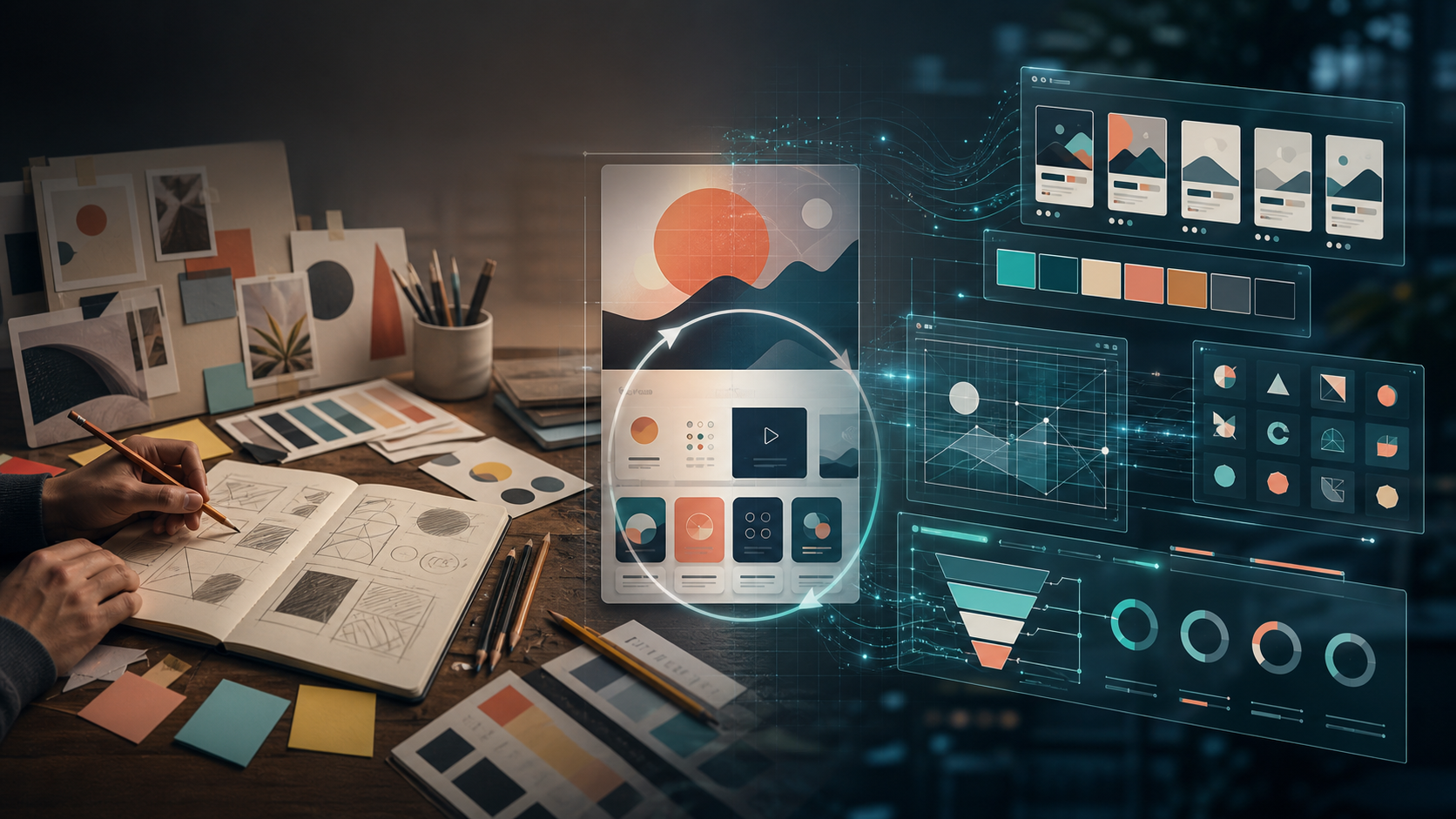


Key Takeaways
- Between 2023 and 2026, generative AI has rapidly reshaped the design process, but human creativity, judgment, and ethics remain central to producing good design that serves real people.
- Design tasks already being automated today include layout variants, asset resizing, UX copy drafts, research synthesis, and basic wireframing. Tasks unlikely to be automated in the next decade include product vision, complex stakeholder alignment, ethical tradeoffs, and cultural meaning-making.
- AI in design is moving from isolated tools to deep ai integration across the entire workflow, from research to delivery, changing what it means to be a designer.
- Designers are shifting from pushing pixels to becoming curators, facilitators, and strategists who guide artificial intelligence rather than compete with it.
- This article ends with concrete next steps for designers and teams, plus an FAQ covering practical and ethical concerns about how ai reshapes creative work.
Introduction: From Hype to a New Era of Design
It's 2026. A product designer opens Figma with native AI features running, a ChatGPT-like assistant ready in a side panel, and a DALL·E-style image tool generating visual directions from a single sentence. What used to take a full afternoon of exploration now takes twelve minutes.
This is not a demo or a concept video. This is a Tuesday morning.
The mainstreaming of generative ai between late 2022 and today has brought artificial intelligence from niche experimentation into everyday creative industries. According to a 2026 report by Designer Fund and Foundation Capital, 91% of designers now use AI at least weekly, up from 54% just one year earlier. The market for AI-powered design tools reached an estimated $8.2 billion in 2026, growing roughly 120% year over year. Meanwhile, 75% of global knowledge workers use ai tools regularly, and 83% of online content creators use AI in their production process. We're living through a new era, not an incremental upgrade.
The core question is direct: in this new world, what about the design process gets automated, what stays irreducibly human, and what changes forever in how we work? This article focuses on practical insights for UX, product, and visual designers-not speculative AGI futures but what's happening right now and what you can do about it.
What AI Already Automates in the Design Process
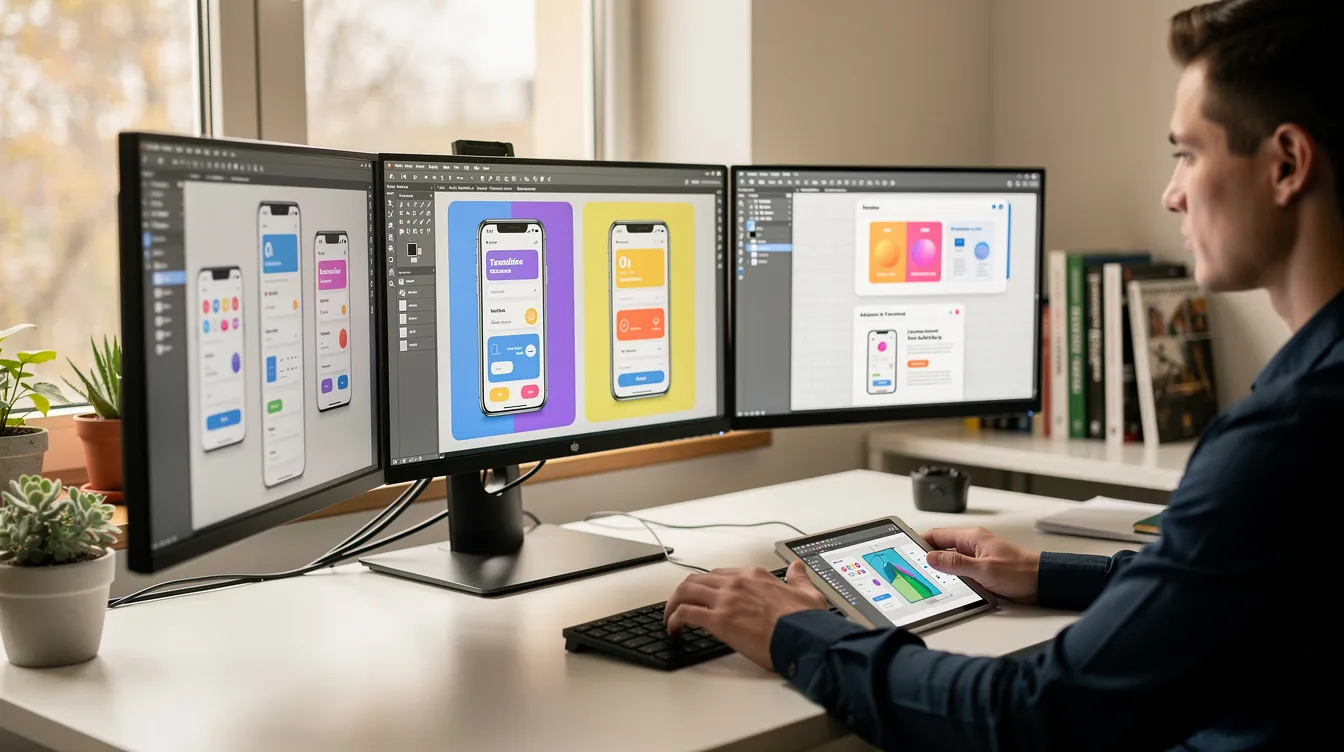
Most of what designers interact with today falls under narrow AI and generative ai-systems designed for specific tasks rather than general reasoning. These systems excel at pattern recognition, high-speed execution, and high-volume production. Research shows that generative AI can automate 26% of tasks in creative fields, and the design process is becoming faster as a direct result.
Visual production and exploration. Tools like Midjourney, DALL·E, and Stable Diffusion generate moodboards, icon sets, illustration styles, and alternative UI layouts in seconds. Figma's native AI features suggest layout adjustments and design system-compliant components. Basic wireframing and layout generation can be automated by AI, and many designers now produce dozens of concept variations where they once sketched three or four. Design tasks being automated include resizing assets and updating layouts for multiple breakpoints, which used to eat entire afternoons.
Content and UX writing. Auto-generating microcopy, error messages, onboarding flows, and localization drafts is now routine. LLMs like Claude and GPT handle early content drafts, which designers then refine for tone, clarity, and brand voice. The Designer Fund report notes that Claude overtook ChatGPT in many designer toolstacks by 2026.
Research support and synthesis. Speech-to-text tools transcribe user interviews. Language models summarize research sessions, cluster feedback themes, and surface emergent patterns. According to Forrester, accessibility checks, design system compliance, and repetitive tasks are increasingly handled by AI systems rather than humans.
Production chores. Responsive layout variants, color contrast and accessibility suggestions, and auto-documentation of component libraries are being generated from existing design systems. AI assists designers by automating repetitive tasks that once consumed a large share of weekly hours. Product designers report saving over 40 hours per year by offloading these chores.
Data analysis and experimentation. AI proposes A/B test variants, forecasts click-through changes, and suggests funnel optimizations from product analytics. Simulation and predictive modeling evaluate design options at a larger scale than manual analysis ever allowed.
Code generation and prototyping. Perhaps the most interesting shift: 50% of designers now ship ai generated code to production. Tools like Cursor and Galileo AI turn descriptions into functioning interactive prototypes. At early-stage companies, this rate is even higher-around 68%.
The numbers back this up across creative work: 90% of creators believe AI saves time by relieving menial tasks, 40% of marketing and design professionals report AI improves efficiency, and 90% of marketers have experimented with generative ai tools at work. AI excels at high-speed execution and pattern recognition. It's undeniably powerful for the right tasks.
But speed and volume don't answer the harder question: what about the work that actually matters?
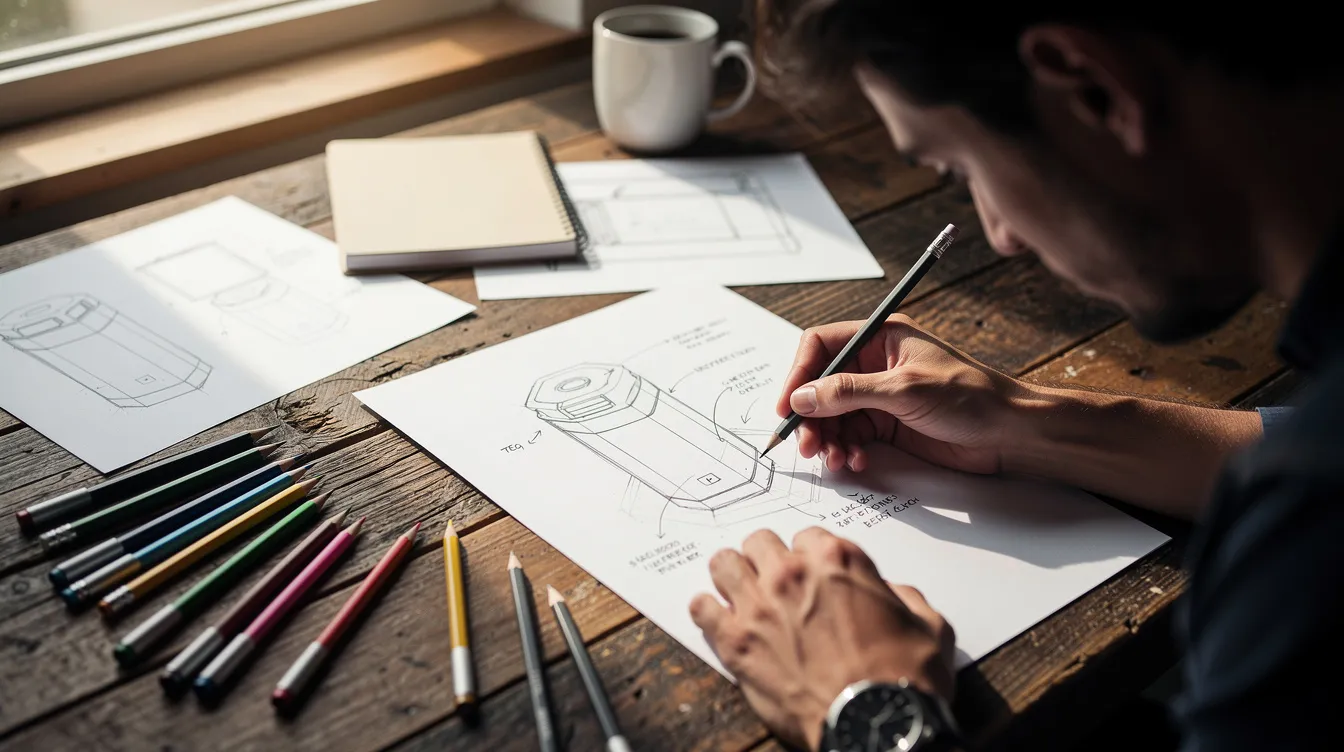
What Stays Human: The Core of Human Creativity in Design
AI's role is powerful, but some parts of design are rooted in human creativity, empathy, and values that current AI cannot authentically reproduce. Strategic thinking and empathy are essential roles for human designers, and no amount of processing power changes that.
Problem framing and vision. Only a human can decide which problems are worth solving, how they connect to business outcomes and societal impact, and what "good" looks like in a specific context. The Cambridge Design Science review notes that AI widens the evidential base and tempo of design thinking but cannot replace human judgment for interpreting insights and deciding what to do. Imagine redesigning a civic service portal: the data might tell you which pages have the highest bounce rate, but only a human understands the fear and confusion a person feels when navigating government bureaucracy for the first time. AI lacks the ability to independently think and make decisions of that nature.
Empathy and ethics. Understanding real people in messy, lived contexts-especially marginalized users dealing with pain points around access, trust, or dignity-requires the kind of human experience that no model can simulate. Making value-laden tradeoffs around privacy versus personalization, or inclusivity versus efficiency, demands human intelligence and moral reasoning. AI lacks human-level context awareness and empathy in design, and these aren't bugs to be fixed; they're fundamental limits.
Narrative and meaning-making. Constructing compelling product stories, brand narratives, and design rationales that resonate with culture, history, and emotion is work that gives design its meaning. While AI can imitate styles, it does not originate cultural movements or understand the sense of identity embedded in visual language. A century ago, the Bauhaus movement redefined what architecture and graphic design could be-not through pattern matching, but through a radical reimagining of the relationship between form and life. That kind of creative breakthrough remains human territory.
Negotiation and collaboration. Aligning executives, engineers, marketers, and users around a shared direction requires social intelligence-facilitating workshops, handling politics, mediating conflicting agendas. These tasks rely on reading the room, building trust, and making the kind of judgment calls where only a human can navigate the ambiguity.
Aesthetic taste and cultural nuance. Curating what feels right for a moment in time, a locale, or a subculture goes beyond what is technically "on brand." Taste is contextual, idiosyncratic, and deeply personal. It's the reason a skilled designer can look at an ai generated layout and immediately sense that something is off, even if every pixel is technically correct.
The final decisions about what a product means, who it serves, and why it matters will remain human for a long time.
What Changes Forever: A New World of AI-Integrated Design
We are not merely adding tools to existing workflows. AI integration is reshaping timelines, roles, and even what it means to hold the job title "designer." Human roles are shifting towards high-level strategy in design due to AI, and the transformation is structural, not cosmetic.
Speed and volume become the default. Ideas that once took days to explore now take minutes. The value shifts from "producing options" to choosing and justifying among abundant options. The Designer Fund report found that the average designer's toolstack jumped from 3 tools to 7 in a single year, reflecting rapid incorporation of AI at multiple workflow stages. The design process is becoming faster at every phase.
Roles shift from maker to curator and strategist. AI changes workflows, shifting designers from execution to curation. Instead of crafting every screen, many designers now evaluate, combine, and refine ai generated options. At smaller companies, designers are increasingly expected to ship code and play roles formerly seen as engineering-adjacent. There is an emerging industry split between budget AI-driven design and high-end strategic design, where human vision commands a premium.
Continuous co-creation replaces discrete phases. Design no longer happens in a single sprint and then ships. AI-enabled personalization, experimentation, and optimization run continuously. Behavior data flows back into the creative process, enabling rapid testing and learning in live products.
Discipline boundaries blur. Content, interaction, visual design, and even front-end development converge in AI-first tools that respond to natural language prompts. This demands broader, T-shaped skill sets. Job descriptions increasingly mention AI proficiency, prompt engineering, and automation workflows as baseline expectations.
Design becomes strategic. Organizations that treat design as an always-on capability embedded in strategy-not a "final stage" after product spec-gain measurable advantages. Autodesk's 2026 report found that 98% of leaders in design and manufacturing use at least one AI tool, and 84% say productivity increased. Competitive advantage no longer comes from adopting AI; it comes from integrating AI across systems, aligning internal data, talent, and strategy.
And here's a number worth sitting with: 34% of creatives believe generative AI will positively impact their careers. That's not a majority, and the doubt is understandable. But it signals that a meaningful share of the industry sees opportunity rather than threat.
AI's Role Across the Design Process: From Research to Delivery
Using the recognizable Double Diamond model-Discover, Define, Develop, Deliver-we can map how ai touches each phase of design thinking. AI can generate design variations based on user prompts at nearly every stage, but its role remains assistive. Humans still make the final product decisions.
Discover
Generative AI supports early-stage research by drafting interview guides, ingesting past studies, and creating proto-personas from behavioral data. Tools transcribe interviews via speech-to-text, summarize findings, and cluster qualitative data. But deciding which questions to ask, recruiting representative users, and interpreting emotional nuance remain human work. You can imagine a scenario where an ai system surfaces three competing themes from 40 interviews-but a person still has to decide which theme to explore first based on the human experience those interviews reveal.
Define
AI helps cluster insights, identify patterns in qualitative and quantitative data, and visualize problem spaces through affinity maps and journey maps. But humans must prioritize among opportunities, frame trade-offs, and define vision statements. The "how might we…" questions at the heart of design thinking require a level of abstraction and moral reasoning that current AI cannot own. This is where critical thinking separates useful analysis from genuine understanding.
Develop
Here, AI becomes a brainstorming and prototyping partner. It generates multiple interaction patterns, visual language directions, and narrative framings in response to natural language prompts. Designers can generate ideas at a volume that would have been unthinkable five years ago. AI can generate design variations based on user-defined parameters, allowing teams to explore dozens of directions before committing. But coherence, usability, and emotional resonance still require human refinement. The creative brief still starts with a human point of view.
Deliver
AI-assisted design QA automates accessibility audits, design token generation, localization checks, and responsive version output. Continuous optimization happens through automated experiments and performance forecasting. Humans decide what to act on, how to tell the story behind the metrics, and whether ethical concerns have been addressed.
Across every phase, AI's role remains augmentative. Humans select which opportunities to pursue, which risks to accept, and how to explain the rationale behind the final product.

Designers as Curators, Conductors, and AI Collaborators
Artificial intelligence is transforming the design industry into a strategic, curation-based discipline. The designer's identity is shifting: from "maker of screens" to "orchestrator of systems," including ai systems that generate design outcomes.
The curator role. Evaluating dozens of ai generated options, spotting subtle usability or brand issues, and combining fragments into a coherent direction. This requires taste, experience, and the ability to sense what will solve problems for real people versus what merely looks correct.
The conductor role. Choosing the right tools for the job, chaining them in the right order-research AI into ideation AI into prototyping AI-and maintaining cohesion across outputs. Think of an AI-assisted design sprint: a team uses one tool for research synthesis, another for visual exploration, and a third for interactive prototyping, all within a single week. The designer conducts this orchestra. Human ai collaboration at its most practical.
The trainer role. Designers influence AI behavior via prompts, fine-tuning, and feedback loops, gradually embedding their team's voice, patterns, and values into workflows. This form of creating is new and increasingly important.
The communicator role. Designers explain AI's capabilities and limits to stakeholders, set expectations, and advocate for responsible, human-centered AI use. When a VP asks "can't AI just do this?" a designer needs the words to explain what AI can and cannot handle-and why that distinction matters for the business.
AI will redefine creative jobs, focusing on higher-order tasks. The question is not whether this will happen but how quickly you adapt.
Skills Designers Need in a New AI-Driven Era
AI will not remove the need for designers, but it will sharply change which skill sets are scarce and valuable. The modern designer's role is evolving into an interdisciplinary problem-solver, and proficiency in ai tools is becoming a baseline skill for designers.
AI literacy. Understanding how generative ai works at a high level-training data, biases, hallucinations-knowing its failure modes, and speaking credibly with engineers. You don't need to train models, but you need to know why an ai system sometimes produces confidently wrong outputs. 40% of creatives say AI tools help them work more efficiently, but only those who understand AI's limits can use it responsibly.
Promptcraft and systems thinking. Writing precise prompts, iterating quickly, and structuring multi-step workflows. Prompt engineers are not replacing designers; they're a new facet of the designer's toolkit. The World Economic Forum has identified similar trend lines, noting that technology fluency will be a baseline requirement across creative roles.
Strategy and business acumen. Designers need to understand business strategy as AI automates technical tasks. Connecting design decisions to metrics, revenue models, and long-term organizational goals matters more when production is cheap but insight is not. The value of a designer in 2026 is less about the same amount of pixel-perfect output and more about knowing which direction to point the machine.
Ethics and governance. Spotting biased outputs, championing inclusive design, and helping shape internal AI use policies. As AI-generated content requires human oversight for quality control, someone needs to define what "quality" and "fairness" mean in context.
Collaboration and facilitation. Running workshops where AI is a participant, guiding cross-functional teams in interpreting ai generated artifacts, and deciding what to ship. This requires emotional intelligence and the ability to hold space for disagreement-skills no model possesses.
Challenges, Risks, and Responsible AI Use in Creative Industries
While AI promises efficiency and creativity, it introduces serious risks that designers must actively manage. These aren't abstract warnings-they're things that happen daily.
Homogenization of design. When many designers use the same models trained on similar data, the outputs start to converge. Interfaces, illustrations, and brand expressions begin to look alike. The 62% of designers who cite inconsistent or unreliable AI outputs as a major frustration are also, paradoxically, often getting outputs that are too consistent-too safely average. Good design requires distinctiveness, and that's under threat.
Bias and fairness. AI can perpetuate biases present in training data. If your image generation model was trained primarily on Western visual conventions, it may produce layouts and imagery that exclude or misrepresent other cultures. Designers must audit outputs, especially in healthcare, finance, civic services, or any context where representation has real consequences. A similar trend appears across data-driven fields: without intentional correction, AI amplifies existing inequities.
Intellectual property and provenance. Questions about ownership of ai generated assets, the provenance of training data, and whether AI output constitutes derivative work remain legally unsettled. For high-stakes work-think architecture, brand identity, regulated industries-tracking sources matters.
Transparency and trust. Overstating what AI can do erodes trust with both users and stakeholders. When a product claims to be "intelligent" but delivers generic responses, the gap between promise and experience damages the brand. Disclosure about AI involvement is increasingly expected.
Sustainability and attention. Large models carry environmental costs. Designers also hold responsibility for shaping humane, non-addictive experiences-even when an ai system suggests engagement patterns optimized purely for metrics. The creative process should positively impact people's lives, not just drive numbers.
The point is not to avoid AI but to use it with the same care you'd bring to any powerful tool that affects real people.

Final Thoughts: Designing for a Human-Centered AI Future
AI will automate much of the routine design work. That's not speculation-it's already happening. But whether this new era leads to more humane products or just faster output depends entirely on the humans guiding the process. Creativity without direction is noise. Speed without judgment is waste.
The most resilient designers are those who treat AI as a collaborator, not a rival. They lean into vision, judgment, and meaning-making-the work that gives design its purpose. They stay competitive not by outpacing machines at production, but by bringing the kind of human intelligence that no model replicates: empathy, ethics, taste, and the courage to make final decisions under uncertainty. There is hope in that distinction, and it's grounded in evidence, not wishful thinking.
If you take one thing from this article, let it be this: start experimenting intentionally. Pick one ai tool this week. Use it for ideation or research synthesis. Document what works and what doesn't. Share your findings with your team. Focus on compounding learning, not one-off hacks. You are not just designing interfaces with AI-you are helping design the AI-shaped world your users will live in. That's a responsibility worth taking seriously.

FAQ
Will AI replace designers completely, and if so, when?
Current evidence from 2023 through 2026 suggests AI will continue to automate production tasks-especially for small, routine, high-volume design work-but is unlikely to replace strategic and human-centered design roles in the foreseeable future. Job descriptions will change significantly over the next 5–10 years, with more emphasis on orchestration, ethics, and cross-functional problem solving. The idea that a person with vision, empathy, and strategic sense becomes obsolete doesn't match what the data shows.
How should a junior designer start learning to work with AI?
Start with a small daily practice: use one generative ai tool for ideation and one for research summarization. Keep a personal log of your prompts and outcomes. But focus first on mastering fundamentals-layout, typography, usability-so you can evaluate ai generated outputs critically rather than accepting them at face value. Without those foundational skills, you can't tell whether what the machine produced is actually good.
What tools should we prioritize if our design team is just beginning AI integration?
Choose tools that plug into existing workflows. AI features in Figma or Sketch, research transcription and summarization tools, and a general-purpose language model assistant are strong starting points. Pilot with one or two high-impact use cases-like research synthesis or variant generation-before expanding. Don't try to overhaul everything at once.
How can we measure whether AI is actually improving our design process?
Track tangible metrics: time-to-first-prototype, number of explored concepts per project, time spent on repetitive tasks, and cost savings on production chores. But also assess qualitative factors: team satisfaction, perceived creative bandwidth, stakeholder feedback on design quality, and whether your brand voice stays consistent. Both matter.
What if stakeholders want to use AI to cut design headcount?
Frame AI as a force multiplier. Use concrete examples to show how designers plus AI create better outcomes than either alone, especially in complex or regulated domains. Proactively define an AI adoption plan that emphasizes higher-value design work-strategy, experimentation, ethics-enabled by automation, rather than simple cost-cutting. Show stakeholders what happens when you remove the people who make the final decisions and solve problems that require judgment: the output gets faster but the outcomes get worse.
Your Friend,
Wade